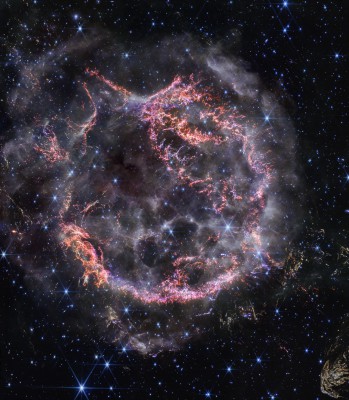
How one exploding star can slow a simulation of the Milky Way
PHEASANT ran a galaxy model with 5.4 trillion particles on Frontier. Its trick was knowing which hundred-year steps it could skip around an exploding star.
PHEASANT ran a galaxy model with 5.4 trillion particles on Frontier. Its trick was knowing which hundred-year steps it could skip around an exploding star.
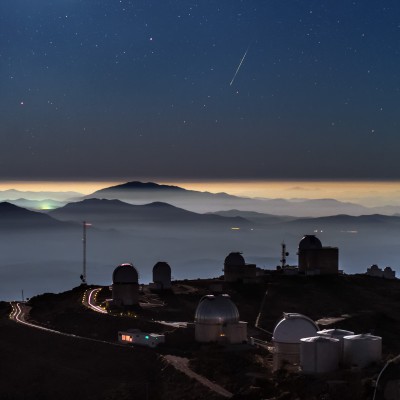
Two cameras put the first meteor nearly 99 kilometres above Earth when its trail faded. The same observations leave a striking uncertainty at the far end of its orbit.
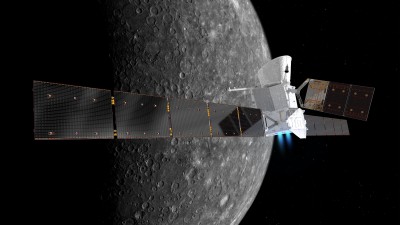
Europe’s MPO will steer Japan’s Mio into orbit with it. Their December separation will give scientists two vantage points on Mercury and its magnetic environment.
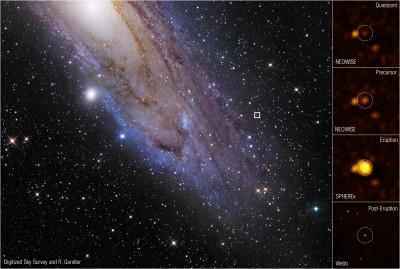
Long before Bao erupted, the smaller star was losing energy inside its giant companion. Infrared observations helped astronomers work out where that energy went.
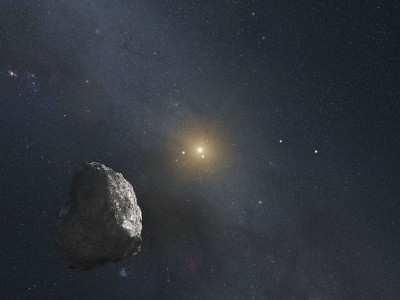
Radiation scars point to a journey from the Kuiper Belt. Oxygen trapped inside the grains records what happened before they left.
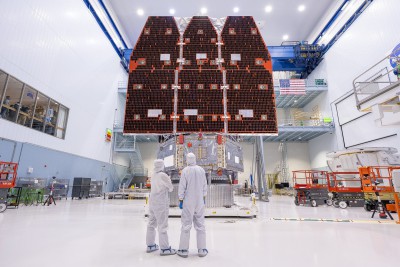
NASA’s September test frame lets you follow one star across a 300-megapixel camera. Here’s how to read it before the December broadcast.
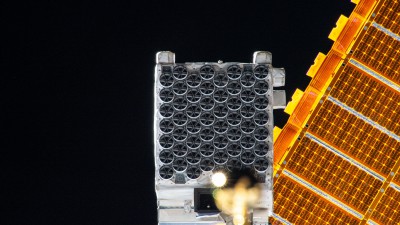
The space-station telescope stopped observing in June 2025. Its closure leaves an eight-year archive that can still test the physics inside neutron stars.
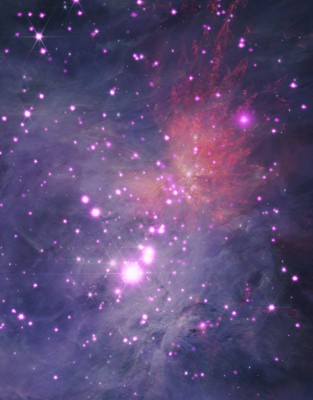
Four new sonifications give telescope data an audible form. Orion’s separate X-ray and infrared layers show why knowing the sound mapping matters as much as pressing play.
Water and carbon dioxide ice support an origin in very cold material. The spectrum reveals chemistry and structure, with limits on the history it can prove.