NASA closes NICER’s science mission after a pointing failure
The space-station telescope stopped observing in June 2025. Its closure leaves an eight-year archive that can still test the physics inside neutron stars.
NASA has ended science operations for NICER, the X-ray telescope mounted on the International Space Station, after a pointing problem left it unable to follow its targets. The November 17 announcement closes a prolonged pause: the instrument stopped collecting observations on June 17, 2025, rather than taking its final measurement this week.
Engineers suspect an internal motor failure, according to NASA's latest mission update. The next work is to finish preparing its eight-year scientific archive and plan the telescope's decommissioning and removal. NASA has not supplied a removal date in that announcement.
NICER's contribution is easy to underestimate if a telescope is imagined mainly as a camera. Its name expands to Neutron star Interior Composition Explorer. It helped investigate extraordinarily dense matter by recording when X-rays arrived, turning changes in a distant star's brightness into evidence about its size. Losing the ability to point meant losing the ability to keep that measurement going.
Two faults, two different jobs
The motor problem followed a separate difficulty that astronauts had partly repaired. In 2023, damage to thin thermal shields allowed unwanted sunlight into NICER. Those shields needed to reject ordinary light while admitting the X-rays the instrument was built to measure.
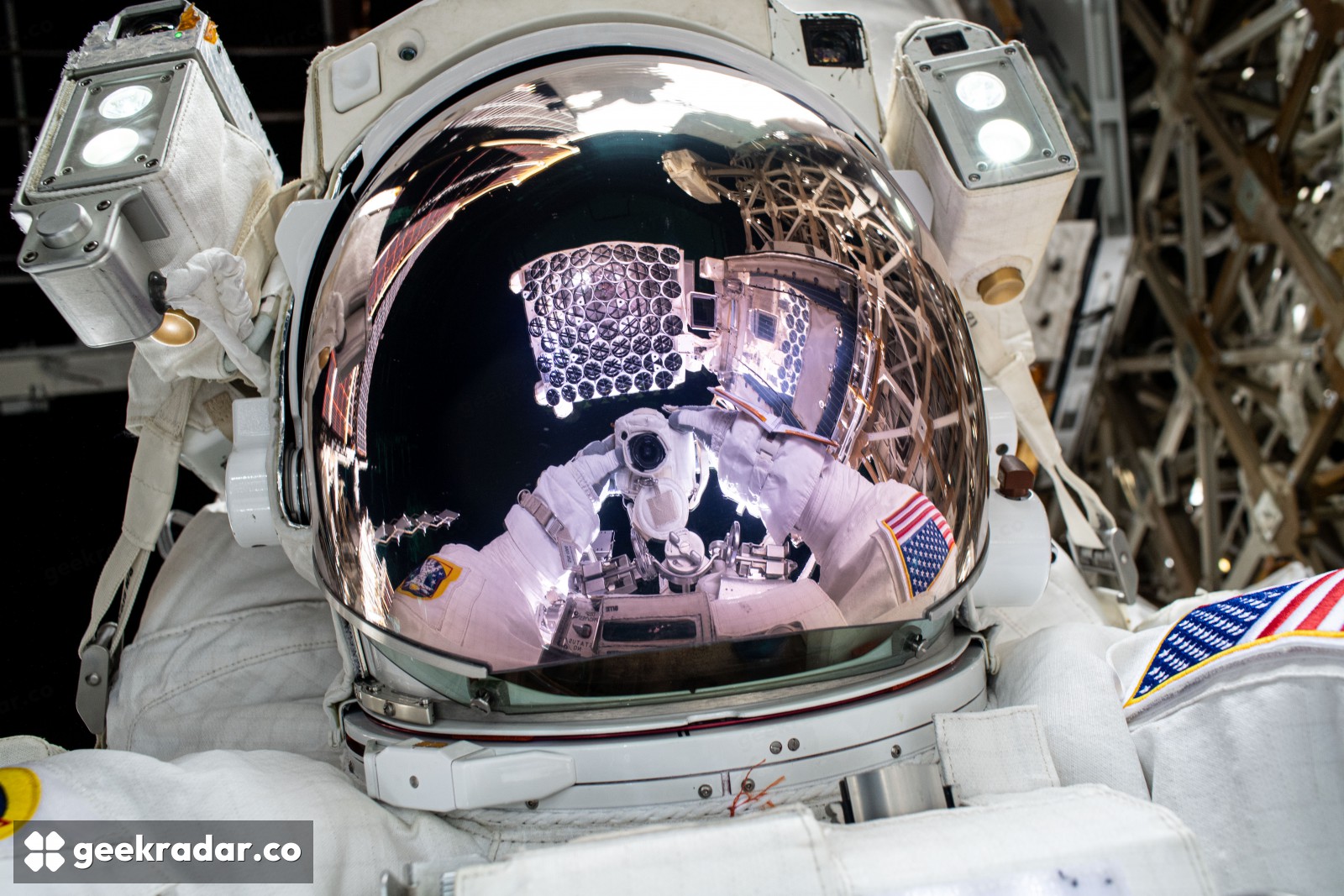
NASA astronaut Nick Hague installed nine patches during a January 2025 spacewalk. A subsequent electronics reconfiguration helped recover observations during more than 70% of the station's daytime, NASA reported that April. It was a substantial improvement, but it addressed light entering the detectors, not the later problem with moving the telescope.
That sequence matters when reading the mission's status page, which retains older updates. The August 2025 entry described an unresolved pause; the November 2026 entry announces the end of science operations. Earlier statements about troubleshooting are historical steps, not a current promise that observations will resume.
The mission had already far exceeded its original 18-month plan. NASA's HEASARC mission record dates its observing lifetime from June 14, 2017, to June 17, 2025. That is the relevant interval for its data, even though the final closure announcement came much later.
A stellar radius hidden in a changing pulse
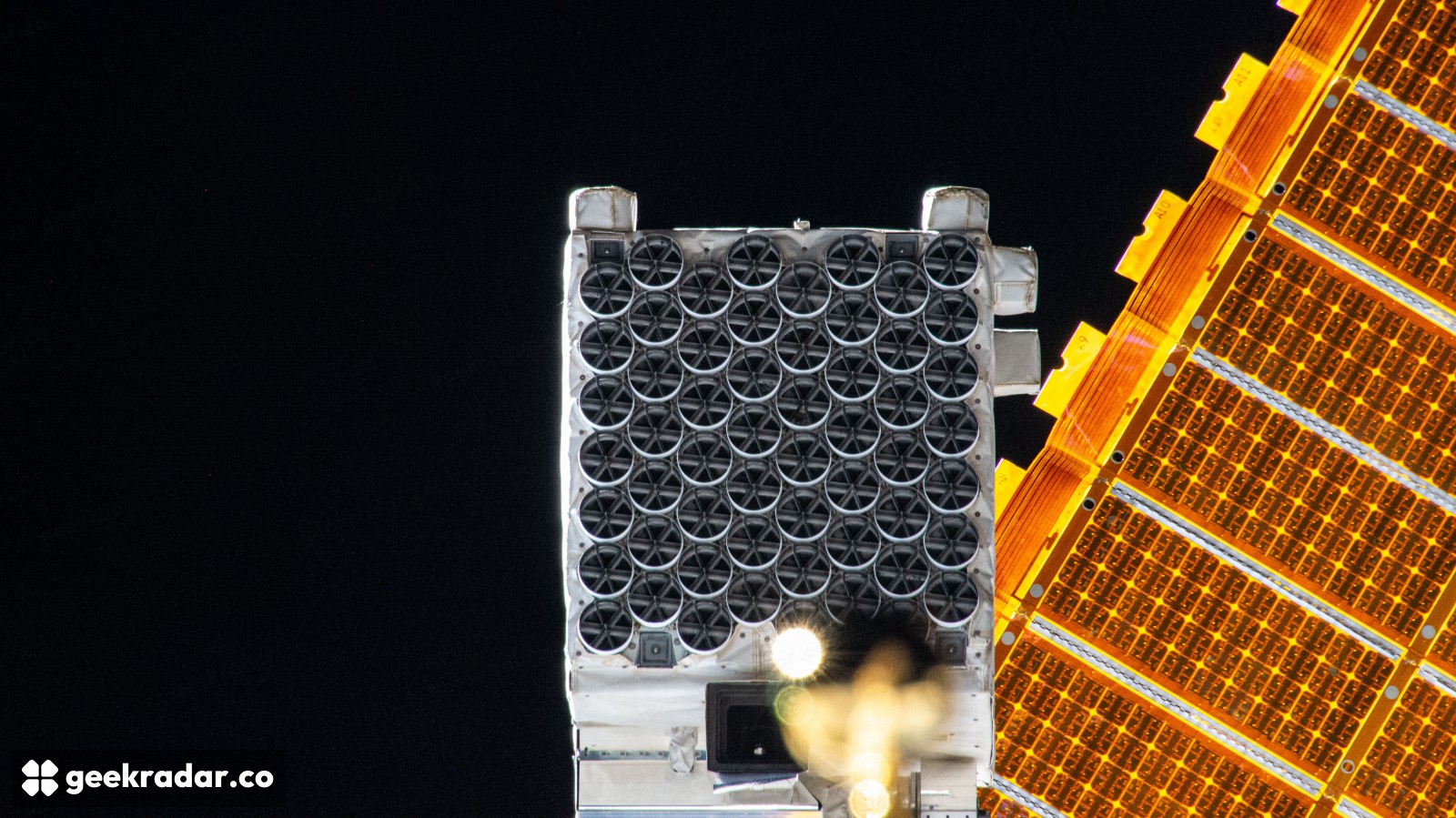
NICER's instrument combined 56 X-ray concentrators with detectors that recorded individual photons' energies and arrival times. HEASARC describes it as non-imaging: its strength was precise timing, rather than a resolved photograph of a neutron star's surface.
A rotating neutron star can carry hot regions that brighten and fade in our view. The changing signal contains more information than a simple spin rate. Strong gravity bends the path of the light, allowing some radiation from beyond the star's ordinary visible edge to reach the observer. The amount of bending depends on how tightly the mass is packed.
As NASA's explanation of the method describes, researchers model the changing X-ray signal to constrain a star's mass and radius. These are inferred physical properties, with uncertainties, not dimensions read from a sharp-edged image. Other observations can help separate the desired signal from background emission or independently constrain the mass.
Knowing both quantities tests how matter responds to pressures far beyond an ordinary laboratory. Two stars with similar mass but different radii would demand different explanations for the material supporting them against gravity. A useful radius measurement therefore narrows the possible physics inside an object that cannot be opened or sampled.
One concrete example is the 2024 analysis of pulsar PSR J0437-4715. The team combined NICER observations with a mass measurement from radio timing and inferred an equatorial radius of 11.36 kilometres, with reported uncertainties of 5–8%. This is an earlier result illustrating the method, not a new measurement announced with the mission's closure. The fitted hot regions were more complicated than a textbook pair of simple opposing spots, another reason the modelling matters.
The instrument stops; the record remains useful
HEASARC hosts NICER's observations, and NASA's closure plan explicitly includes finalising the archive. Those data describe particular targets at particular times. Later analysis can revisit a model or compare an observation with other instruments; it cannot manufacture a missing observation of tomorrow's event.
The distinction also runs through the end of Terra's observing mission: preserving a record and continuing to extend it are different achievements. NICER's final archive will retain the measurements that can still be questioned, combined and interpreted. What ends is the opportunity to turn the telescope toward the next source. The hardware's lasting value is that its earlier observations remain precise enough for scientists to ask better questions of them.