BepiColombo is due to enter Mercury orbit on November 21 with both spacecraft still joined
Europe’s MPO will steer Japan’s Mio into orbit with it. Their December separation will give scientists two vantage points on Mercury and its magnetic environment.
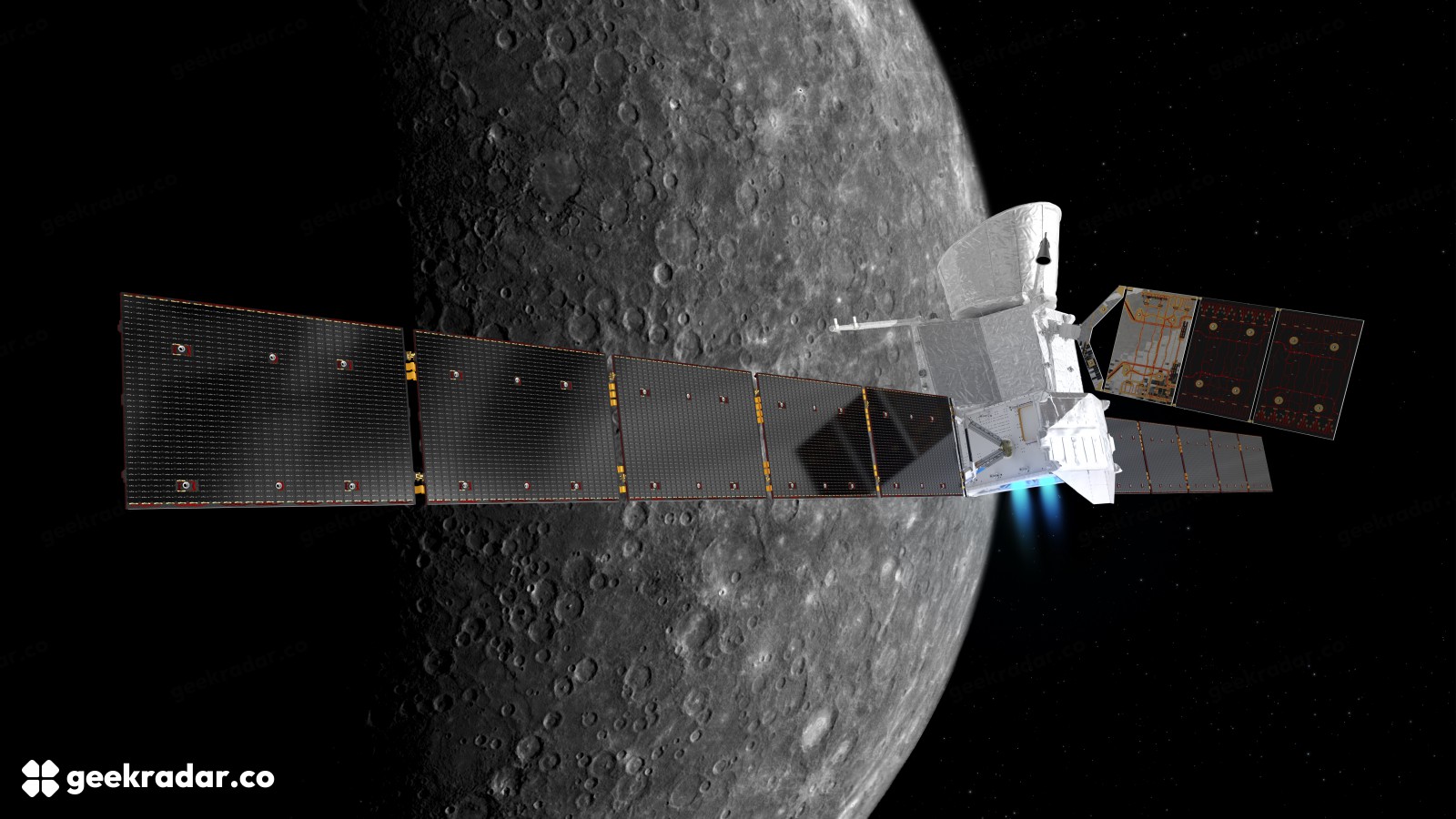
BepiColombo has already flown past Mercury six times. On November 21, the aim is to stay. The European and Japanese spacecraft are due to enter a polar orbit around the innermost planet, still fastened to each other. If the manoeuvre succeeds, the first signal of success will mark an unusual halfway point: two orbiters at Mercury, with neither yet in the orbit where it will do most of its science.
The sequence is set out in ESA’s November 18 mission advisory. The agency expects to release Japan’s Mio on December 9–10. The European spacecraft will then have a sunshield to shed and an orbit of its own to reach. The joint science phase is scheduled for April 2027.
The engine that got them here has already gone
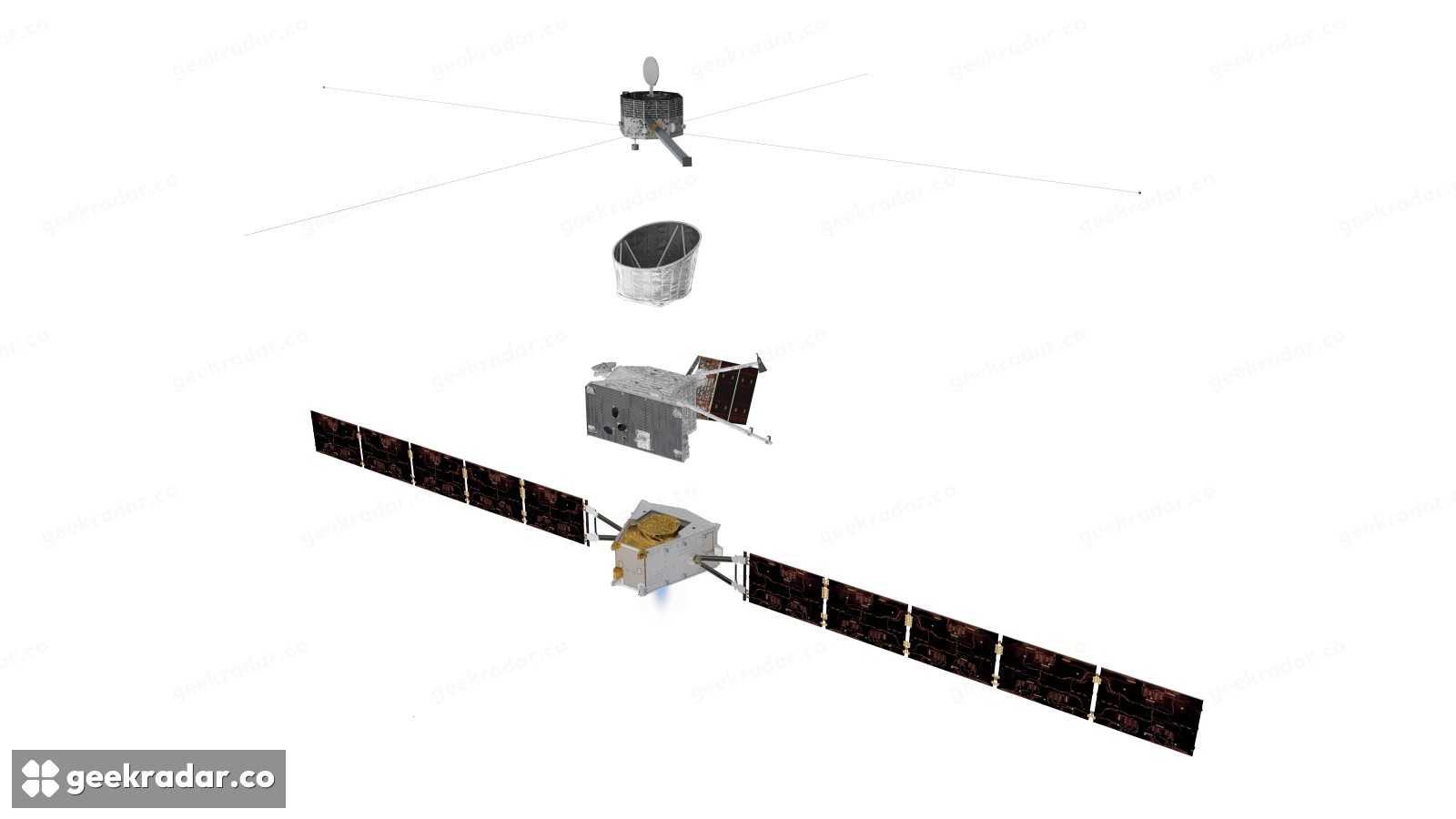
For much of the eight-year trip, BepiColombo looked like one long spacecraft with solar wings. The component carrying the large arrays was the Mercury Transfer Module. Its solar-electric propulsion helped shape the journey through the inner Solar System, alongside gravity assists at Earth, Venus and Mercury. Each Mercury flyby bent the path again. The spacecraft still left the planet behind after each pass.
That arrangement ended on September 3. The transfer module detached, leaving ESA’s Mercury Planetary Orbiter, or MPO, to steer the remaining stack with its chemical thrusters. The engineers could see the change before they could read a full status report. ESA’s account of the separation describes a small shift in the radio signal’s frequency as the first indication that the pieces were moving apart. Telemetry confirming the spacecraft’s condition followed later.
These are planned operations, and ESA’s arrival timeline allows for changes. Mio and its sunshield are separate pieces of hardware. Releasing one leaves another job to do.
Why the spacecraft will be more useful apart
MPO will study the terrain and composition of Mercury’s surface and probe its interior. JAXA designed Mio to sample the planet’s surroundings, including its magnetic field, charged particles and dust. The Sun makes those surroundings change while the spacecraft are travelling through them. With only one measurement, a jump in a reading could mean the spacecraft crossed a boundary, or that the boundary moved across the spacecraft. Measurements taken at the same time from different places give researchers a way to test those explanations.
That complementarity matters as much as the hardware count. ESA’s Hera mission illustrates what different instruments can reveal about the same target. BepiColombo adds a second observing position. On Saturday, the desired result is for both orbiters to follow Mercury around the Sun together. The scientific payoff comes when they can watch the same planet from different parts of its sky.