Chandra turns young-star observations into sound. Here is how to read the music
Four new sonifications give telescope data an audible form. Orion’s separate X-ray and infrared layers show why knowing the sound mapping matters as much as pressing play.
NASA’s Chandra team has released four new ways to explore places where stars form: short audio pieces built from telescope observations. The collection, published on November 17, covers the Orion Nebula, the Cosmic Cliffs in Carina, Rho Ophiuchi and the starburst galaxy M82. Its most useful feature is the explanation of what each sound represents. Read that alongside the audio, and an attractive soundtrack becomes a way to follow different layers of evidence.
The new collection and listening guide are available together. These are sonifications of observations, not recordings made by a microphone beside a star. Nor does the release mean all four regions were observed yesterday: the novelty is this presentation of the data.
Start with Orion’s two layers
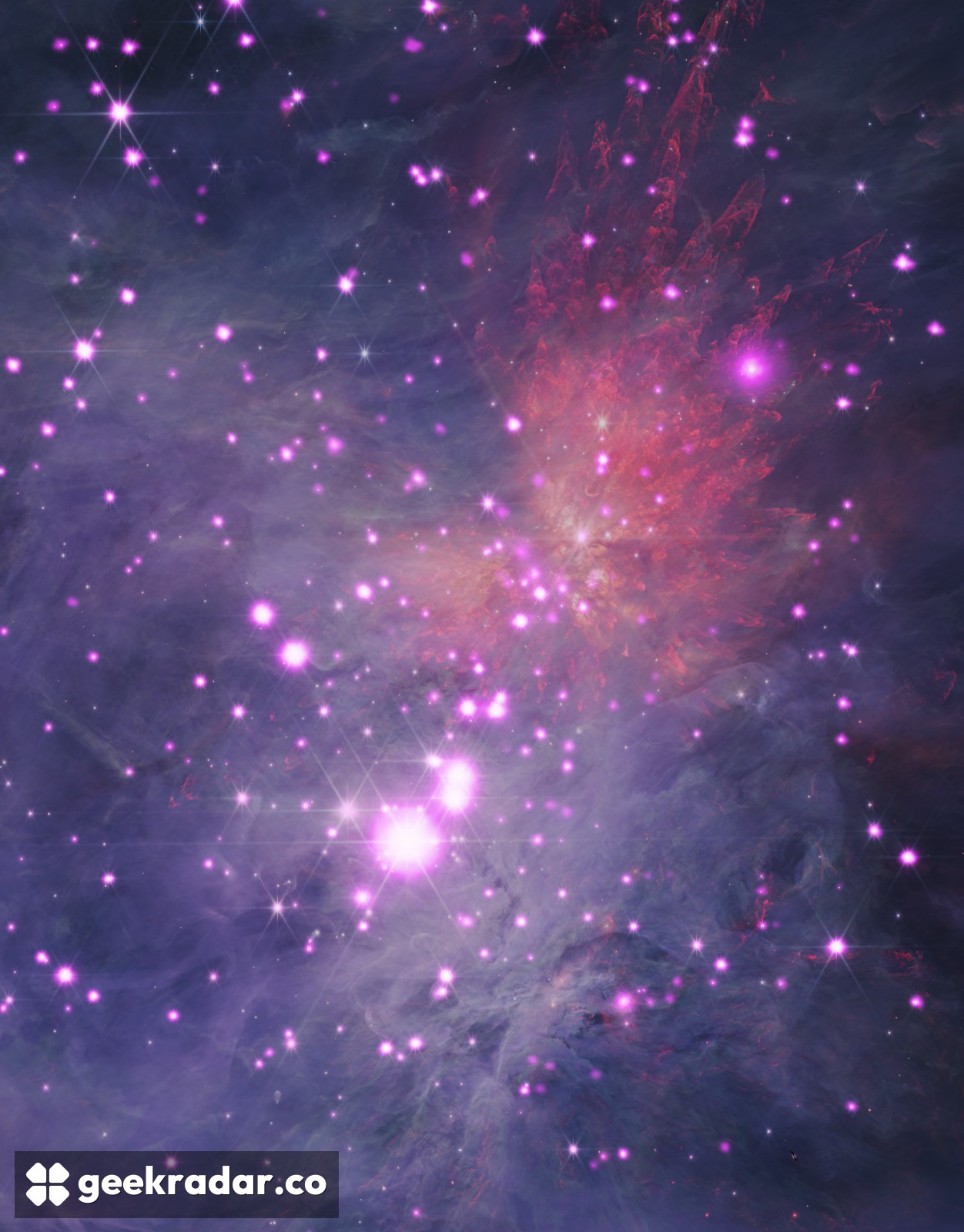
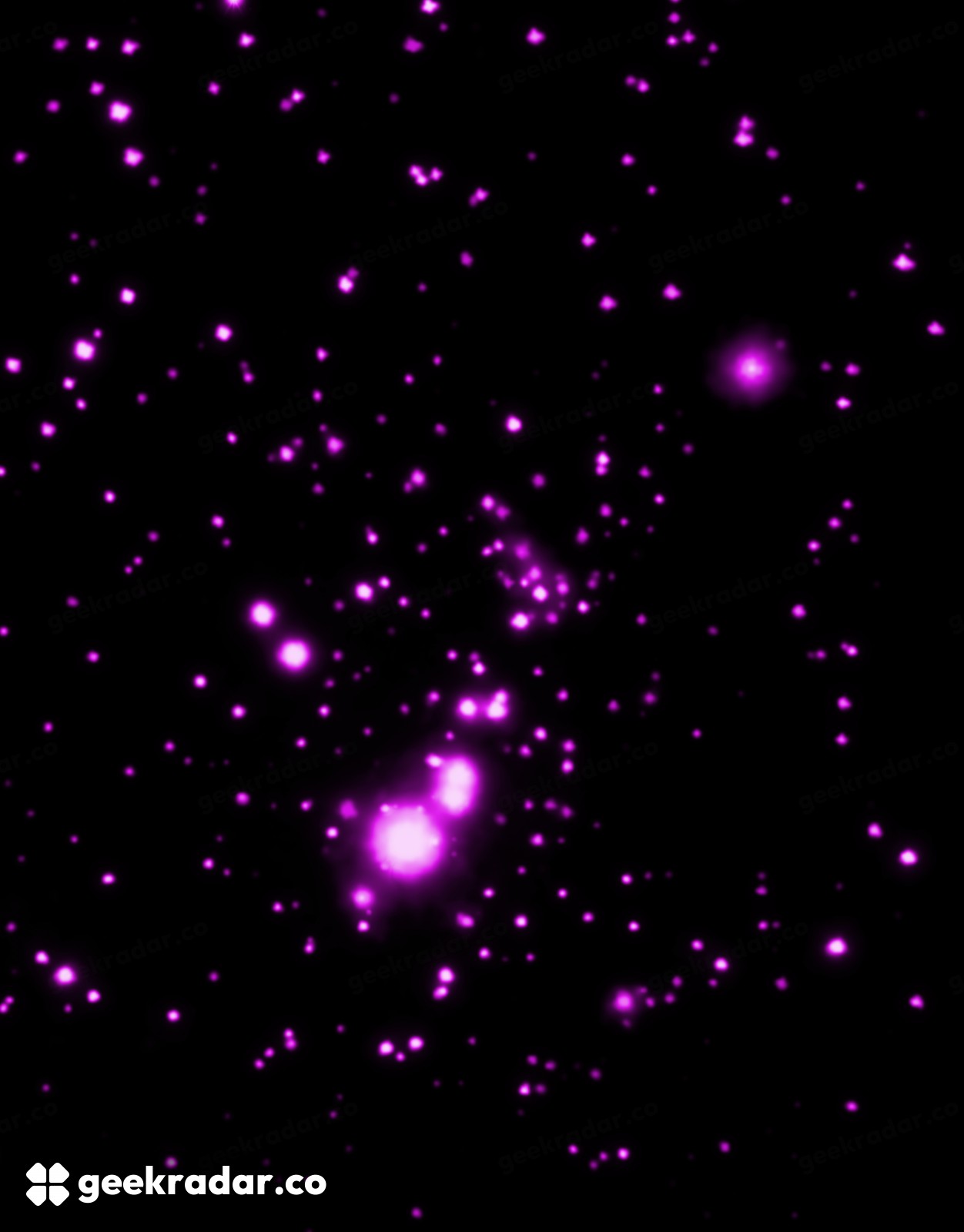
Orion provides a particularly useful introduction. In the team’s description, individual young stars detected by Chandra become brief, twinkling sounds, while diffuse X-ray emission receives high tones. Webb’s infrared observations supply the gas-and-dust context, represented through lower tones and different instrumental textures.
The images make that separation concrete. The combined view shows bright magenta X-ray sources amid a much more extensive cloud structure. The X-ray-only view below removes the infrared layer. It is not a failed or incomplete version of the colorful picture: it answers a different observational question. A cloud that dominates one view need not dominate the other.
That is also the reason to listen for changes in texture rather than treating the entire piece as one melody. When two layers have distinguishable sounds, the listener can follow their contributions without having to identify them by color. The sound design carries part of the job normally assigned to an image legend.
The scan has a sequence, not a stellar clock
The collection uses an activation line moving across a composite image. Features encountered along that path trigger the assigned sounds. The sequence therefore describes the order in which the image is scanned; it should not be read as a film of stars forming or flaring in real time.
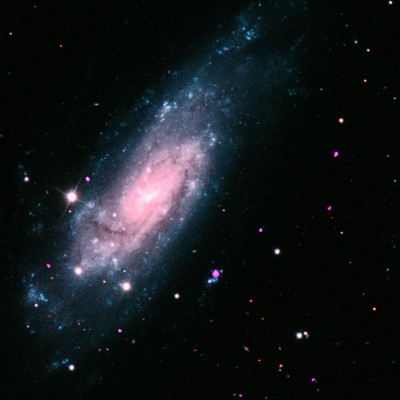
M82 adds optical observations to the X-ray and infrared material. Its radar-like sweep grows louder at brighter sources. In Carina, individual Chandra sources and diffuse emission receive string sounds of different duration. Rho Ophiuchi includes a quieter gap associated with dark dust clouds that emit little light in the represented data.
These examples are worth keeping separate. The project’s methodology overview explains that mappings vary with the object and available observations. A higher note cannot automatically be interpreted as the same physical quantity across every piece. Each one needs its own key.
For a first pass, pick one object and keep its description open. Identify the data layer attached to a distinctive sound, then follow where it enters and disappears. A second pass can focus on another layer. That gives the musical choices an interpretive purpose without requiring the listener to learn the entire arrangement at once.
Accessibility is part of the design
In an earlier interview about the project, visualization scientist Kimberly Arcand explains that the team tests sonifications with blind and low-vision participants, including people with different levels of astronomy expertise. Descriptions supply a route through the sounds; they are part of the communication, rather than an optional technical appendix.
The broader effort also includes tactile models and visual descriptions. Those approaches address different needs. Sound does not have to replace an image, and one arrangement cannot be assumed to work equally well for every listener. The practical strength is giving people more than one route into the same observations.
This collection belongs alongside the observations themselves, not in place of them. Our astronomy coverage examines what telescopes reveal; these pieces also ask how that evidence can be communicated. The useful moment comes when a sound stops being merely atmospheric and becomes identifiable: that note belongs to this data layer, and its presence changes how you understand the picture.