AMD brings FSR Upscaling 4.1.2 to Vulkan. The rest of the SDK has limits
SDK 2.4 expands the API path for upscaling, while ray regeneration and radiance caching remain separate compatibility questions.
SDK 2.4 expands the API path for upscaling, while ray regeneration and radiance caching remain separate compatibility questions.
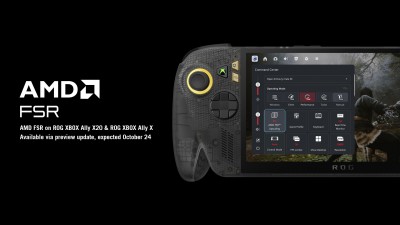
ASUS describes a smaller reconstruction model and a driver override for supported games. Its page contains conflicting rollout details worth checking.
AMD’s new driver expands upscaling options on existing hardware, with separate rules for games, notebooks and handhelds.
Both names cover several rendering tools with different requirements. Separate image quality, rendered frames and displayed frames before judging the result.
Compare NVIDIA and AMD compute through application support, hardware matrices and porting effort. A source conversion is not a promise of binary compatibility or equal speed.
The Linux choice involves kernel modules, userspace drivers and game compatibility. Open NVIDIA modules, Mesa NVK and Radeon RADV are different paths.
Hybrid cores, X3D cache and motherboard reuse answer different needs. Compare complete systems and real workloads instead of counting cores across architectures.
Game rendering, upscaling and creative applications can favor different purchases. Feature support depends on the GPU generation and the software, not only the brand.
Twenty-four cores against eight is a misleading shortcut. Workload, cache behavior and the motherboard you already own give this CPU comparison its meaning.