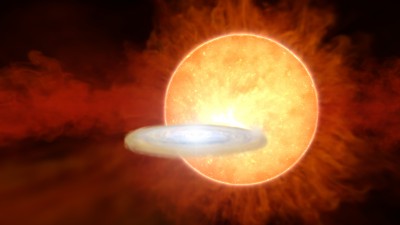
One green-channel reading gives astronomers a timestamp for a faint T Coronae Borealis. Two very different forecasts show what its brightness leaves hidden.
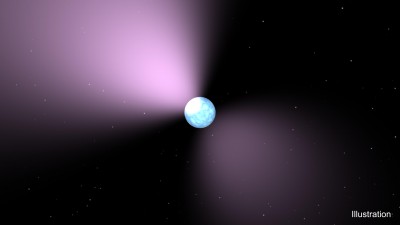
A new search found a neutron star in 15 years of Fermi observations using about ten CPU-hours. The crucial step was working out how many turns the detector missed.
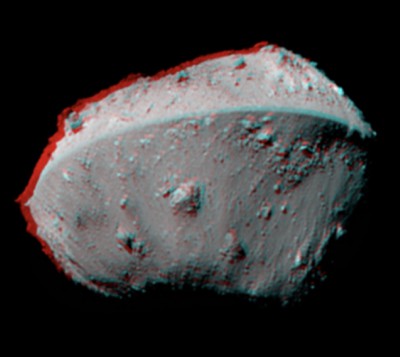
Brian May and Claudia Manzoni turned two spacecraft exposures into a stereo view. The ridge stands out even without special glasses if you use the paired frames.
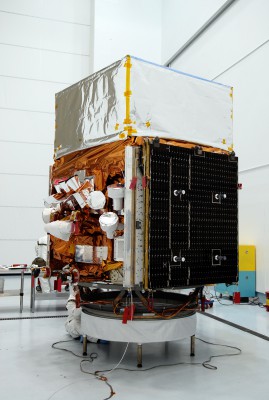
An orbiting prototype has already sent back a poem. Before the dedicated launch, Google wants to see whether two satellites can exchange data fast enough to share the work.
Fourteen years of Fermi observations reveal sources that stand out clearly even when their origin is uncertain. An all-sky map shows where astronomers can look next.
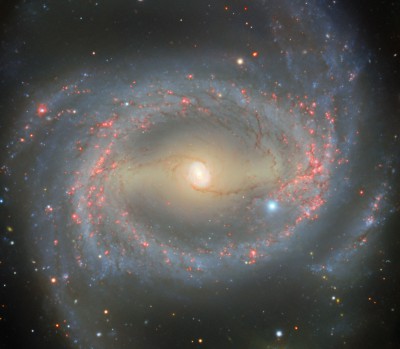
Two archived observations narrow down which kind of white dwarf could have exploded in NGC 1433. Nearby star clusters offer a separate clue to its age.
PHEASANT ran a galaxy model with 5.4 trillion particles on Frontier. Its trick was knowing which hundred-year steps it could skip around an exploding star.
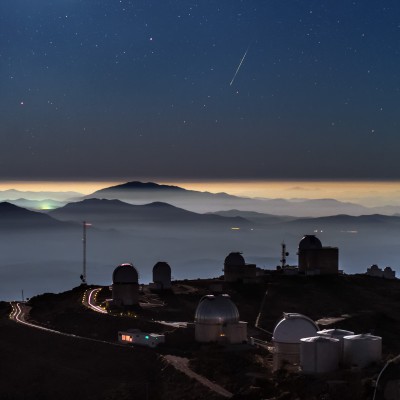
Two cameras put the first meteor nearly 99 kilometres above Earth when its trail faded. The same observations leave a striking uncertainty at the far end of its orbit.