Fermi mapped 450 gamma-ray sources. What are the 73 without a known counterpart?
Fourteen years of Fermi observations reveal sources that stand out clearly even when their origin is uncertain. An all-sky map shows where astronomers can look next.
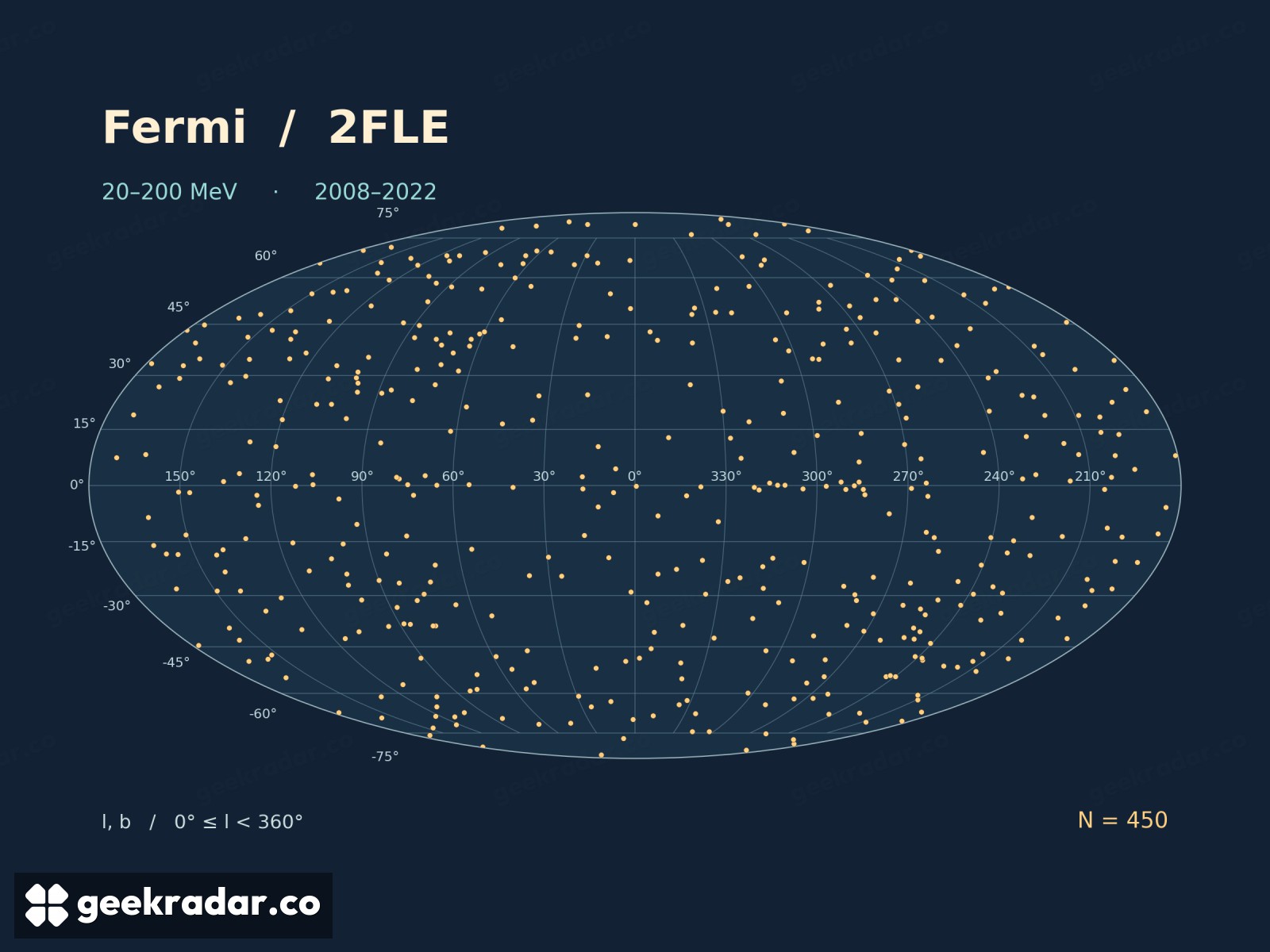
Fermi found 450 sources in a band of gamma-ray light where it is particularly hard to tell which direction a photon came from. For 377 of them, astronomers could connect the signal to a known object. Among the remaining 73 are 60 newly reported gamma-ray sources with no identified counterpart. They are genuine targets for follow-up, even though nobody can yet say what produced their light.
Those numbers come from the Fermi Large Area Telescope collaboration’s second low-energy catalogue. NASA announced its availability on November 4, and independent coverage this week has drawn attention to what the telescope could extract from 14 years of observations. The catalogue covers August 2008 to August 2022. The new sources emerged from a fresh analysis of that record. The catalogue gives no reason to think they all switched on recently.
Why a single photon makes a poor compass
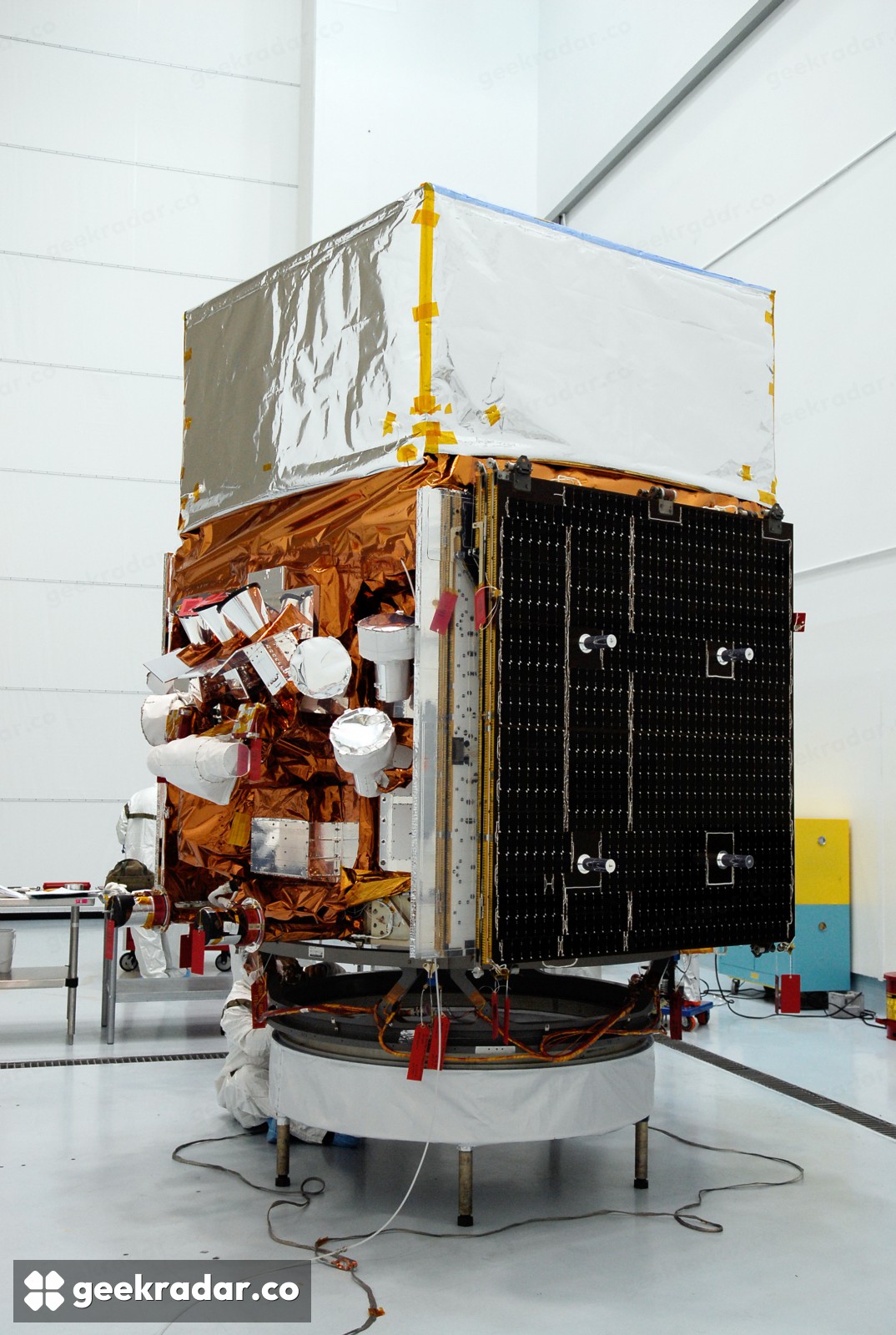
Fermi’s Large Area Telescope measures incoming gamma rays by letting them convert into other particles. When a photon interacts with tungsten inside the tracker, it can produce an electron and a positron. Both travel roughly along the direction the photon was heading. Layers of silicon record the paths they take, giving scientists a way to work backward toward the sky. NASA’s description of the detector explains the catch. The particles themselves scatter as they pass through the material.
That scattering is a particular problem at the lower energies considered here, 20 to 200 megaelectronvolts, or MeV. Imagine two candidate objects near one another on the sky. Several photons may be good evidence that something in their vicinity is emitting gamma rays, while still leaving considerable room for doubt about which object emitted them. Fourteen years of observations give a persistent source more chances to stand out against the surrounding emission. They do not turn each individual arrival into a precise bearing.
What counts as a match?
The public data release makes the distinction visible. One file supplies a point for each source, another gives its 95 percent positional uncertainty region, and others list proposed counterparts. On the sky map, a dot stands for the team’s estimate of the position. Its printed diameter says nothing about the size of the object or the accuracy of that position. The collaboration used statistical association methods to judge which known objects plausibly account for the emission.
The remaining 60 in that last group illustrate an important difference between detecting a source and identifying it. The researchers report that 38 of those 60 clear a detection significance of ten sigma. A strong signal can make the case for a gamma-ray source quite persuasive while doing little to decide between possible objects in the same patch of sky.
The search works in the opposite direction, too. When astronomers went back to old Chandra observations at the position of supernova SN 2026ahvu, the known position let them ask how bright an earlier source could have been without showing up. Here the light is already in the record and the object is the missing piece.
For a follow-up observer, the most useful download may therefore be the file of uncertainty regions. The dot tells you where to center a search. The surrounding area tells you how much sky to investigate before deciding which object, if any, deserves the name beside it.