The Blaze Star was still faint on November 19. That reading could help time its next eruption
One green-channel reading gives astronomers a timestamp for a faint T Coronae Borealis. Two very different forecasts show what its brightness leaves hidden.
At 22:49 UTC on November 19, an observer recorded T Coronae Borealis at magnitude 9.93 in the green channel of a colour camera. That is far too faint to pick out by eye. It is also a useful answer to a narrower question than the one usually asked about the Blaze Star: how bright was it when somebody actually looked?
The November 20 refresh of the public observing dashboard contained one reading in its rolling 24-hour export. The underlying AAVSO report, credited to observer BSGA, gives 9.927 with a reported uncertainty of about 0.02 magnitude. A smaller magnitude means a brighter object. If the recurrent nova approaches the brightness of its past eruptions, it could reach roughly second magnitude and become conspicuous in the Northern Crown. A green camera channel and a standard visual filter respond differently to colour, so the two figures describe the scale of the change rather than an exact brightness ratio. One reading also leaves the hours on either side of it unaccounted for.
The fuel is on the smaller star
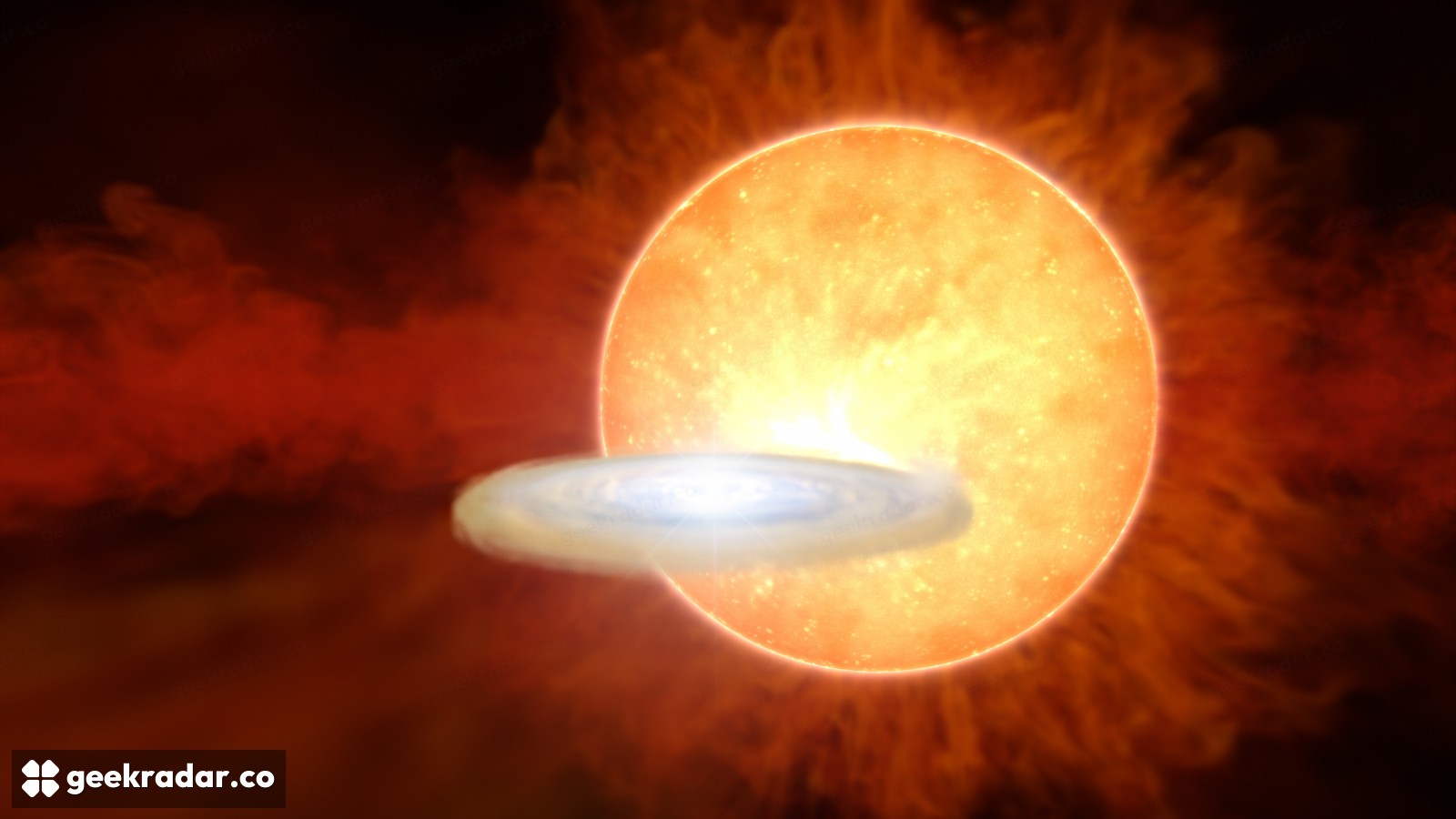
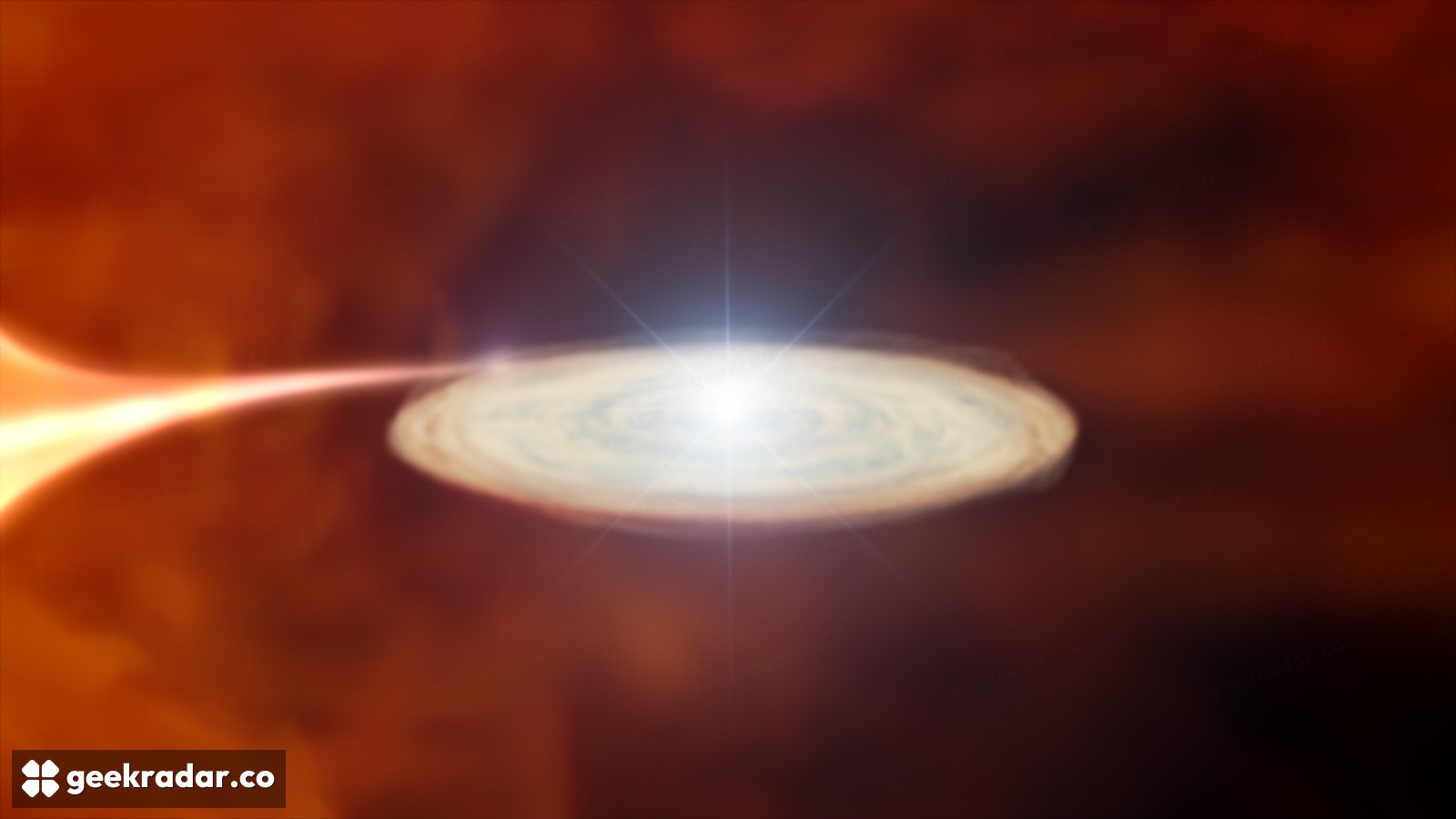
NASA’s model of T Coronae Borealis shows a red giant beside an object roughly the size of Earth. The small one is a white dwarf. Its gravity collects gas from the giant into a disk. As material works inward, hydrogen accumulates on the dwarf. Sufficient pressure and heat at the base of that layer can set off runaway fusion. The layer erupts and the underlying dwarf survives to accumulate fuel again. That survival distinguishes this system from the Type Ia supernova recently caught in another galaxy.
The two well-observed eruptions, in 1866 and 1946, were separated by 80 years. Adding another 80 lands neatly in 2026. The arithmetic says nothing about how much gas arrived in any one of the intervening years. The camera sees light from the system; it cannot inventory the hydrogen at the bottom of the layer.
Why December and 2029 can appear in the same paper
Songpeng Pei and colleagues examined more than the interval between eruptions. Before the 1946 event, the system dimmed. If a decline seen in 2026 corresponds to that earlier dip, their analysis leaves an eruption around December 2026 plausible. Under a different assumption, that the system continues to shine below its 2014–2023 high state, the team estimates a shortfall in accumulated material. In that scenario May 2029 is an approximate earliest date, not the month in which an eruption is expected. The two results answer different questions about the same unresolved fuel supply.
In a November interview with Space.com, NASA astrophysicist Elizabeth Hays pointed out that episodes of brightening and fading had already excited observers without leading straight into the main event. That is precisely where an apparently uneventful measurement earns its place. If a sharp rise is independently confirmed, the last faint observation and the first bright one will bracket when the change took place. The person who caught the Blaze Star still faint may help time its eruption as surely as the person who first sees it shine.