Google books New Glenn to launch rack-scale AI satellites in early 2029
An orbiting prototype has already sent back a poem. Before the dedicated launch, Google wants to see whether two satellites can exchange data fast enough to share the work.
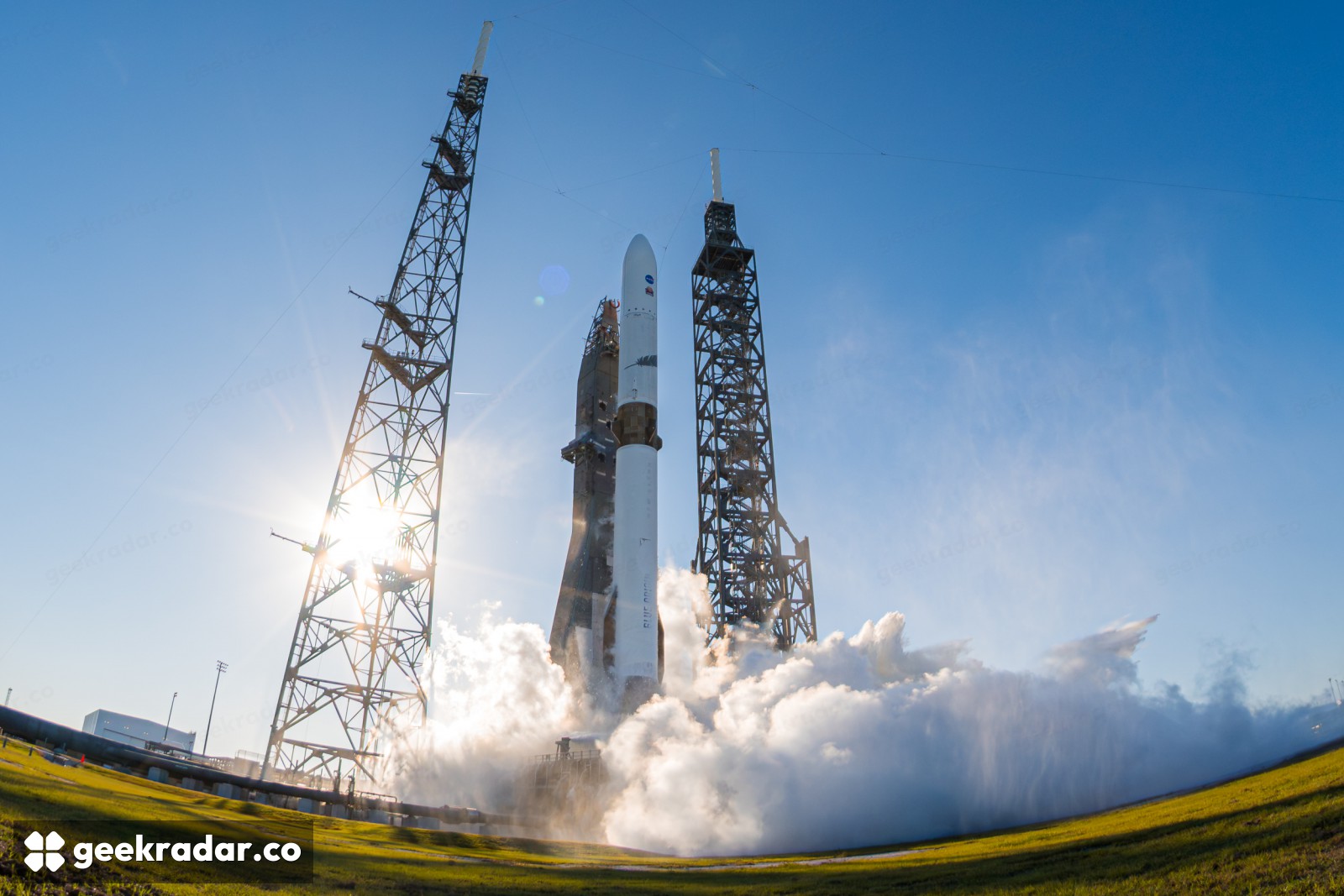
Google has booked Blue Origin’s New Glenn rocket for Project Suncatcher’s first dedicated heavy-lift launch. The target is the first quarter of 2029. Google says each satellite on the flight will carry roughly a data center rack’s worth of computing capacity into a sun-synchronous orbit. It has given neither a satellite count for the flight nor a benchmark for that rack comparison.
One of Google’s AI chips has already answered a prompt from orbit. The reason to send up several spacecraft is to find out whether their chips can do useful work together. A terrestrial data center can run a cable between racks. In Google’s design, the two ends of that connection are flying independently.
What came back over Svalbard
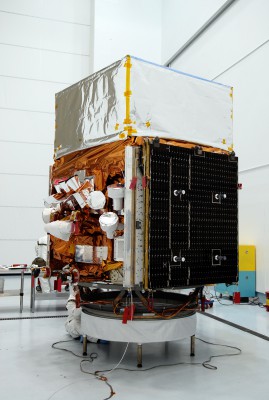
Google and satellite maker Planet sent the first prototype into space on October 1 on a SpaceX rideshare flight. After powering up its computing hardware, the team sent a prompt to a language model running on board. During a pass over Svalbard, the satellite returned a short poem. Google subsequently tried prompts about the technical status of the payload.
A poem is a modest output by design. Receiving it verified a whole chain of events: engineers could get a request to the spacecraft, execute the model on a tensor processing unit (TPU) and retrieve the result on the ground. That round trip says little about how many requests a satellite could handle continuously. Each calculation generates heat, and even in the cold of space there is no surrounding air to carry it away. Google is testing heat pipes and radiators to move heat from the chips and shed it into space. Its ground tests also exposed Trillium accelerators to a proton beam to study radiation effects.
What changes when a second satellite joins in
Google’s next planned experiment pairs two satellites in 2027. The engineering question shifts from cooling a single payload to keeping a fast optical connection aligned as both spacecraft move. More solar power can help run more chips. It cannot compensate for chips waiting on data held by a neighbor.
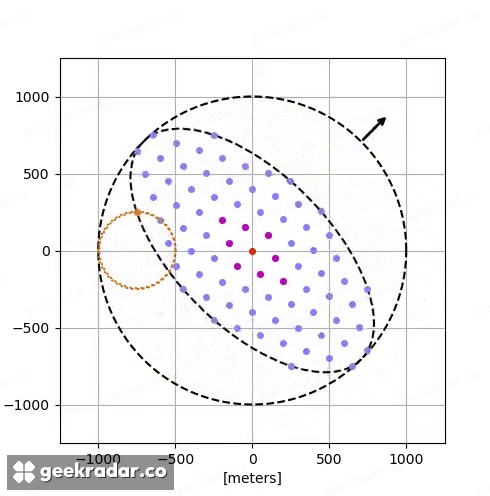
The accompanying figure shows one configuration Google Research simulated. It put 81 satellites in a cluster with a radius of about a kilometer at a mean altitude of 650 kilometers. The dots are plotted relative to the central spacecraft, so a neighboring dot can move in this picture even while the whole group follows the same path around Earth. The 81 are an example used to study orbital motion. They are not a passenger list for New Glenn.
The booking gives Google a way to lift several rack-scale payloads at once. The most informative step before that flight will involve just two: can a pair of moving satellites keep exchanging data fast enough for one machine to benefit from the other’s work?