Why Madrid heard Voyager 1’s first signal from one light-day away
The Spanish dish was already tracking Voyager when the signal arrived. Earth’s rotation put the other two stations below the spacecraft’s line of sight.
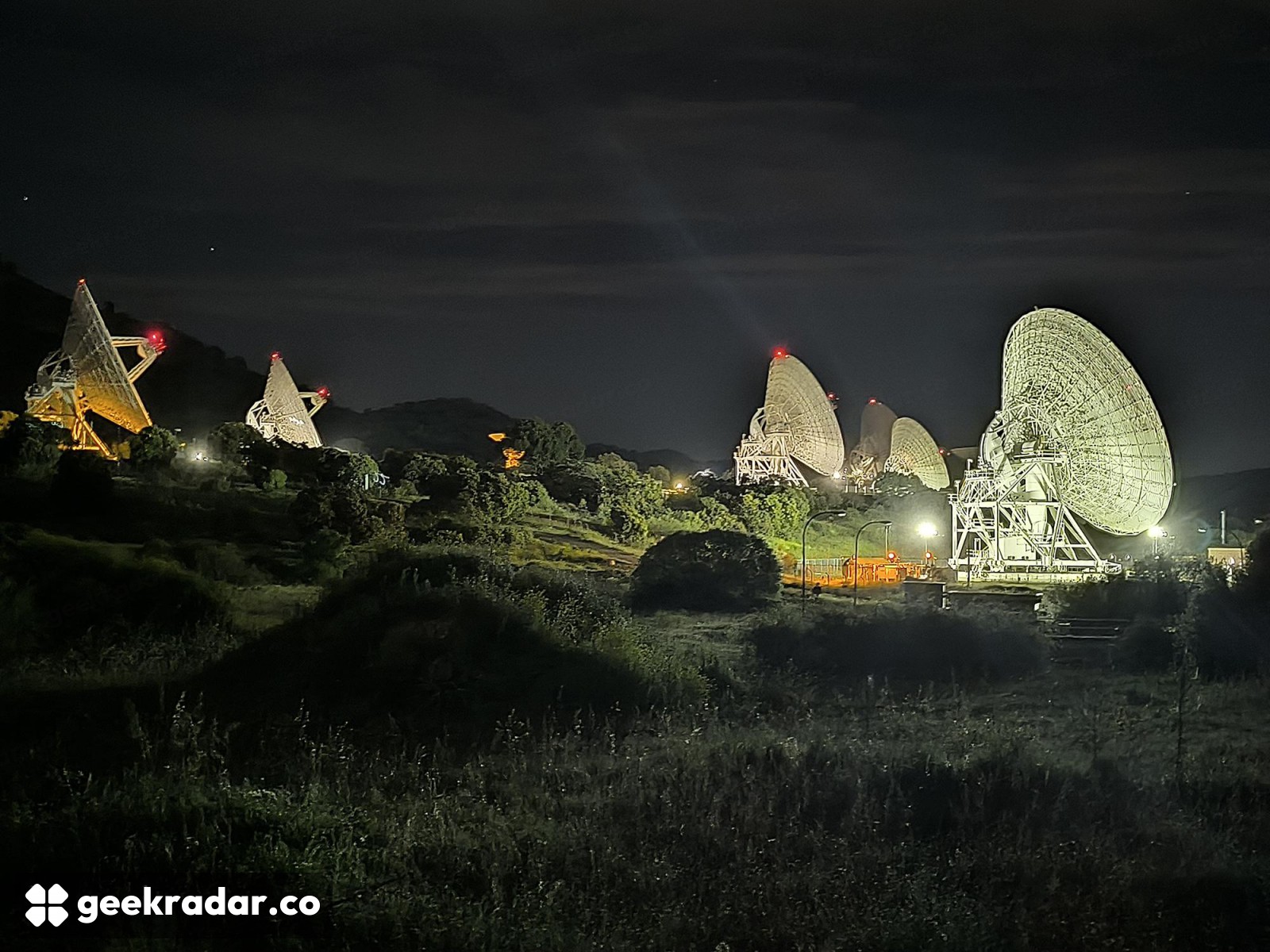
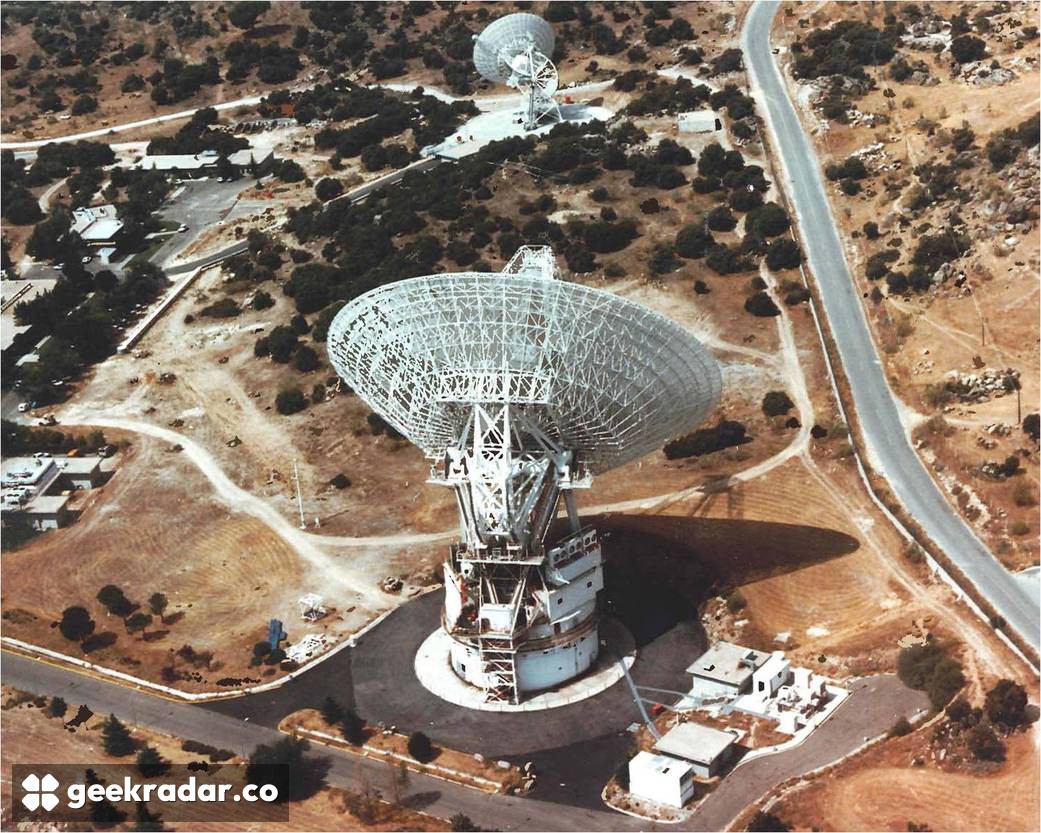
The 70-metre antenna at Robledo de Chavela, near Madrid, was already tracking Voyager 1 when a signal arrived on November 19 that had spent a full day crossing space. During a single pass, the dish went from receiving radio waves emitted before the spacecraft reached one light-day from Earth to receiving waves emitted after it.
That detail comes from station director David Muñoz, who described the pass to *El País*. NASA confirmed the distance using the radio carrier and its calculations of Voyager’s trajectory. The confirmation establishes where the spacecraft was. Engineers are still waiting for it to tell them how it is doing.
Why Madrid got the call
NASA’s Deep Space Network has stations near Madrid, Canberra and Goldstone in California. They occupy different longitudes so that as Earth turns, a distant spacecraft can rise above one station’s horizon while setting below another’s. At the moment the signal was due, Voyager was below the horizon at both Goldstone and Canberra. Madrid had the view.
The dish had been following Voyager since about 10 a.m. Spanish time, according to Muñoz. Just over an hour later, the signal from the milestone reached it. A station can schedule a pass like that because years of measurements give navigators a trajectory precise enough to predict where to point. Imagine looking at a clock beside the receiver. It tells you when the radio wave arrived. To say how far that wave travelled, you also need to know where the spacecraft was when it left.
A dish enlarged for Voyager
The antenna that heard the signal has grown during the spacecraft’s lifetime. Madrid’s Deep Space Station 63 entered service as a 64-metre dish. In 1987, engineers enlarged it to 70 metres for the Voyager programme. That sounds like a small change across such a wide structure. But the area of a circle grows with the square of its diameter. Those extra six metres added about a fifth to the dish’s geometric collecting area.
Voyager’s transmitter still provides a carrier that ground antennas can follow. The science and engineering data normally encoded on it stopped arriving earlier in November. A lock on that carrier tells engineers that Voyager can still aim its antenna and broadcast across the gap. It gives them no fresh instrument readings.
For the team at Robledo, the November 19 pass answered a question with an unusually precise time attached. For colleagues diagnosing the fault in California, the important consequence is how long the next question takes. A command sent today can reach Voyager tomorrow. Even if the spacecraft answers at once, the team must wait until the day after to hear it.