How the IEA estimated 17 GW of AI data centre capacity from space
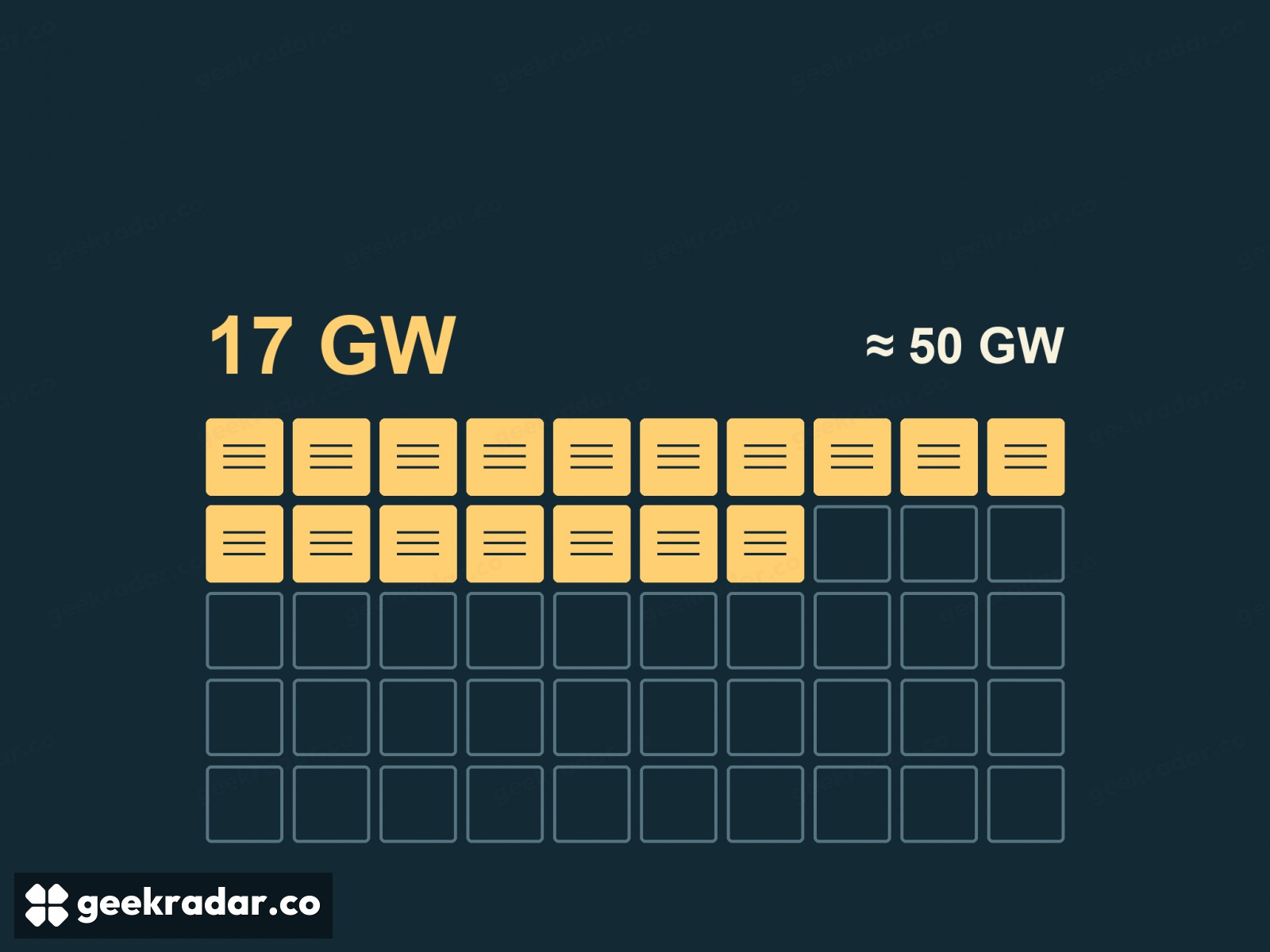
The IEA estimates the same sites could reach about 50 GW at completion. A roof visible from orbit, a grid connection request and a meter reading each tell a different part of the story.
A satellite can see a new data hall before anyone outside the company knows how many servers are running inside it. The International Energy Agency used that difference to track 93 large sites being built specifically for AI. By September 2026, the buildings it could identify suggested about 17 gigawatts of potential capacity, ten times the estimate two years earlier. The same sites would add up to around 50 GW if completed. Neither number tells you how much electricity those servers used last night.
The figures appear in the IEA’s *World Energy Outlook 2026*, released on November 19. They capture something that chip sales and corporate announcements each miss. A sale can tell investors that someone bought computing hardware. An announcement can put a final capacity on a campus that has yet to open. Satellite images add a third piece of evidence: how much of the site has actually taken shape.
What the roofs can tell us
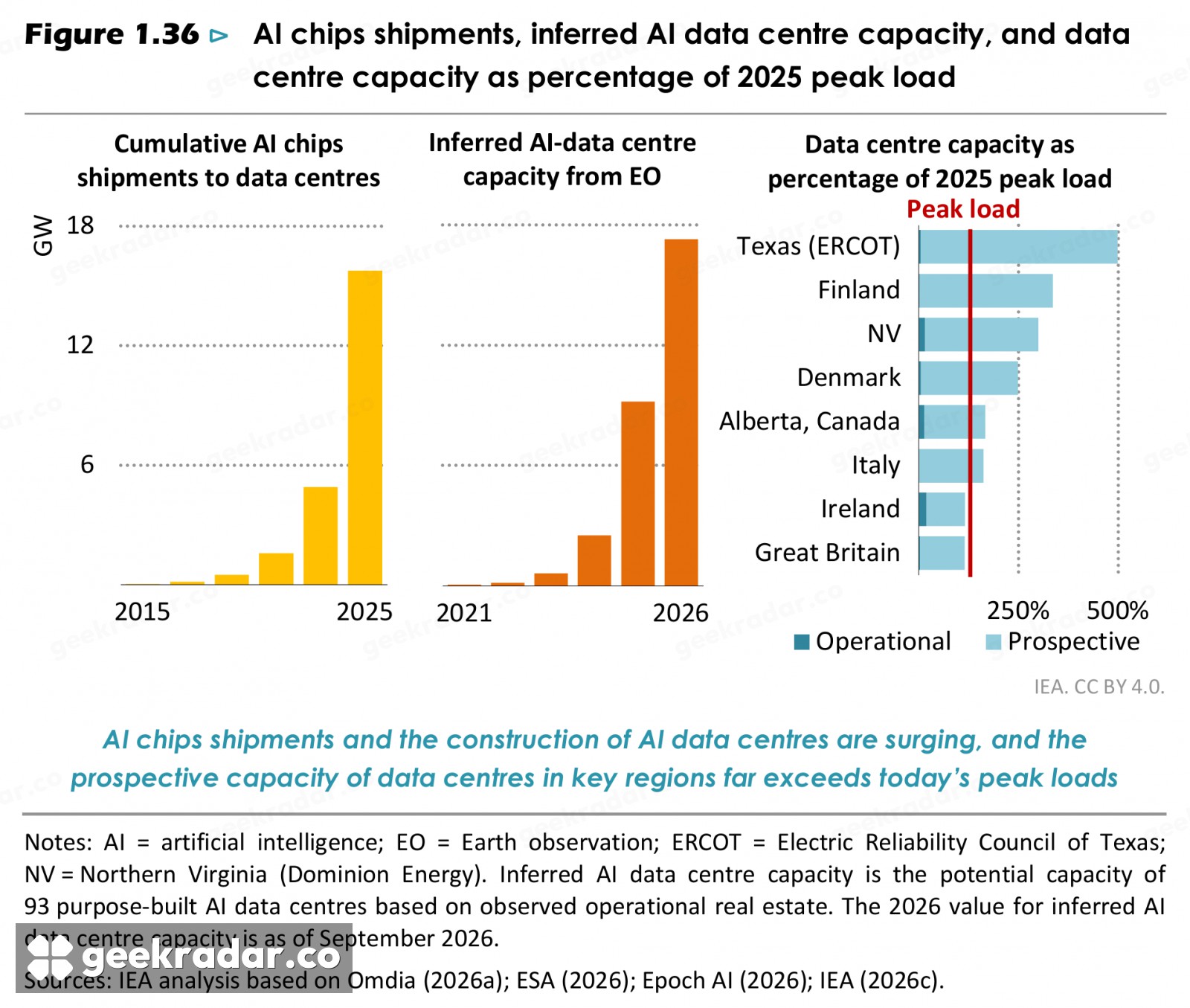
The IEA calls its September figure an inference from “observed operational real estate.” That qualification matters. Buildings are visible from space. The number of chips installed in a hall, the jobs they are running and the reading on the electricity meter are not. An extra building can therefore raise the capacity estimate before it makes a comparable difference to demand on the grid.
There is a useful scale check in the same report. The IEA puts the combined capacity of all the world’s data centres at roughly 120 GW today. The 93 sites form a selected group of purpose-built AI facilities. Adding their entire projected 50 GW to that 120 GW would count some existing capacity twice and mix a future estimate with a present one. Nor does a count of 93 tell us how many other AI sites exist.
A connection request leaves a different trace
The right-hand panel of the IEA’s figure 1.36 poses a different question. It compares operational and prospective data-centre capacity with the peak demand local grids faced in 2025. In Texas, the prospective capacity dwarfs the peak on the ERCOT grid. That makes the pipeline important to a planner even though the IEA explicitly says some projects will never be built. The figure is reproduced under CC BY 4.0.
A grid operator has to decide which proposals justify new connections and equipment, often years before every customer is ready to switch on. The IEA describes rules that give priority to credible applications and arrangements under which facilities agree to operate flexibly. A campus that can reduce its draw when the grid is under strain asks something different of the network from one that needs its full allocation at any hour.
The distinction also helps place Nvidia’s data-centre revenue in context. A chip supplier can record a sale, a satellite can register a completed roof and a grid operator can receive a connection request. All three can be right about the same project at different moments. For the people planning the substation that will serve it, the date that matters most is when that building starts drawing power.