NASA can hear Voyager 1, but its science and engineering data have stopped
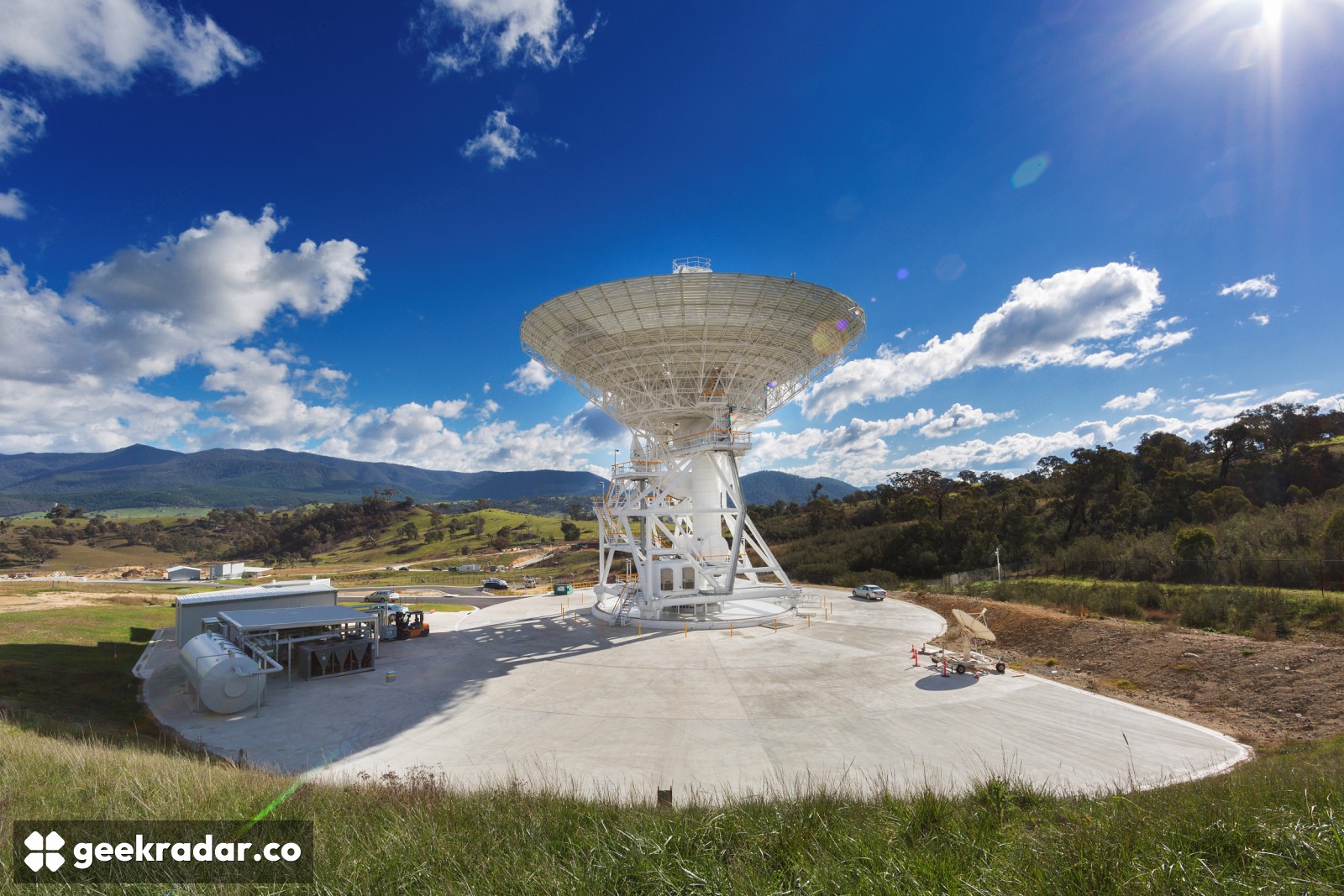
A radio antenna in Canberra still picks up the spacecraft’s carrier. That tells engineers the dish is pointed at Earth and narrows the search for the missing readings.
A radio antenna near Canberra picked up Voyager 1 right where engineers expected to find it. What was missing was everything the spacecraft usually sends about itself. NASA says its team learned on November 14 that the probe was transmitting a radio carrier without science or engineering data. That leaves controllers able to hear Voyager across nearly 26 billion kilometres, with no fresh instrument readings or status reports to tell them what went wrong.
In its November 18 mission update, NASA narrowed the investigation to the path that prepares data for transmission. The carrier is evidence that the spacecraft can still point its antenna toward Earth and broadcast. Those are demanding operations for a probe launched in 1977, and both must work before any measurement can reach the ground. Farther upstream, a computer gathers readings from the instruments and other systems and formats them for the downlink. NASA suspects that part of the chain. It has yet to identify a failed component.
A signal can still mark the distance
Voyager crossed the one-light-day mark on November 18. NASA planned to confirm the milestone on November 19, once the signal from that distance could reach Earth. Its trajectory is already well established from years of tracking. Engineers can use the carrier alongside those calculations even while the science instruments have no way to report what they measured. Our guide to Voyager’s light-day explains the timing.
That distinction matters for the investigation. During an earlier interruption in October, contact disappeared altogether for about 48 hours and returned on its own. This time there is a signal to track. Engineers are investigating whether the episodes are connected.

An earlier recovery offers a clue
In 2023, readable data also stopped arriving. Engineers eventually traced that fault to a memory chip in the flight data subsystem. Some of the software that assembled Voyager’s reports had been stored on the damaged chip. There was room for the code elsewhere, but no single free area was large enough. The team split it up and adjusted the instructions so the pieces could still find one another. In April 2024, engineering readings began to arrive again.
That history gives the team a place to look. It also shows why a familiar symptom falls short of a diagnosis. At today’s distance a command spends roughly a day travelling out, and the earliest possible reply spends another day coming back. NASA says an investigation could take weeks or longer. The carrier will let the team mark Voyager’s distance from Earth. The message the engineers want most is the first one that tells them how the spacecraft is doing.