Molten’s Oakland plant turns methane into battery graphite and hydrogen
A working demonstration reactor opens a different route to anode material. Its battery specifications and environmental claims need to be read at the right scale.
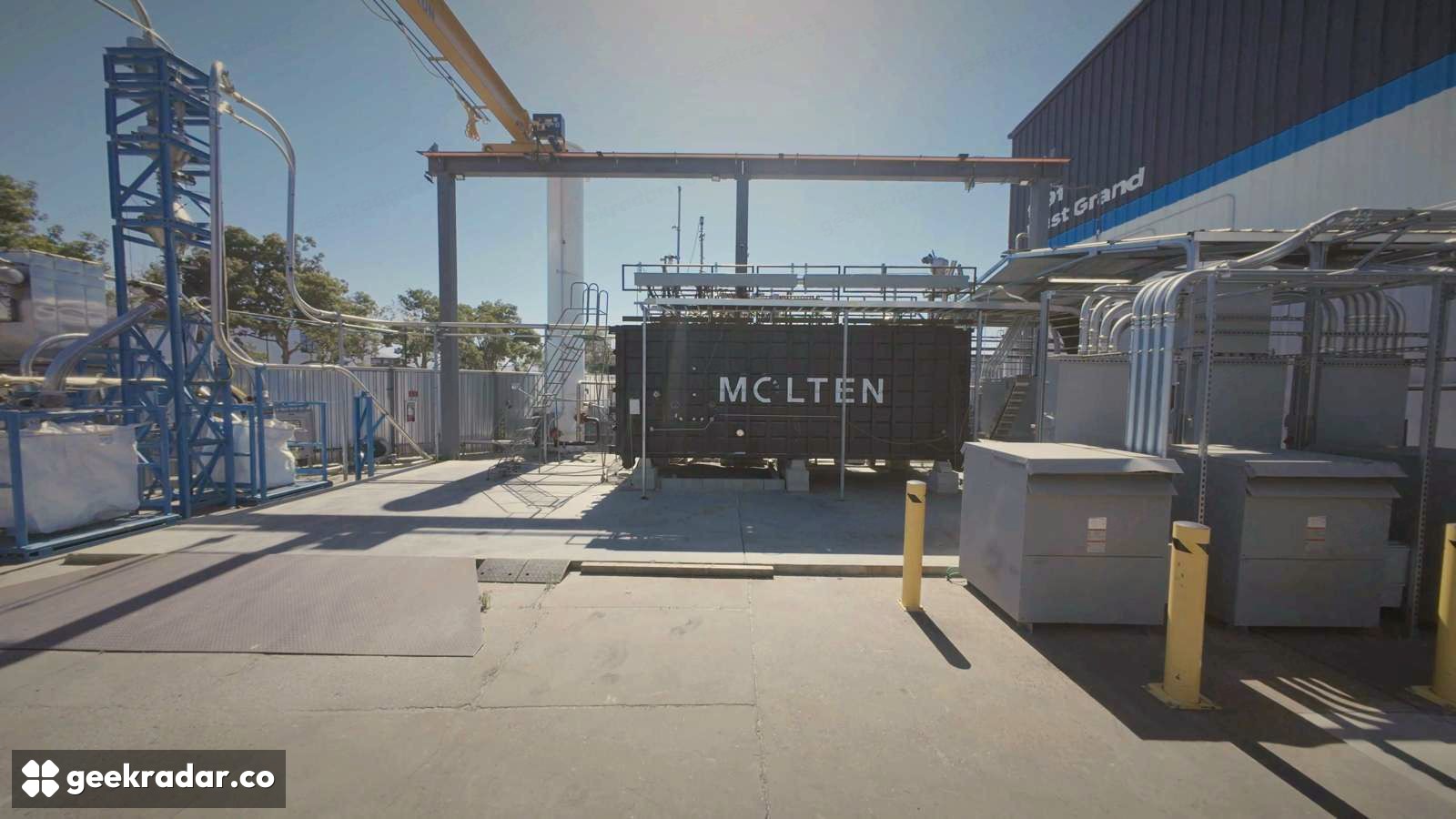
Molten Industries says its Oakland demonstration plant is running, turning natural gas into graphite and hydrogen. The immediate significance is a new production route for a battery ingredient: the company is trying to make the carbon useful enough to sell into an anode supply chain, alongside the hydrogen produced in the same reaction.
Molten describes the plant as a single full-scale modular reactor. That is a concrete industrial milestone. It does not, on its own, establish the price, emissions or battery performance of a future fleet of factories.
Keep the carbon instead of burning it
Methane contains one carbon atom and four hydrogen atoms. Heat can split it without adding oxygen, producing solid carbon and hydrogen gas. In the idealised reaction, CH₄ becomes C + 2H₂. The carbon has not disappeared; it has changed form.
That explains why this route, called methane pyrolysis, can avoid directly producing carbon dioxide in the reaction. The Congressional Research Service’s overview of hydrogen production describes the same chemical distinction. It also makes clear that the resulting carbon can serve different industrial uses. Producing a carbon solid and producing a material suitable for a particular battery are separate achievements.
The useful economic idea is that both outputs have a job. A process that creates a difficult waste stream faces a different proposition from one whose second output meets a customer’s specification. That still leaves the practical question of finding dependable demand for both products, at the volumes and locations where they are made.
What a graphite specification can tell you
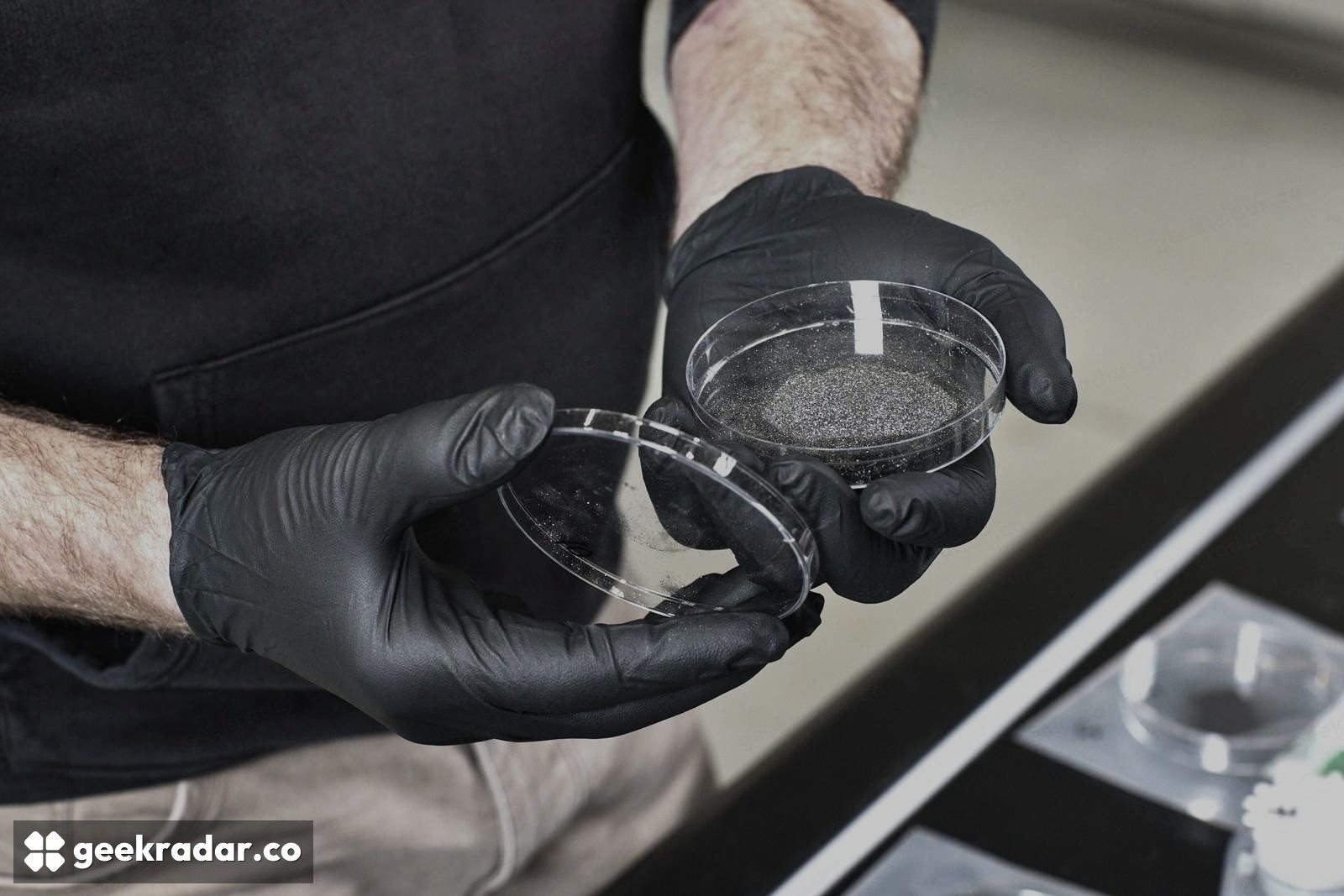
Molten’s product table lists three MG-series graphite grades. For MG-1-17, it gives a typical capacity above 358mAh/g and a median particle-size range of 15.5–18.5 micrometres. These are supplier specifications, not independent results for a finished battery.
The unit matters. Milliamp-hours per gram describe charge capacity relative to the mass of the specified material. They are not watt-hours per kilogram of a complete cell, and cannot be read as the range of an electric car or the endurance of a phone. A battery also contains the other electrode, electrolyte, separator, current collectors and packaging.
The US Department of Energy’s battery explanation provides the useful baseline: lithium ions move between the electrodes while electrons flow through the external circuit. During charging, ions move towards the anode; discharge reverses that movement. An anode material therefore participates in a repeating electrochemical system, rather than acting as an interchangeable lump of carbon.
That is why a new material supplier belongs in the broader story of battery technology, even without a new consumer device. Its contribution may be changing how an existing component is made. Whether that becomes a better cell depends on the complete design and its measured behaviour.
The emissions boundary extends beyond the reactor
The CRS report explicitly identifies upstream natural-gas emissions and the electricity supply as factors in pyrolysis’s overall footprint. A reaction without direct CO₂ production can still depend on a supply chain that emits greenhouse gases. Conversely, that qualification does not erase a genuine reduction at the reactor; it defines what a complete comparison must count.
For this plant, the evidence reviewed does not establish an independently audited lifecycle result. Nor should a general emissions range for pyrolysis be assigned to Molten as though somebody had measured this particular installation. The same discipline applies to economics: a promising production method is not a verified delivered price for every customer.
Oakland’s importance is practical. It puts a different route to battery material into operation, where consistency, operating costs and customer requirements can meet. The meaningful payoff would be graphite that battery makers can repeatedly use, at a competitive delivered cost, with a measured environmental advantage. A working reactor brings that question closer to an answer; the answer belongs in the material and the numbers it produces.