Suomi NPP’s final job is to leave orbit deliberately
NOAA plans a December descent for the weather satellite. Its retirement shows why an end-of-life maneuver belongs in the mission design.
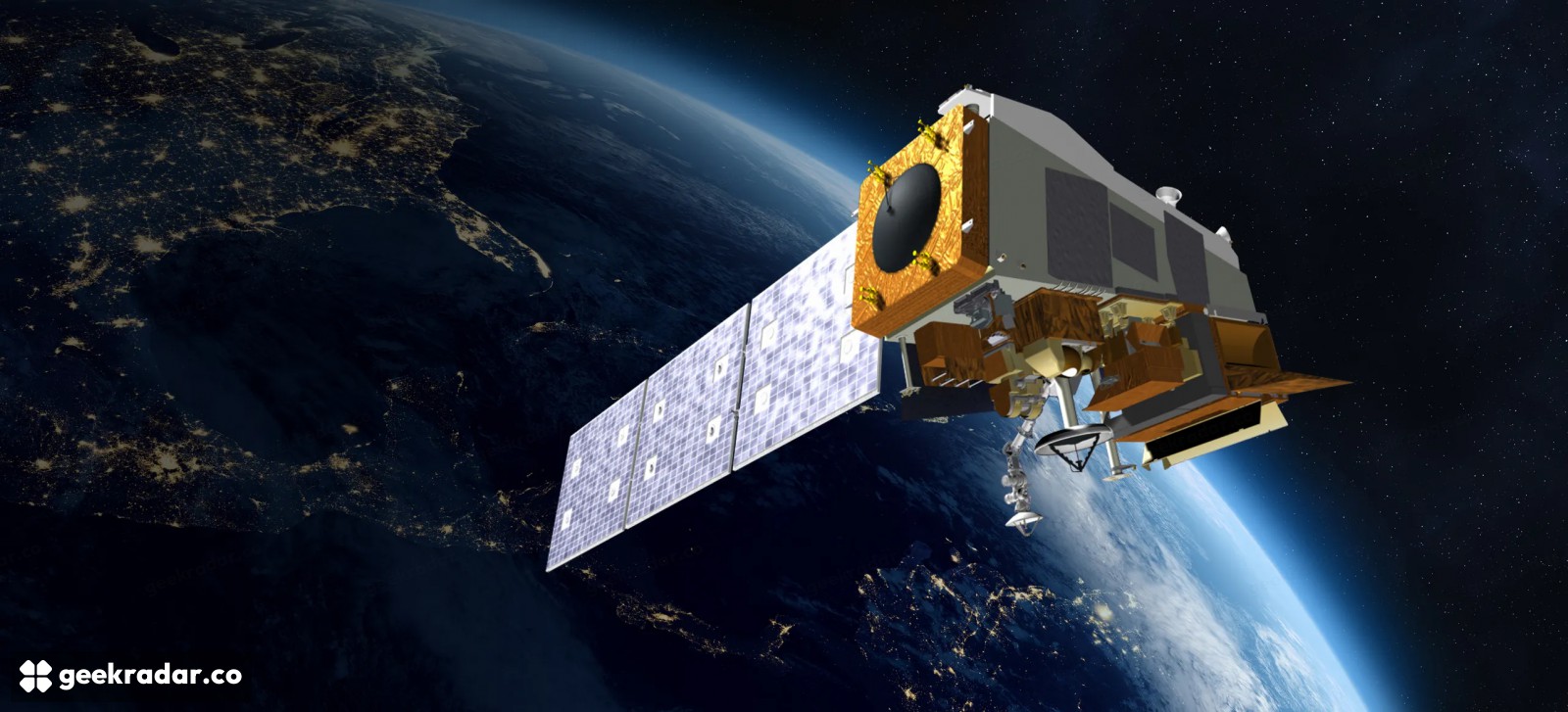
NOAA plans to begin bringing Suomi NPP out of orbit on December 1, ending a weather-observation mission launched in October 2011. The descent is expected to take about 12 days, with the final reentry targeted over a remote part of the South Pacific. This is a planned retirement, not a satellite already falling uncontrolled.
The October 19 announcement describes a spacecraft that has substantially exceeded its original five-year design life. Its last useful operation will be different from collecting another image: using its remaining control capability to reduce the long-term burden it leaves in orbit.
Retirement is part of managing a constellation
Suomi NPP helped demonstrate instruments for the Joint Polar Satellite System. Polar-orbiting weather satellites build repeated observations across the planet as Earth turns beneath their paths. That role complements a geostationary satellite's persistent view of a particular region.
The constellation has newer spacecraft. NOAA-21 became the primary satellite in 2024, with NOAA-20 providing the secondary role and Suomi NPP supplying tertiary observations. Its retirement therefore should not be described as NOAA abandoning polar weather monitoring. It is a change in the supporting fleet as an older spacecraft's instruments and systems age.
The operational tradeoff is familiar beyond spaceflight. Keeping an old system running can preserve useful capacity, but waiting until it can no longer be controlled may remove the option of retiring it cleanly. A satellite makes that tradeoff unusually visible because the retired hardware remains in a shared physical environment.
A controlled ending still requires active work
The plan calls for altitude reductions of about 50 kilometers at intervals, followed by a final maneuver from an orbit around 200 kilometers high. The exact operational sequence remains a plan until carried out. A date in a retirement announcement is not proof that each future maneuver has succeeded.
There is a reason to lower the orbit deliberately rather than simply switch the satellite off. An inactive object can continue occupying orbital space long after its instruments stop contributing. Planned disposal limits that continuing presence while the operator still has a way to influence the outcome.
That does not mean every part necessarily disappears in the atmosphere. NOAA's choice of a remote reentry region explicitly accounts for surviving debris. The meaningful claim is risk management through a controlled process, not a promise that physics produces no remnants.
The record remains after the spacecraft
Suomi NPP observations have supported work on storms, fires, sea ice and other environmental changes. Those records do not vanish when the mission ends. The distinction between a spacecraft's operating lifetime and the usefulness of its archive matters for long-term science, where an older observation can become more valuable as a comparison point.
Our reporting on smoke over New Guinea shows how satellite evidence can make a large environmental event legible. The space archive also follows the machines that collect it. Suomi NPP's retirement connects the two: preserve the observations, while making a deliberate plan for the hardware that produced them.