NASA asks industry how to extend Hubble’s life—and end it safely
A request for information explores reboost, servicing and controlled disposal. No commercial mission has been selected.
NASA is asking commercial companies how they could extend Hubble’s working life—or help end it safely. The request covers raising the telescope’s orbit, servicing it and arranging controlled re-entry or another disposal option. It is a request for information, not an awarded rescue mission.
The urgency comes from an ordinary feature of low Earth orbit. Even at Hubble’s altitude, traces of atmosphere create drag. The telescope has no propulsion system to maintain its own orbit, so remaining scientifically useful and remaining safely in orbit are two different engineering questions.
An orbit deadline, rather than a science expiry date
In its October 30 announcement, NASA says analysis places Hubble’s likely atmospheric re-entry in the 2033–2034 period. The agency anticipates that an intervention would need to take place by 2032. Those estimates describe planning conditions; they do not announce that observations stop on a particular day.
The industry request remains open until November 30 at 20:00 UTC. Asking for capabilities gives NASA a way to compare proposed approaches before deciding what is technically and financially plausible. It does not establish a chosen spacecraft, company, launch date or funded servicing design.
These possibilities should not be collapsed into one promise. A vehicle able to move the telescope may not be able to repair instruments. A safe end-of-mission system answers a different requirement from a mission intended to deliver additional years of observations.
Why an old telescope remains worth discussing
Hubble continues to produce observations such as the recent galaxy image whose central subject is easy to overlook. That is the scientific side of the equation: the observatory can still supply useful evidence. The engineering side asks how much additional science a proposed intervention could preserve, at what cost and with what operational risk.
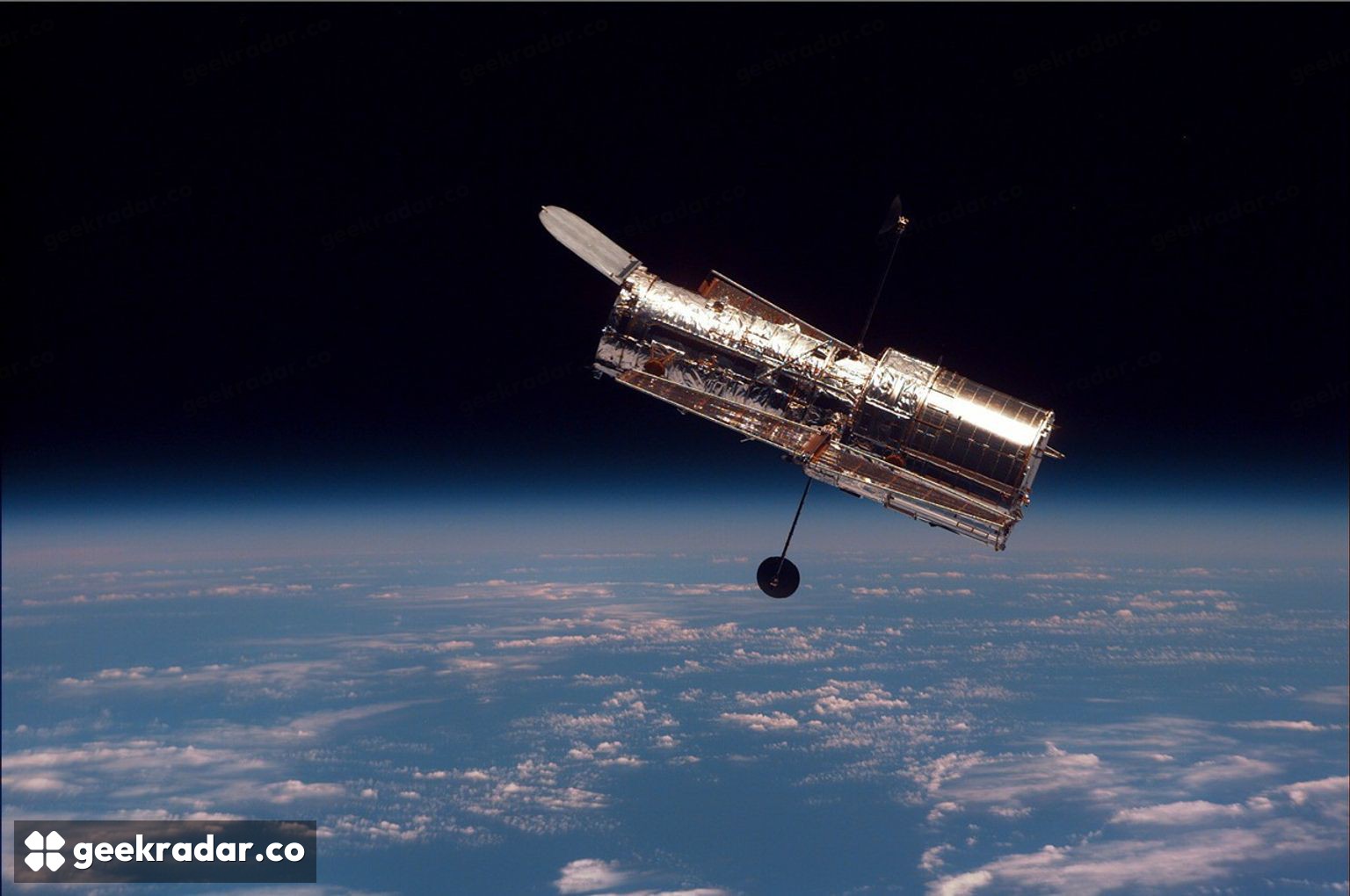
The historical photograph accompanying the announcement shows Hubble after its second servicing mission in 1997. It is a reminder that the telescope has been maintained before, rather than a picture of a newly selected commercial vehicle. A future proposal has to be assessed on its own capabilities; the existence of earlier servicing flights does not make today’s alternatives interchangeable with them.
NASA and ESA operate Hubble as an international scientific partnership. The decision therefore matters beyond the country paying for a particular mission: continued access to the observatory supports researchers and observing programs across borders.
The useful outcome of this request will be a credible comparison between extra scientific life and a controlled ending. Hubble does not need a dramatic rescue headline. It needs a plan that treats both the discoveries still possible and the eventual return to Earth as real engineering obligations.