Vega Island’s bare ice shows why the season of a satellite image matters
NASA’s two views reveal a striking surface difference, but they are not a same-season annual comparison.
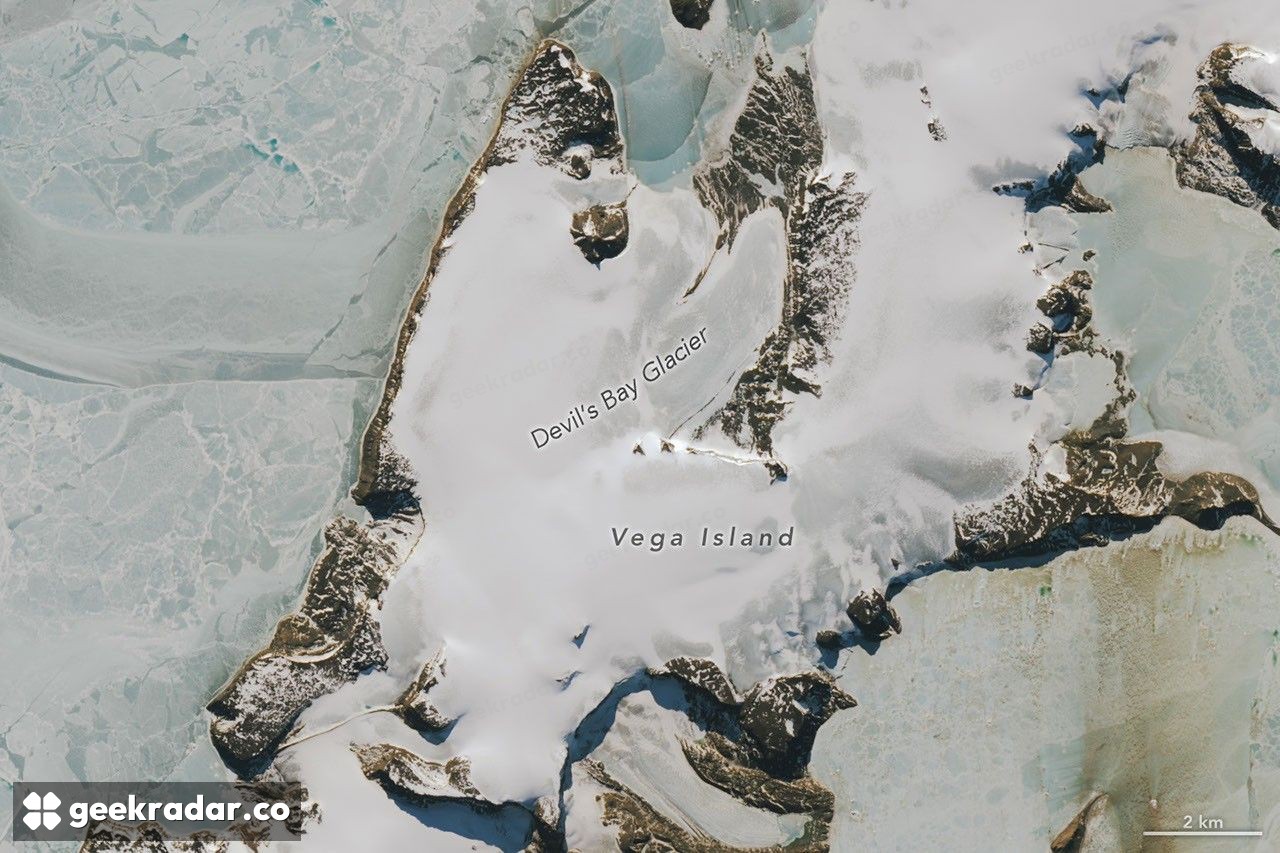
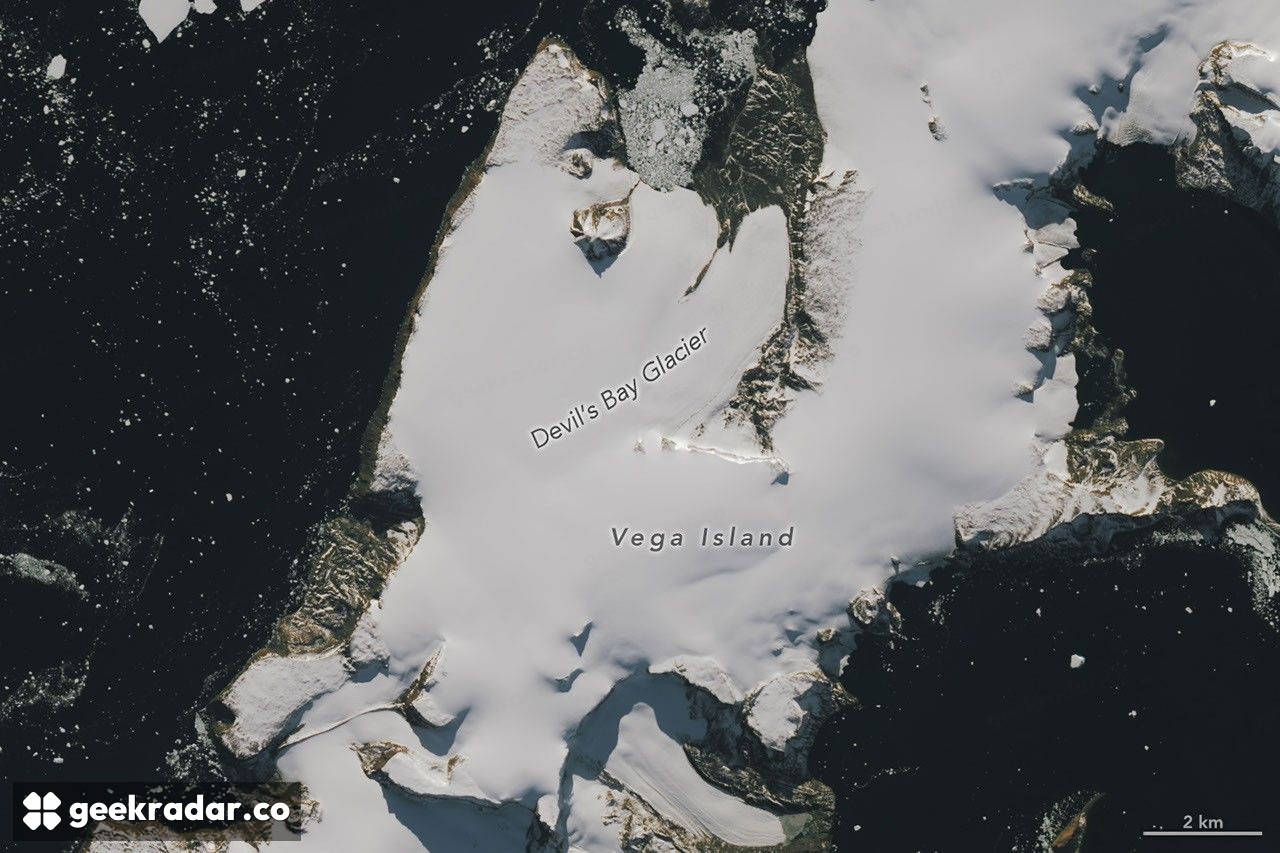
Vega Island’s skull-like outline makes an arresting Halloween image, but the more consequential detail is the surface around it. In NASA’s October 30 comparison, broad areas that were snow-covered in March 2025 appear as darker exposed ice in October 2026.
The Landsat 9 images show an Antarctic island east of the peninsula. A rock outcrop supplies the apparent eye socket, a moraine the mouth and the Devil’s Bay Glacier the jaw. The resemblance draws attention to real terrain; it should not distract from the dates printed beneath the pictures.
This is not a matched annual measurement
The observations were acquired on March 22, 2025, and October 10, 2026. They represent the start of austral autumn and spring, not the same point in consecutive years. NASA explains that clouds obscured the island in March 2026, preventing the cleaner comparison a reader might assume.
That limits what can be calculated from the pair alone. It does not make the exposed ice uninteresting. NASA quotes glaciologist Mauri Pelto’s interpretation that unusually warm winter conditions, limited accumulation, sublimation and wind scouring contributed to the scarcity of snow visible in October.
The images document a surface condition; the explanation of its causes draws on additional observations and expertise. Keeping those two steps separate avoids turning an evocative before-and-after into a complete climate analysis.
The surface affects what happens next
Snow and bare ice do not absorb sunlight equally. Darker exposed ice takes in more solar energy, making the surface cover relevant as the Southern Hemisphere moves toward longer, warmer days. A fresh layer of snow can change that immediate balance even without restoring all the glacier mass lost over previous years.
NASA also points to longer-running work on the island, including monitoring of Devil’s Bay Glacier since the 1998–99 austral summer. That record, rather than a single seasonal image pair, is the appropriate context for the reported long-term decline in glacier mass.
The picture succeeds at attracting a second look. What rewards that look is the transition from a familiar shape to an unfamiliar physical process: the pale covering is not merely decoration on the ice. It changes how much of the coming season’s sunlight the surface absorbs.