Odyssey reaches 25 years at Mars, with a second job behind the rover pictures
NASA’s veteran orbiter built a thermal record of Mars and helps surface missions send their discoveries home. Longevity has become part of the infrastructure.
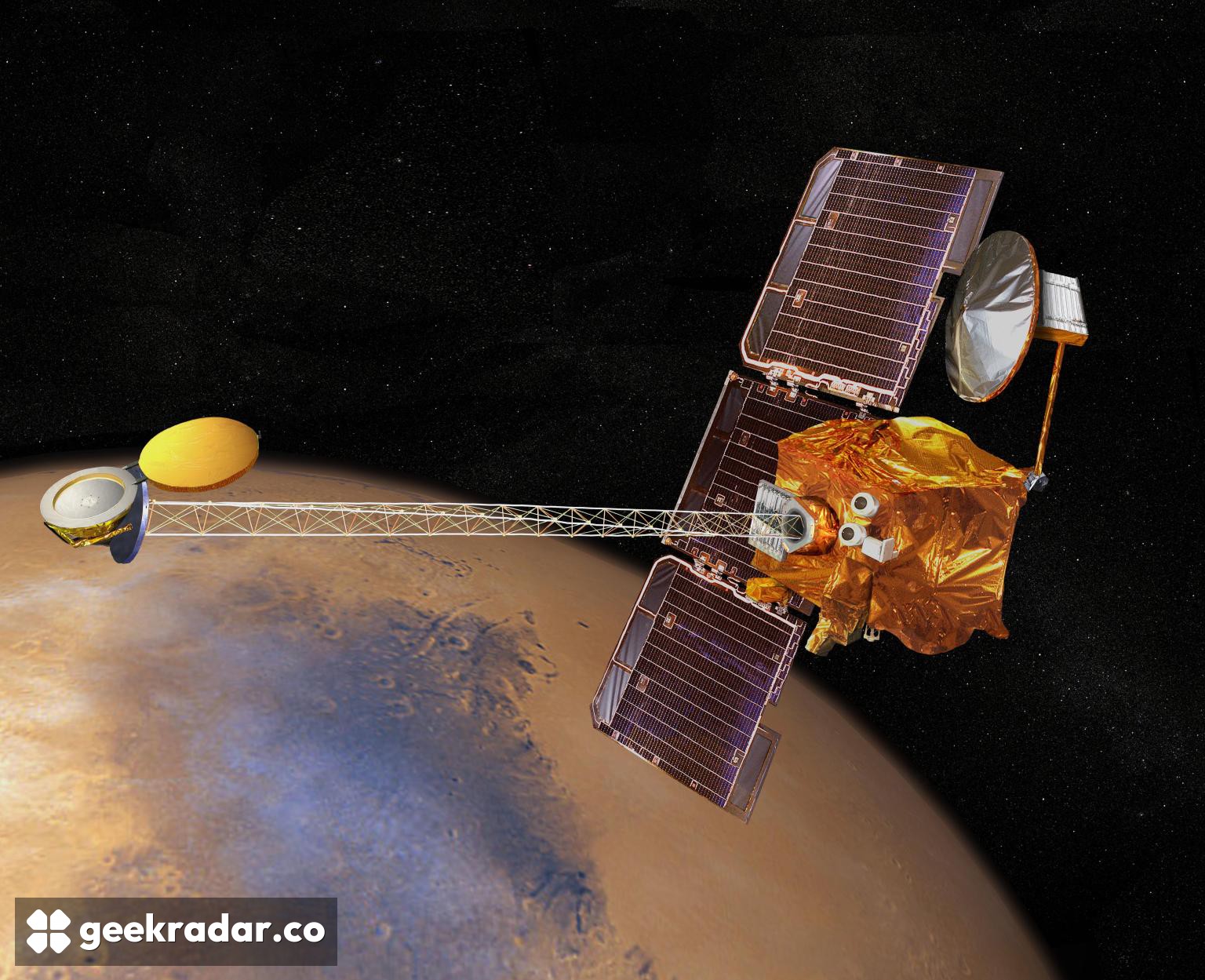
On October 24, NASA's Odyssey spacecraft reaches 25 years in orbit around Mars. Its longevity matters for more than an anniversary: the mission has built a thermal record that can reveal how the planet changes, while also helping messages from the surface reach Earth. Some of the newest discoveries depend on a spacecraft that arrived in 2001.
NASA's anniversary account describes more than a million images from THEMIS, the Thermal Emission Imaging System. A long record changes what an instrument can do. One observation can identify a feature; repeated observations allow researchers to compare seasons, illumination and surface behavior instead of treating every image as an isolated discovery.
Heat supplies information that visible light misses
THEMIS observes Mars in visible and infrared wavelengths. The infrared view is valuable because materials warm and cool differently. A landscape that looks similar in a conventional photograph can have a different thermal signature, supplying clues about its surface properties.
Odyssey also helped map water associated with the upper meter of the Martian surface. That contribution should not be confused with a photograph of an underground reservoir, or a guarantee that a particular location contains easily extractable water. Different instruments answer different questions, and the distance between identifying a resource and using it remains substantial.
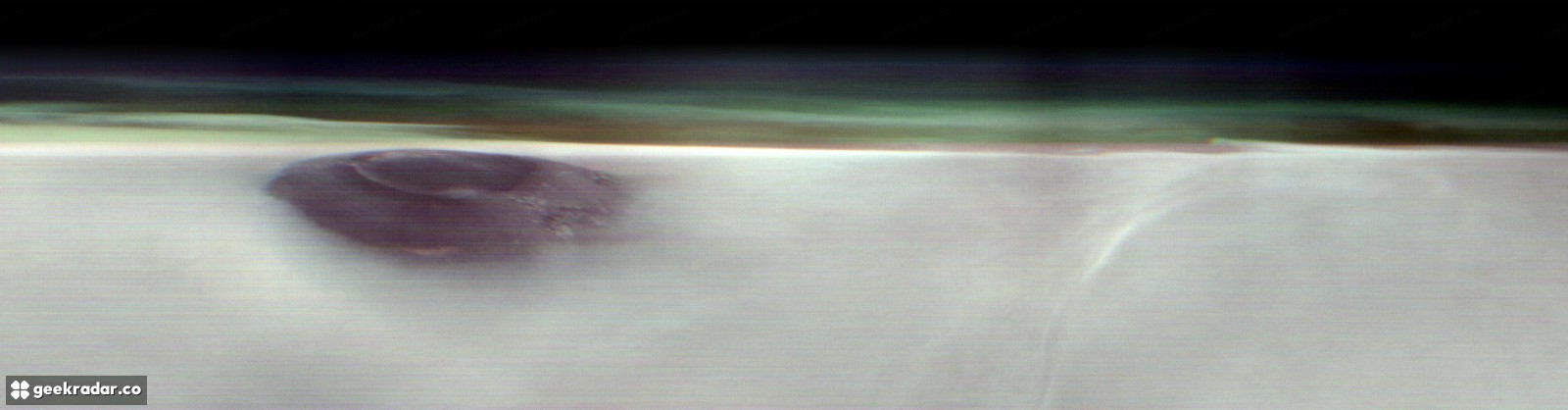
The mission's recent horizon views offer another perspective. Looking along the atmosphere rather than straight down makes its vertical structure visible. NASA describes months of planning behind such observations: an unfamiliar viewing angle is an operational choice for a spacecraft with power, pointing and communications constraints, not simply a different camera filter.
Why an orbiter sits between a rover and your screen
Odyssey also belongs to the Mars Relay Network. Surface vehicles can transmit data to an orbiter using an ultra-high-frequency radio link. The orbiter then forwards the information toward Earth, where the Deep Space Network receives it.
This arrangement takes advantage of the larger antennas and greater power available in orbit. NASA describes surface-to-orbiter links reaching up to two megabits per second. That figure is a link capability, not a continuous internet connection: a rover must have a useful pass, compatible equipment and an agreed communications opportunity.
The practical result is a division of labor. A rover can spend its mass and energy budget on driving and science while orbital infrastructure handles much of the long-distance relay. The work of Perseverance therefore belongs to a wider system of spacecraft, ground antennas and scheduled contacts.
Longevity has an operational consequence
It is tempting to describe an old spacecraft as a bonus once its original mission is complete. That becomes less adequate when other missions benefit from its continued operation. An additional relay opportunity can help move scientific data; losing one changes the network's options even if another orbiter remains available.
That does not make Odyssey a permanent service or guarantee another decade. It explains why a mission's age is relevant to both science and infrastructure planning. The anniversary marks a durable instrument, but also a dependency worth understanding.
Mars exploration is usually pictured as the rover at the center of a dramatic landscape. Odyssey's quieter achievement is that, for a quarter of a century, it has helped give that landscape both a history and a route home.