The ISS has installed its final roll-out solar array, completing a five-year power upgrade
Eight new arrays raise stated generating capacity to about 215 kilowatts. The final deployment followed 18 supporting spacewalks.
The International Space Station has completed its roll-out solar-array upgrade. Astronauts Anil Menon and Joshua Kutryk installed and deployed the eighth and final new array on November 5, bringing the programme's stated generating capacity from 160 kilowatts to approximately 215 kilowatts.
The NASA spacewalk report places the installation on the station's 3B power channel. The six-hour, 59-minute excursion closes a sequence that began in February 2021 and required 18 spacewalks to prepare the power channels and fit eight arrays. It is the completion of an upgrade programme, not the construction of an entirely new station power system.
The last array closes a five-year sequence
The previous milestone, the seventh array's deployment, left one installation outstanding. Completing that last channel matters because the additional power is now the result of installed hardware rather than a projection dependent on another spacewalk.
The stated increase is about 55 kilowatts, roughly one-third above the earlier 160-kilowatt figure. These are generating-capacity numbers. They should not be interpreted as a promise that every experiment continuously receives more power or that the station produces the same output at every point in its orbit.
Electricity on an occupied orbital laboratory has several jobs before it reaches a new instrument. Systems supporting the station and its crew must keep operating, while research equipment competes for resources within operational planning. More capacity gives that planning additional room; it does not eliminate the need to allocate power.
Unrolling is only the visible finish
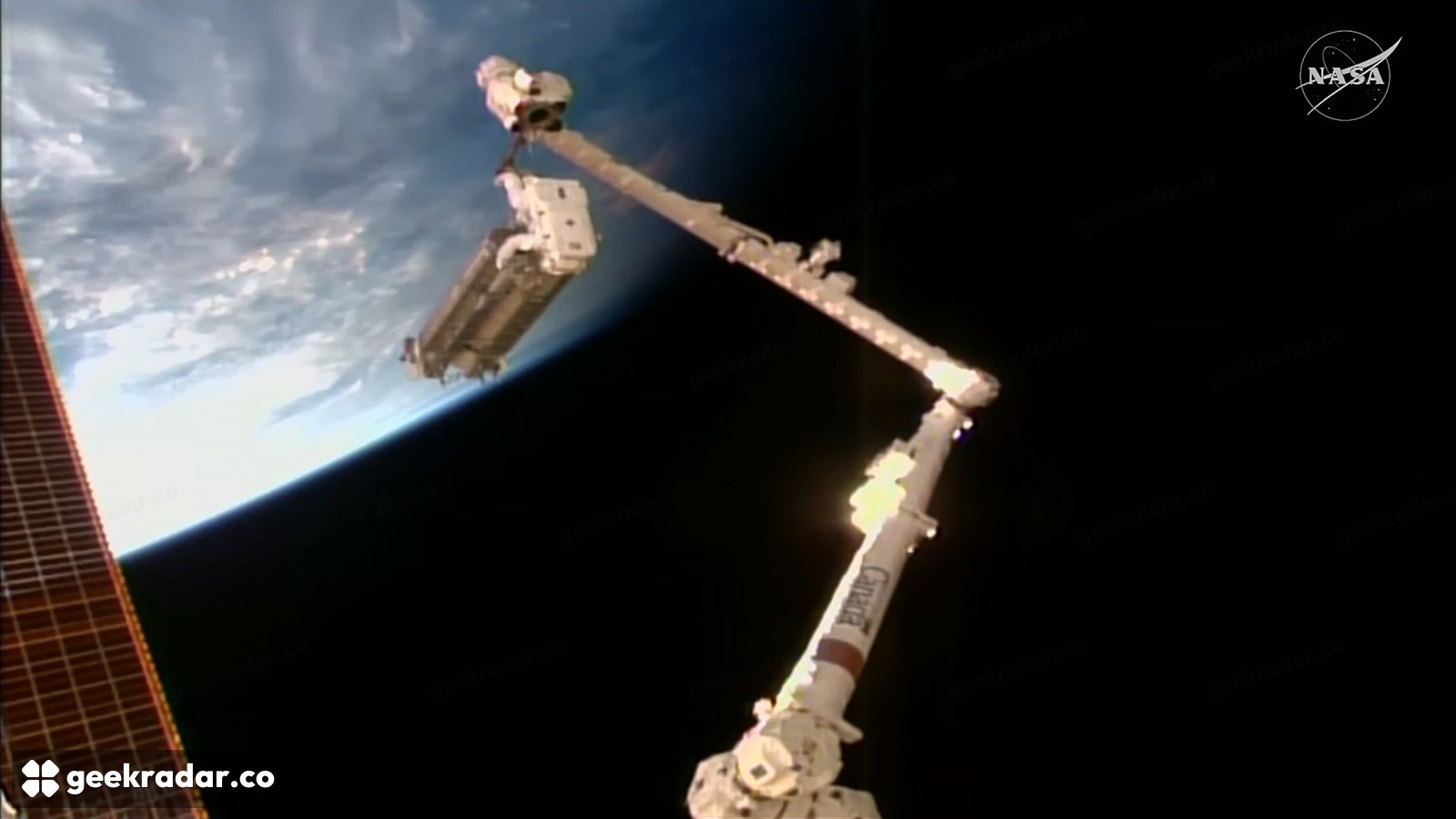
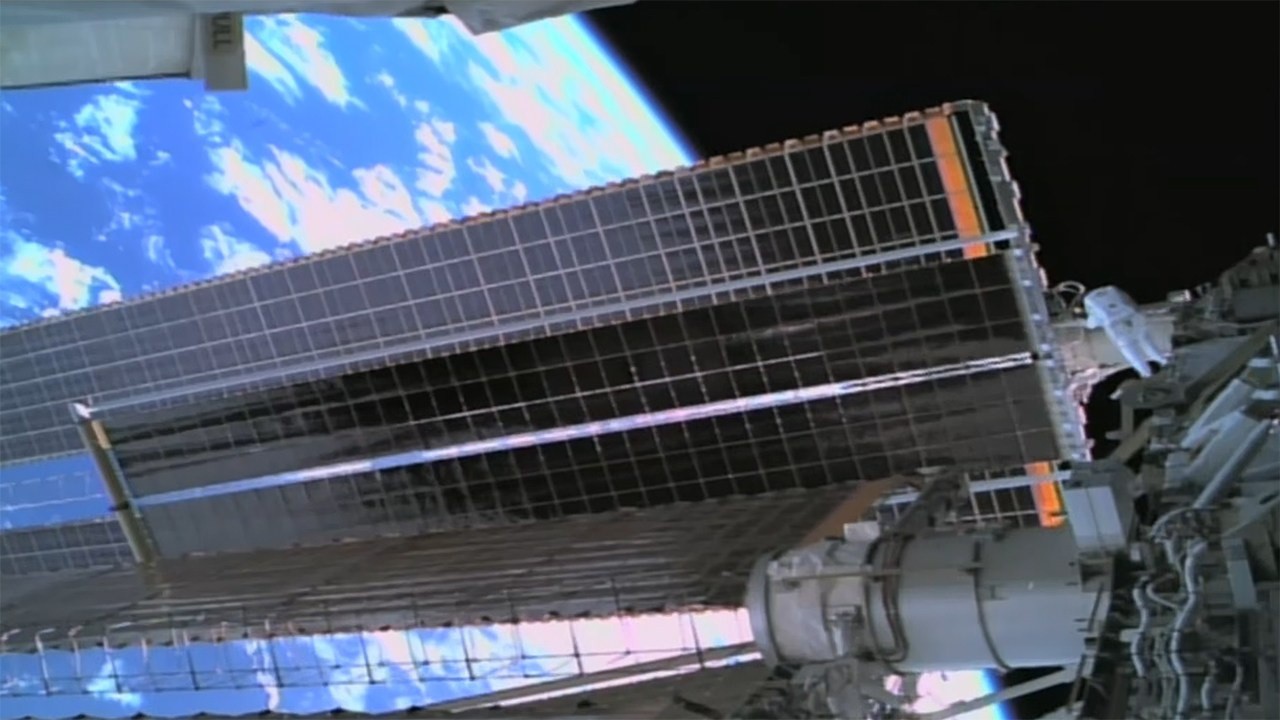
NASA's images show a compact array being transported to the worksite and the deployed structure extending from the station. The roll-out approach turns a package carried during installation into a much larger collecting surface once it is in position.
The programme's count of 18 spacewalks is a useful reminder that the final unfurling is only one stage. Preparing channels, arranging equipment and integrating the new hardware require work before the visually dramatic moment. The astronauts must also manage tools, tethers and movement around a station that continues to operate throughout the upgrade.
The next day still belonged to the spacewalk
NASA's November 6 operations account describes the less photogenic work afterwards: cleaning up equipment, dealing with water and air in suit systems, maintaining batteries and inspecting protective components. The crew also reviewed the excursion with colleagues who supported it, including the robotic-arm operators.
That follow-through is part of completing the job safely. A successful installation leaves both a working array outside and equipment inside that must be ready for another use. Treating the spacewalk as finished at the moment the panel opens would miss a significant part of the crew's workload.
The new power hardware is also a reminder that an ageing station can receive meaningful upgrades while remaining occupied. Its useful life depends on maintenance and resources as much as on the experiments that make headlines. The final array does not remove every constraint aboard the ISS, but it leaves the laboratory with more electrical capacity to work within them.