Perseverance’s driving record is also a story about knowing when to stop
NASA’s new engineering account connects a 45.22-kilometre milestone with science stops, autonomous navigation and a reused helicopter processor.
Perseverance could have broken its driving record earlier. That is the revealing detail in NASA's newly published account of the milestone: the rover spent weeks close to the target while its team chose to examine interesting rocks. The distance record arrived when the science was ready to move on.
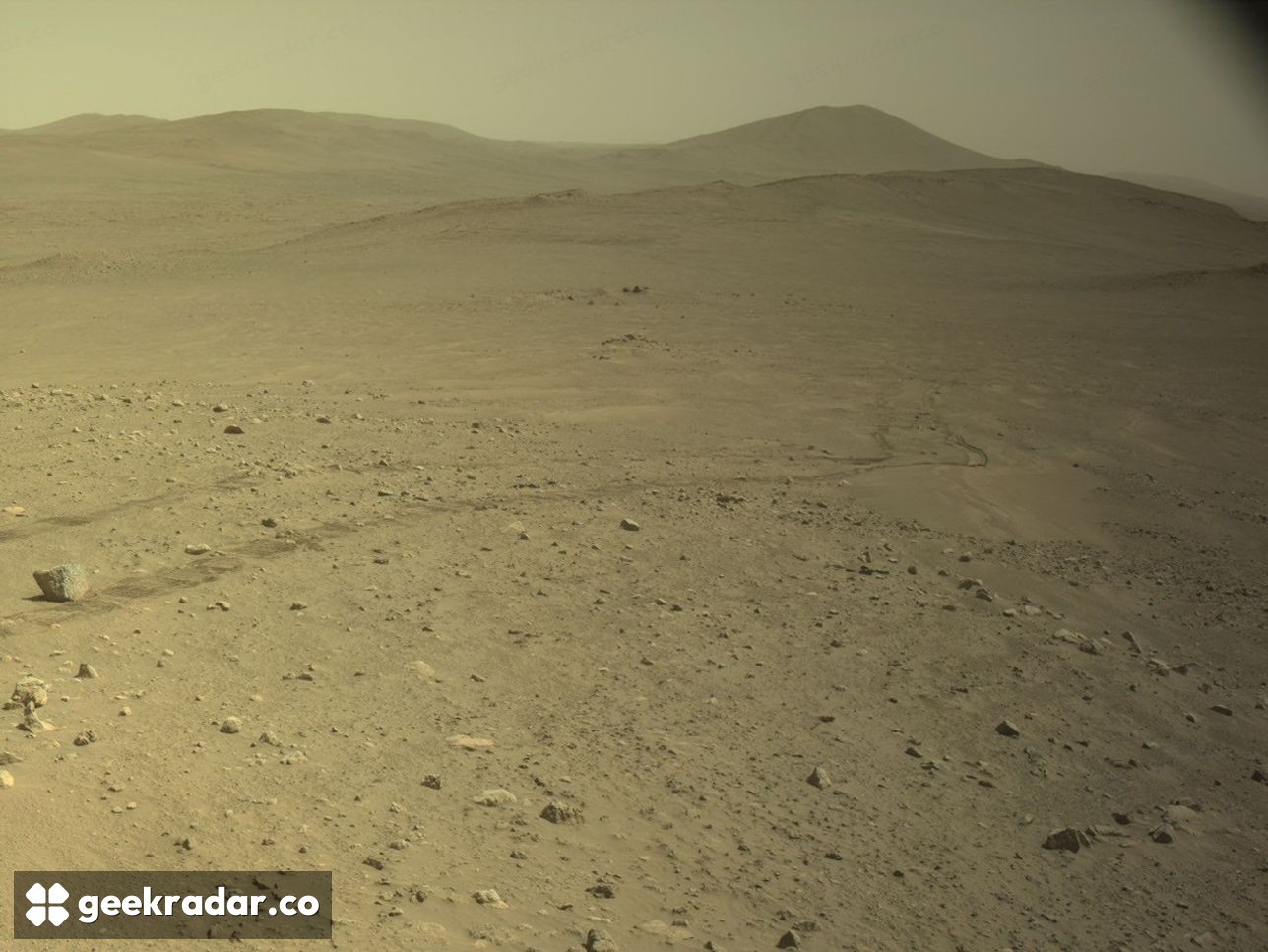
The mission update published on October 21 describes the achievement on October 11, when Perseverance reached 45.22 kilometres. JPL's original report puts Opportunity's previous total at 45.16 kilometres. This is fresh context about an earlier event, not a claim that the record was broken today.
Image: NASA/JPL-Caltech.
The odometer is a means, not the mission
According to the mission team's account, Perseverance had been within roughly 200 metres of the milestone two months earlier. Short drives and close examination of ancient outcrops took priority. A robot that can travel farther is useful because it can reach more worthwhile places, not because every day without a long drive is wasted.
That distinction changes how the record should be read. Kilometres are an easily understood achievement, but they do not measure the value of an observation made while stationary. A long traverse and a carefully chosen stop serve the same scientific purpose when each follows the terrain and the questions it presents.
JPL attributes much of the mobility improvement to AutoNav, which evaluates terrain and chooses a path between waypoints selected on Earth. It reports that more than 90 percent of Perseverance's distance has used AutoNav. That describes a division of work: people establish objectives, while the rover handles local decisions that would be cumbersome to direct one by one from another planet.
Avoiding a rock and knowing your location are different jobs
Local navigation can tell a rover how to move past an obstacle without perfectly resolving where it sits on a wider map. Small errors accumulate as it travels. A cautious system may then stop because its uncertainty has become too large, even when the immediate ground is passable.
NASA's earlier explanation of Mars Global Localization describes how Perseverance compares camera imagery with orbital terrain maps to recover its position onboard. There is no Martian GPS network involved. The system uses a processor previously assigned to communication with the Ingenuity helicopter.
The consequence is more than a better dot on a map. If the rover can resolve uncertainty itself, it can avoid waiting for Earth to supply information it is capable of deriving locally. Autonomy is valuable here because it removes a specific interruption in the work, not because it removes human scientific direction.
Old hardware can acquire a new job
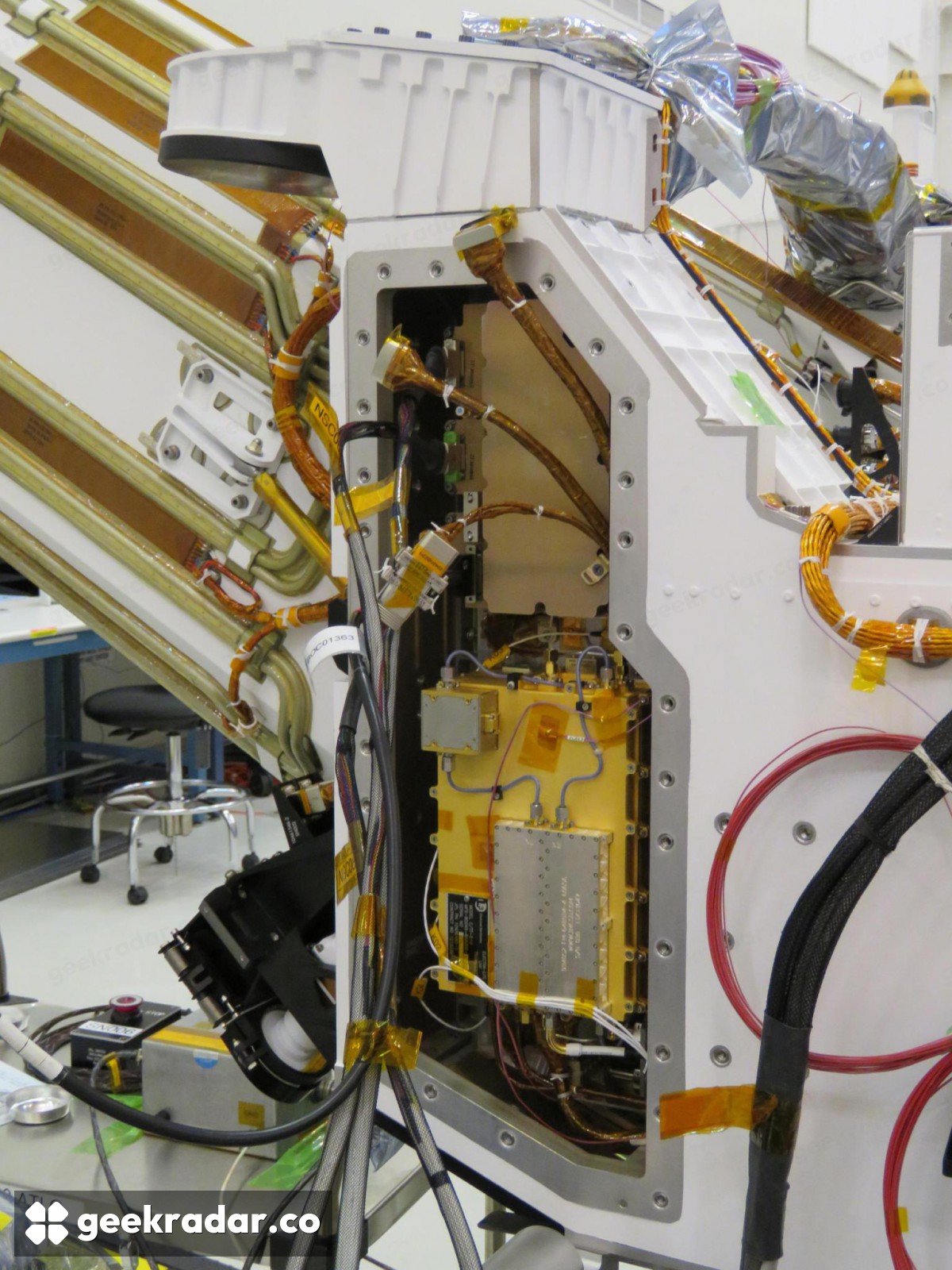
The reused processor is a particularly tangible part of the story. NASA explains that it is faster than the rover's radiation-hardened main computers, but its commercial design brings reliability challenges. The team uses repeated calculations and checks, alongside measures to isolate damaged memory, rather than treating computing speed as sufficient protection.
This is a different kind of upgrade from replacing a device with a faster one. Hardware already on Mars gains usefulness through a new role and software built around its limitations. The supporting photograph shows the helicopter base station during integration on Earth; it is not an image of a repair performed on Mars.
The wheel tracks from October 11 record a real engineering achievement. The pause before them explains its purpose just as clearly. A more capable rover earns its extra range by reaching the next useful rock, and sometimes earns its keep by staying beside the one it has already found.