Aura Ink 10 makes the photo frame slower on purpose
Nine physical pigments and a 200ppi panel accompany a battery claim built around one new photo per day.
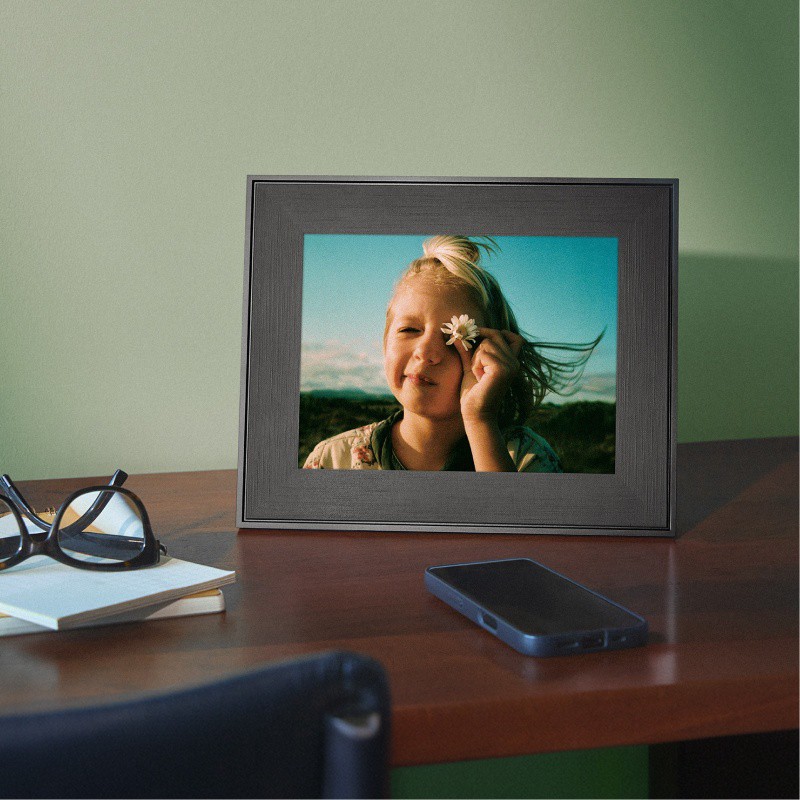
Aura's new Ink 10 photo frame trades frequent screen changes for a quieter display that can sit away from a power socket. The 10-inch e-paper model is available in the US for $349, with a claimed battery life of up to three months when it changes one photograph per day.
That last condition is central to the product. Ink 10 is not a conventional slideshow frame with a long-lasting battery added. Its default rhythm is one new image overnight, and the combination of e-paper, lighting behavior and infrequent refreshes supports the claimed endurance.
More pigment choices do not mean only nine visible colors
The Ink 10 profile records a 200ppi display, compared with 150ppi on Ink 13. Aura also describes an E Ink Spectra 6 system with nine physical base pigments: the existing six plus off-white, mustard yellow and orange.
Those nine pigments are not a limit of nine colors in the photograph. The frame arranges them through dithering, using patterns to create the appearance of a broader palette. The extra pigments are intended to improve transitions and common photographic tones, particularly faces and textures.
The claim of more natural rendering comes from Aura. It is not an independent color-accuracy measurement. Higher pixel density can make detail finer, but it does not by itself establish the contrast, color fidelity or appearance of every image under different room lighting.
The room is part of the display
E-paper reflects light rather than relying on an LCD-style illuminated image. Aura adds a front light that responds to ambient light and motion, with scheduling controls. The purpose is to keep photographs readable while avoiding the constant visual presence of a bright screen.
That also means placement affects the experience. A frame in a dim corner may use its front light differently from one beside a window. A busy room can trigger different lighting behavior from a quiet shelf. The battery estimate cannot be separated from those conditions.
The frame can refresh up to twelve times a day, and owners can change the photograph manually through the app or buttons. That flexibility does not preserve the one-photo-per-day endurance assumption. More updates and more lighting are different usage patterns.
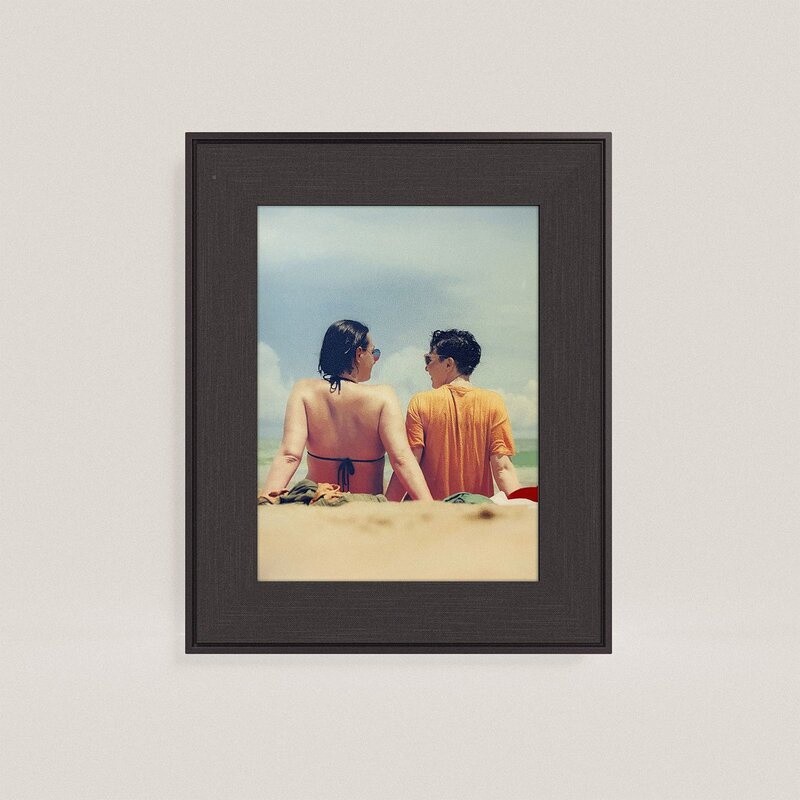
A slower screen can still receive new pictures
Aura supports contributions from invited friends and family, with photo uploads managed through its app and other supported routes. It advertises free unlimited storage without a subscription. That is a service statement, not a claim that the entire experience is local or independent of the network.
The frame supports portrait and landscape placement and includes a stand and mounting kit. Its smaller dimensions make it easier to place on a shelf or side table than the 13-inch model, although the smaller image is a real tradeoff rather than an unconditional improvement.
At $349, the case for Ink 10 is not simply that it can display photographs; cheaper LCD frames already do that. Its proposition is to make a changing digital collection behave more like a photograph that belongs in the room. The price and battery promise make sense only if that slower, less luminous presence is what the buyer actually wants.