Shelly’s Neo valve can shut off the water in 12 seconds. First the leak has to reach a sensor
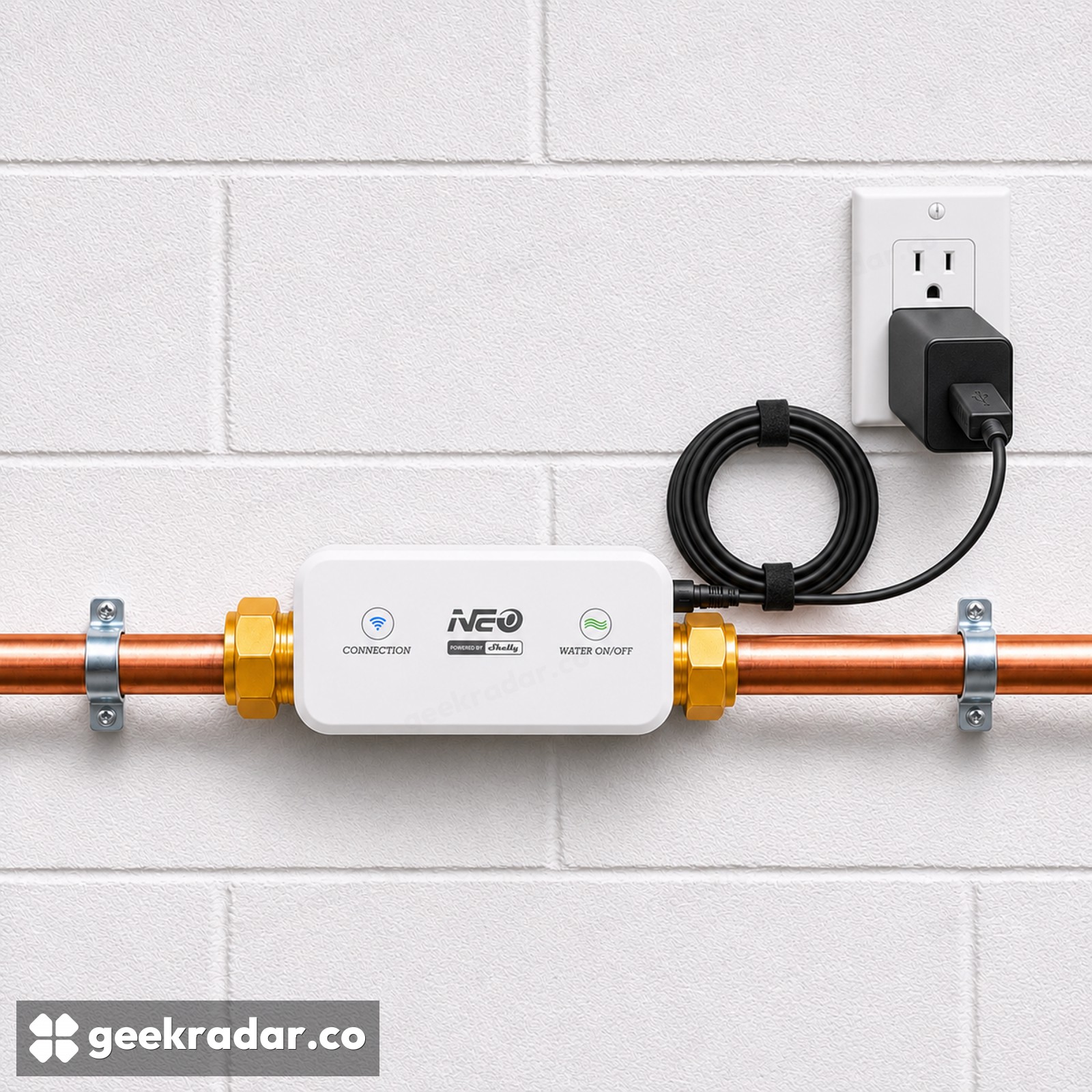
The $499.99 US valve can act on a flood alarm. Its flow meter and the cable on the floor detect different things, especially when a leak starts with a slow drip.
A leak alarm can tell you there’s water under the washing machine while you’re away. Shelly’s Neo Smart Water Valve gives that alarm a way to act: pair a compatible flood sensor with the powered valve on the incoming cold-water line, and a leak alert can shut off the supply. Shelly’s US store lists the valve at $499.99. Before budgeting for one, it helps to understand what each half of the system can actually see.
The meter knows water is moving. The cable knows where it shouldn’t be
The Neo measures flow, pressure, water temperature and accumulated consumption. Those readings can flag a change worth investigating. They can’t tell you whether a litre passing through the main ended up in the washing machine or on the floor beside it. For that distinction, the system uses a separate detector where a spill is likely to reach it.
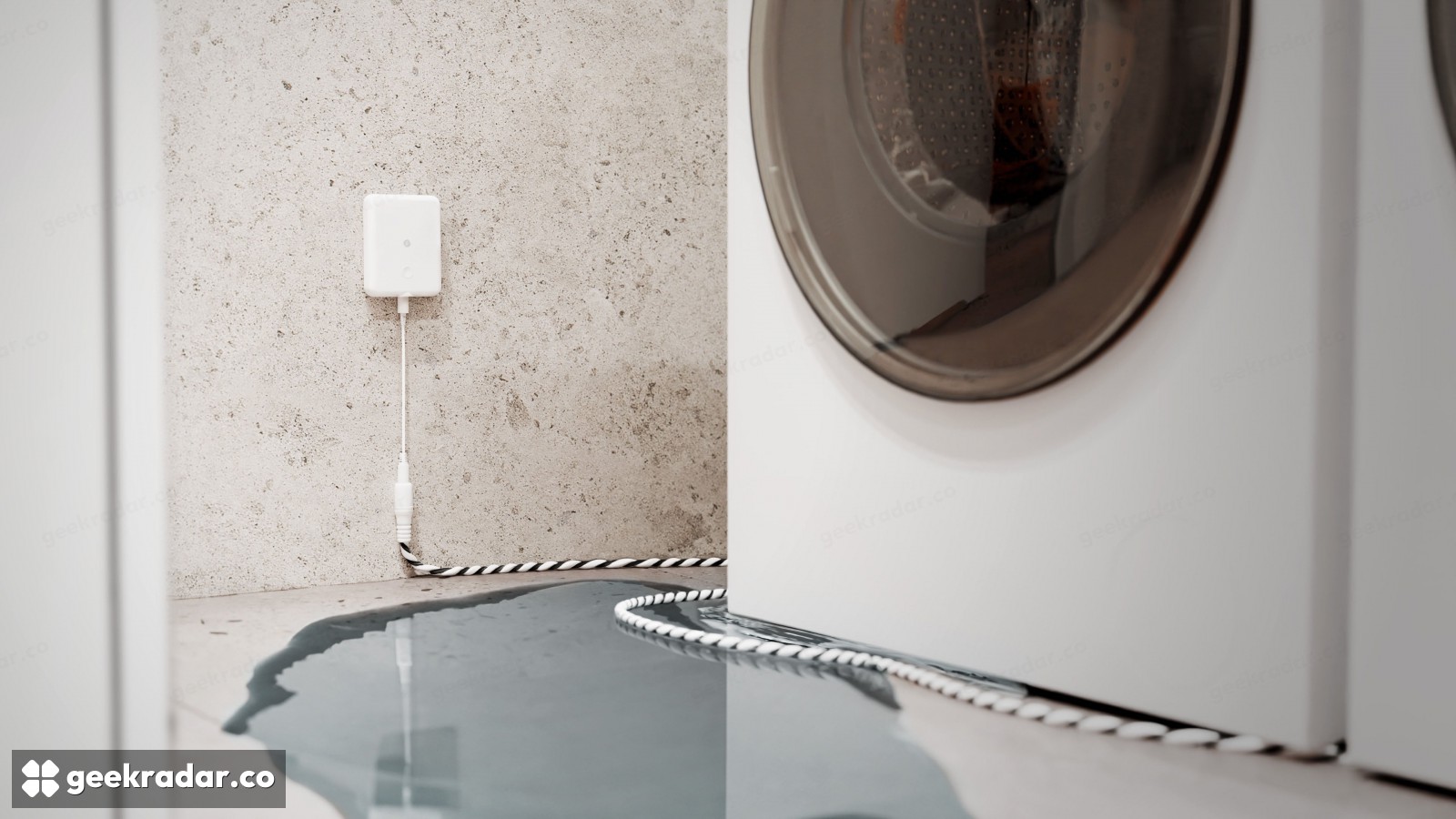
Shelly’s Flood Gen4 has a two-metre sensing cable that detects water along its length. Laid beside a washing machine, it can pick up a spreading puddle even when the electronics are mounted higher on the wall. The detector can sound an alarm. With the shutoff action configured, a motor at the main can also stop more water from entering the property. Placement matters: water that takes a different path may never touch the cable.
Shelly gives the valve an opening or closing time of 12 seconds. That measures the valve’s movement once commanded. A slow drip could take much longer to reach the detector in the first place, and water already downstream of a closed valve can still escape. Moving the cable closer to a likely leak can make a bigger difference than a faster phone notification.
Why a zero on the meter deserves a second look
There’s a useful detail in Shelly’s technical guide. Very low consumption can fall below the threshold for a measurement interval, causing the displayed flow reading to return to zero. A dry detector and a zero flow reading answer different questions. Neither is enough to rule out a drip behind a cabinet.
The purchase includes a plumbing decision
The US launch coverage describes an inline valve with an external power supply. It needs a compatible fitting and power at the place where the water enters. The US product is sold as one-inch NPT; the European listing specifies a BSPP thread and supplied adapter. A one-inch label alone is insufficient to select between the two. The valve is for cold water, and the listed price leaves the detector and any installation work to budget separately.
The cable sensor carries Matter certification. As with other smart appliances that use a shared control standard, it is worth checking which actions your controller actually supports. The practical test for this purchase is as concrete as the plumbing: if water reaches the cable while nobody’s home, does the configured action close the valve, and can you tell that it closed?