Gemini Robotics 2.5 moves into factory kitting. The failed attempts still matter
Google reports a 96% pilot success rate, a useful result with a much narrower scope than general factory autonomy.
Google DeepMind is rolling out Gemini Robotics 2.5 to partners, with demonstrations that move beyond grasping an isolated object toward dexterous, multistep work. Its November 10 announcement includes a factory pilot in which Apptronik robots prepare parts for automotive production. The claimed 96% success rate belongs to that pilot, not to robots performing arbitrary factory jobs.
The distinction is central to the news. A robot that can handle a set of components reliably enough to support a defined station is a different proposition from a general worker that can be dropped into any unfamiliar production line. The former can still be valuable, provided the task, hardware and supervision are understood.
A model that turns perception into action
Gemini Robotics 2.5 is a vision-language-action model. It connects what a robot sees and the instruction it receives with physical actions. Google distinguishes that action layer from the higher-level reasoning used to plan and understand a workflow.
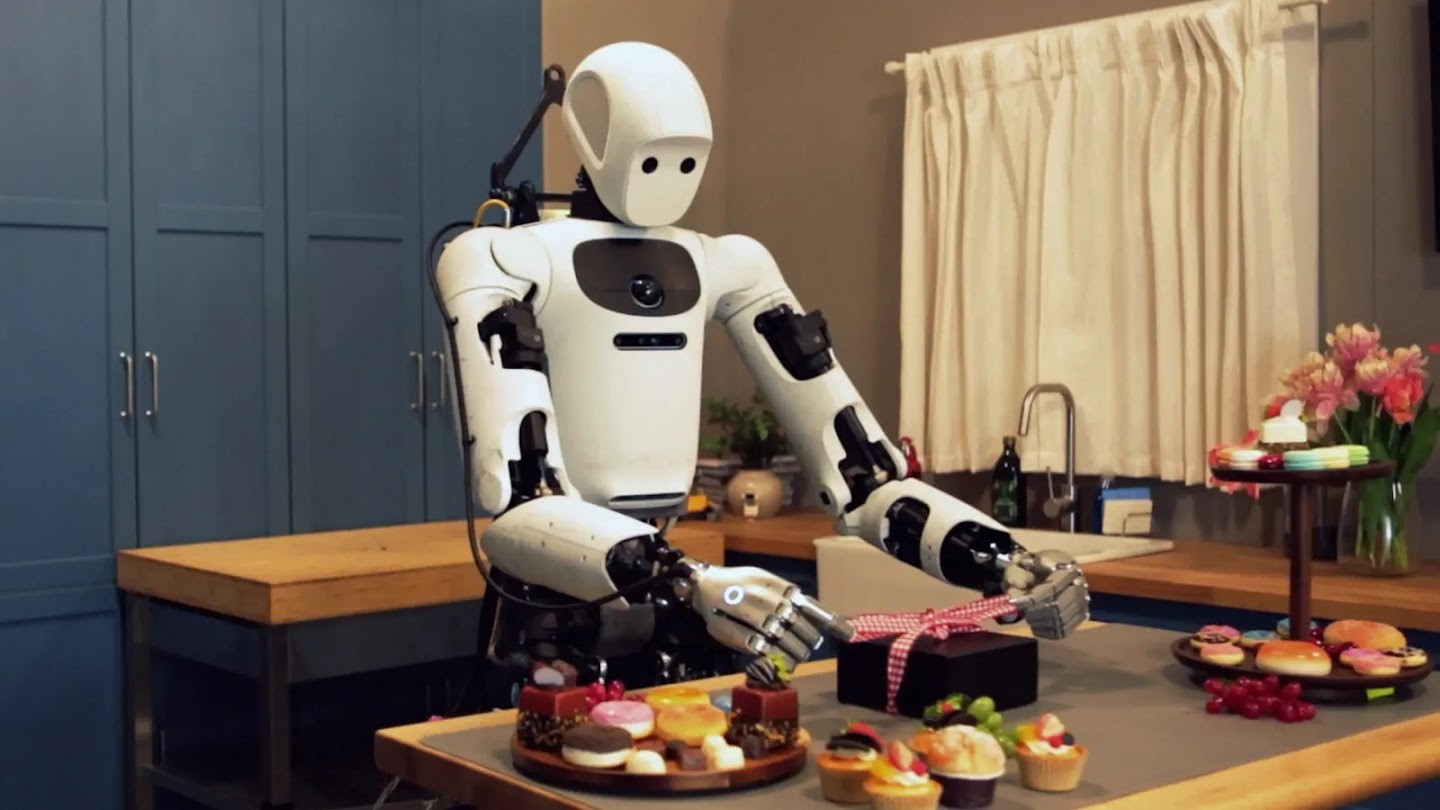
The demonstrations include activities involving tools, fine manipulation and contact with objects. These are harder than recognizing an object in an image because the robot must also control force, position and timing as the situation changes. A correct description of a task is not enough to execute it safely.
Google describes training that combines real-world experience with simulation and generated environments. Simulated examples can expand the situations available during development, but contact with a real object remains a physical test. Friction, compliance and small positioning errors do not become irrelevant because a model can explain the intended movement.
What the Mercedes-Benz pilot establishes
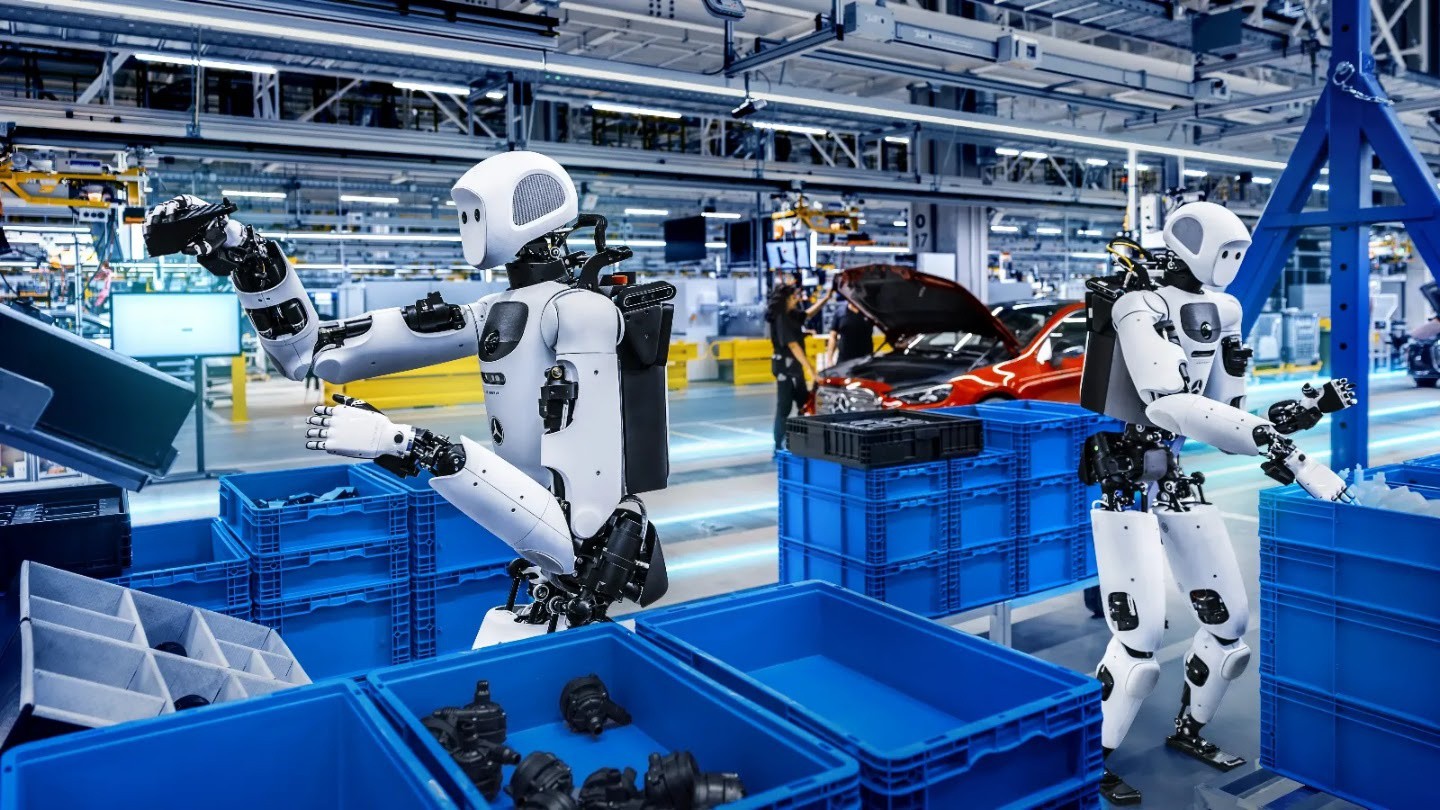
The company describes Apptronik Apollo 2 robots fitted with Sharpa Wave hands, which have 22 degrees of freedom, working on kitting in Mercedes-Benz facilities in Kecskemét, Hungary, and Sindelfingen, Germany. Google reports a 96% task-success rate in this deployment context.
That number needs its context every time it is used. It does not state the rate for an entire factory, the amount of human assistance outside the measured task, or a universal guarantee that the same system will work with a different set of components. It is a vendor-reported pilot result.
Even within a station, the remaining failures matter operationally. A production process must decide what happens when a part is misplaced, a bin changes or the system is uncertain. A high average success rate can coexist with interruptions that require a person to notice and recover the process.
Our coverage of a shape-changing origami robot explored a different way to make control easier through the body itself. Here, dexterous hardware and learned control work together. Neither story supports treating software intelligence as independent of the machine that has to touch the world.
Safety figures measure different things
Google also reports improvements on obstacle and human-avoidance tasks. Separately, the announcement discusses a high score on an adversarial safety evaluation involving its reasoning model. Those tests are not interchangeable. Resisting a malicious instruction in an evaluation is not a measured probability that a robot will avoid every physical accident.
Partner access likewise does not mean a consumer can download the model and expect it to control arbitrary hardware. Deployment requires a compatible robot, an engineered environment and a task whose boundaries can be checked.
The meaningful advance is a more specific industrial claim: a learned action system performing useful preparation work with dexterous hands in named pilot facilities. Its next practical challenge is not looking more human in a video. It is making the uncommon failed attempt visible, recoverable and cheap enough that the surrounding production process can trust the routine ones.