Hubble’s dwarf-galaxy census finds an oxygen deficit that models must explain
A 37-galaxy study measures low retention of oxygen produced by stars, while its missing reservoir remains uncertain.
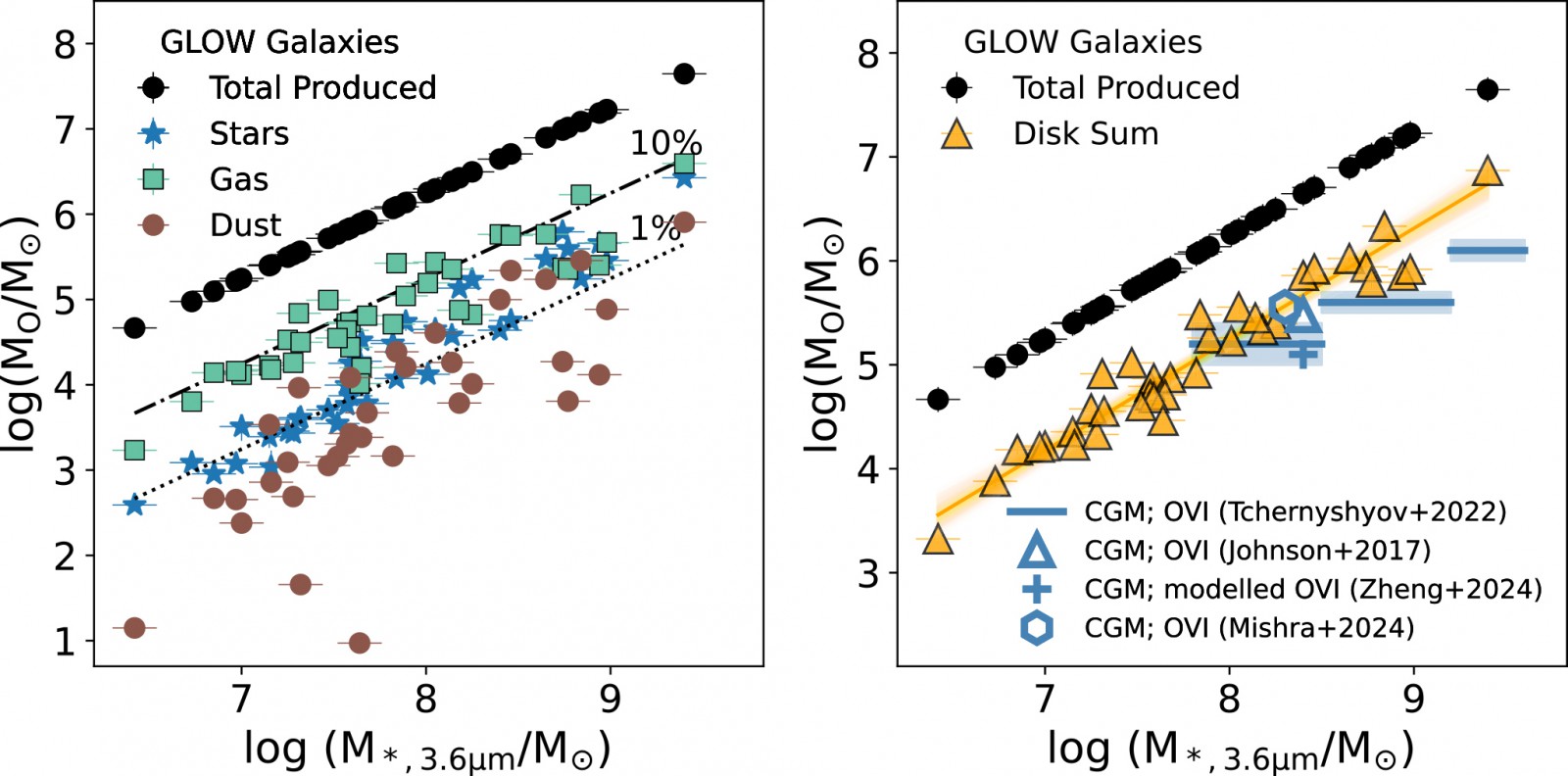
Nearby dwarf galaxies appear to have kept only a small fraction of the oxygen their stars produced. A new census combining Hubble observations with measurements of gas finds retention of 4–25% across its sample, averaging 11%. The result leaves a substantial accounting problem: most of the expected oxygen is missing from the galaxies' visible reservoirs, and the study does not establish where all of it went.
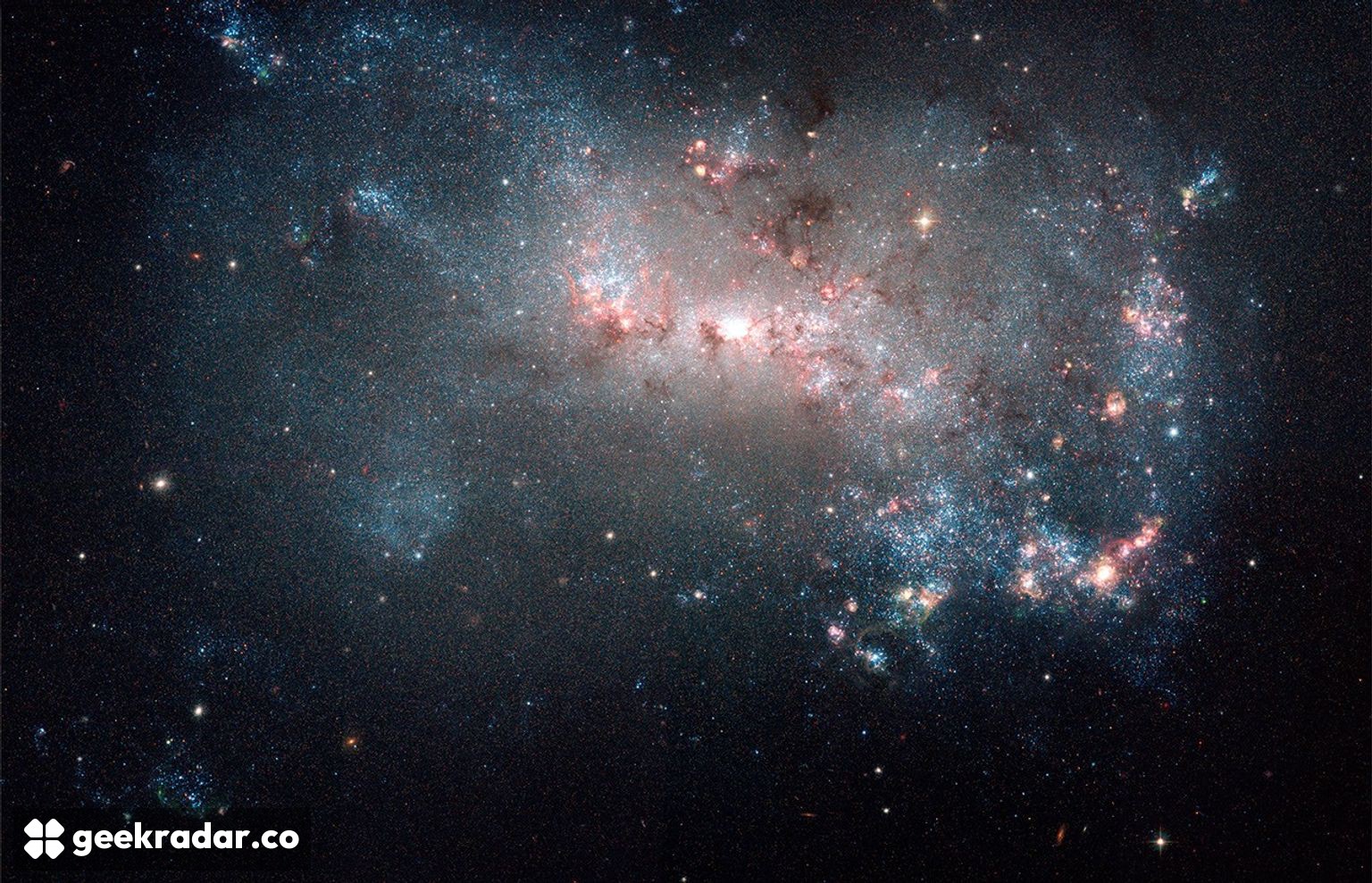
The GLOW study, published in The Astrophysical Journal, examines 37 low-mass galaxies within six megaparsecs. NASA's November 2 account explains how Hubble's ability to distinguish individual stars provides a way to reconstruct their past. The question is about an element manufactured by stars and redistributed through galaxies, not the disappearance of breathable oxygen from a planet.
Counting what stars should have made
A present-day photograph cannot directly show every generation of stars a galaxy has formed. Researchers instead use the properties of its resolved stellar population to infer a history of star formation. That history supplies the basis for estimating how much oxygen stellar processes should have produced.
The other side of the ledger is the oxygen still accounted for in stars, gas and dust. The project combines the stellar histories with measurements of gas mass and chemical composition. The resulting comparison links a cumulative estimate of production to the material retained today, rather than simply comparing which galaxy has the brightest oxygen emission.
That distinction gives the research its force. A galaxy can have a measurable chemical composition today while having lost much of the material that helped create it. A concentration is a snapshot; an inventory also asks how much material exists and how it arrived there.
The missing material has more than one possible address
The paper finds that nearly all the oxygen these galaxies retain is in their gas. Some oxygen can also exist in the circumgalactic medium: the extended material around a galaxy, beyond the bright stellar body that usually dominates its image.
Detecting ionized oxygen there does not settle the full budget. The authors say it remains unclear whether most of the missing material occupies that surrounding region or has been expelled farther into intergalactic space. Calling the result a discovery of the entire lost reservoir would therefore reverse the central finding: the deficit is better measured, while its destination remains uncertain.
The study also reports greater scatter toward higher retention in denser surroundings and near massive galaxies. That relationship is consistent with an environment that affects retention, recycling or accretion. It does not, by itself, identify one universal mechanism operating in every member of the sample.
Why a convincing simulation can still miss the budget
One of the more revealing comparisons concerns the mass–metallicity relation, which describes how galaxies' chemical enrichment varies with their mass. The authors find that matching this relationship does not guarantee matching oxygen retention. Simulations can reproduce the familiar present-day relationship while predicting that low-mass galaxies keep considerably more oxygen than the observations indicate.
This is a useful warning about what counts as a successful model. Two histories can reach a similar present-day composition through different combinations of production, inflow and outflow. Testing an accumulated inventory can expose a disagreement hidden by the final concentration alone.
There are limits to the reconstruction. Oxygen production is inferred using stellar histories and assumptions about stellar yields; it is not an atom-by-atom measurement of everything ever created. The sample also concerns particular nearby low-mass systems, rather than a census of every galaxy in the Universe.
That scientific value is separate from the engineering problem in NASA’s request for Hubble servicing and disposal proposals. A telescope’s orbital future and the usefulness of its existing observations are related, but different questions.
For space science, the result illustrates the continuing value of an archive that resolves individual stars. Hubble's old observations can answer a new accounting question when combined with other measurements. The challenge now is unusually concrete: a model must explain both the oxygen a dwarf galaxy contains and the much larger amount it apparently failed to keep.