A Mars meteorite records ancient water, but its exact home is still unknown
Teghaza 001 preserves evidence of alteration about 4.1 billion years ago. Dating its grains does not locate its source crater or detect life.
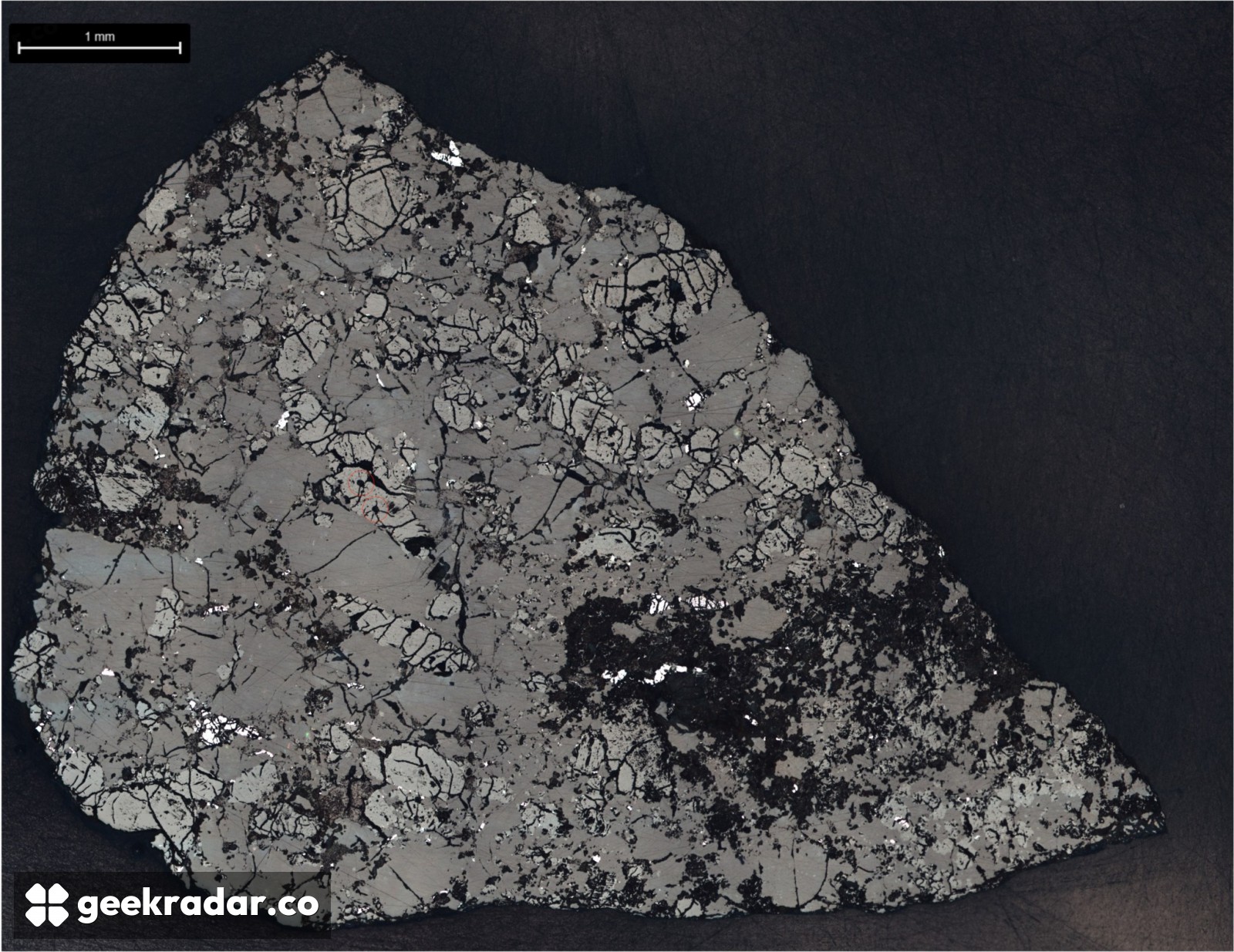
A meteorite found in Mali in 2022 has turned out to preserve a much older story: interactions between water and Martian rock roughly 4.1 billion years ago. Teghaza 001 weighs about 800 grams, yet its mixture of minerals offers a rare sample of the planet’s ancient crust.
The NASA account of the new Science study distinguishes the rock’s formation from later alteration by water. The dated alteration suggests the original material formed earlier still. Treating one number as the date of every event recorded in the stone would erase the sequence that makes it scientifically valuable.
A meteorite carries history without a return address
Martian meteorites reach Earth after impacts eject material from the planet. Researchers identify their origin through chemical and mineral evidence, including comparisons with other known samples and measurements from Mars missions. Teghaza 001 was initially recognized as Martian through oxygen isotopes, but its unusual texture and minerals prompted closer investigation.
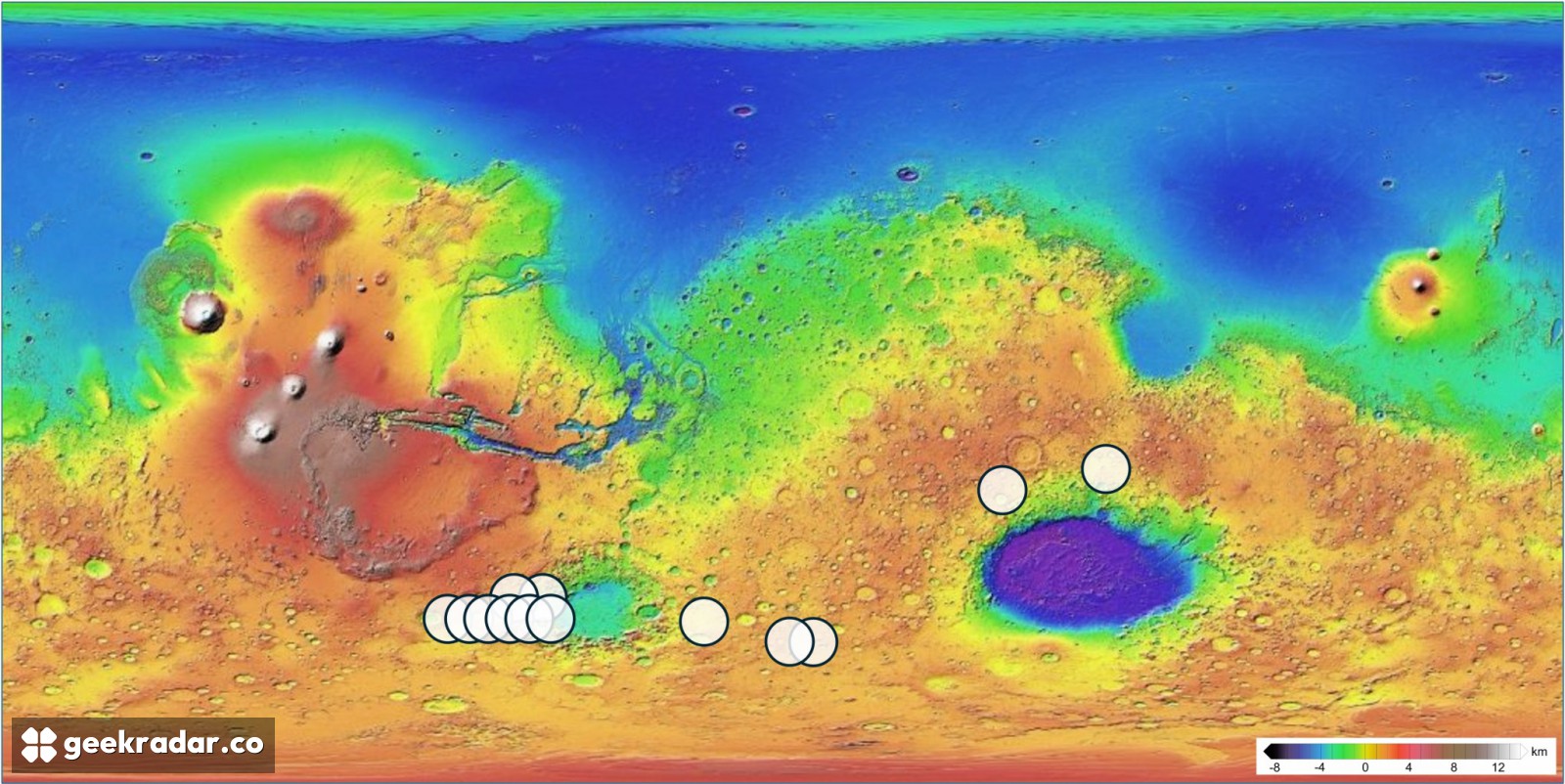
The difficulty is geographical context. A rover can photograph the surrounding terrain before studying a rock; a meteorite arriving on Earth does not bring an equivalent field notebook. The researchers identified 13 possible Martian locations consistent with this sample’s mineralogy and chemistry. Those are candidates, not a recovered launch coordinate.
That distinction makes the accompanying map useful. It shows how laboratory measurements can be compared with orbital observations without pretending the comparison has located the exact outcrop. The stone and the map answer different parts of the same question.
Dating grains leaves more of the sample for later
The team found zircon crystals and used multiple lines of analysis to investigate the sample’s age and history. NASA describes an in-situ rubidium-strontium method that examines individual mineral grains on a piece smaller than a fingernail, instead of dissolving the entire sample for a bulk measurement.
Preserving material is consequential when the specimen is rare. A destructive measurement may answer one question while removing the opportunity to ask another with a future instrument. Working on individual grains also helps retain relationships within a rock whose components need not all record the same event.
The sample’s diversity matters for the same reason. A mixture of igneous minerals can preserve several aspects of crust formation and subsequent change. Its usefulness is not reducible to winning a contest for the single oldest Martian rock.
Water evidence is not a life detection
NASA links the new characterization to an earlier study of Teghaza 001’s water content. Together, the work offers clues about how water and rock interacted early in Mars’s history. It does not establish that organisms lived in the sample, or that the candidate source locations were inhabited.
The result is also an initial characterization rather than an exhaustive account of everything the meteorite contains. Other laboratories can test additional questions, which is one reason preserving portions of the material has value now.
Teghaza 001’s journey has stripped away the certainty of an exact collection site while delivering something orbital images cannot: physical grains available for laboratory analysis. The next discoveries depend on reading those grains carefully enough to keep formation, water alteration and the later trip to Earth as distinct chapters.