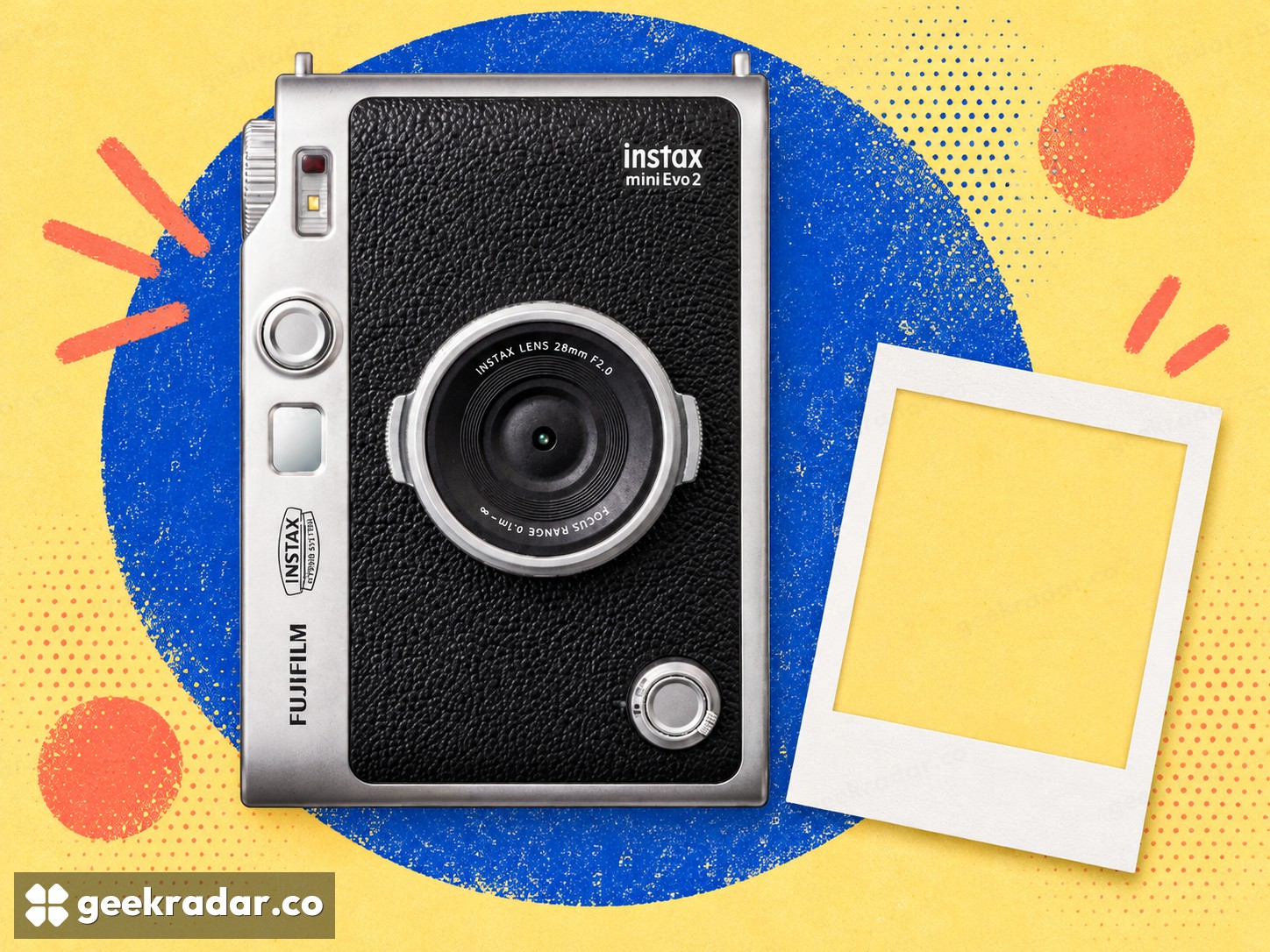
Instax mini Evo 2 gives the digital preview a bigger role in the printed photo
A 4.5-inch screen and Expanded View help with selection and timing. The 13 MP capture figure requires a memory card and the right mode.
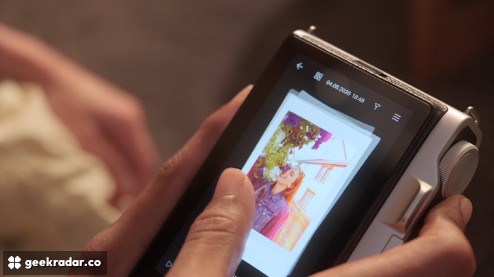
Fujifilm’s instax mini Evo 2 makes the digital half of an instant camera more prominent. A 4.5-inch touchscreen gives the photographer more room to inspect an image before spending a sheet of film, while a new framing mode shows some of the scene outside the eventual print area. The useful change is control over what gets printed, rather than a promise that every capture must become a physical photograph.
The official launch announcement describes a hybrid camera: it captures digitally, lets the user choose a shot and then exposes an instax print. It can also act as a printer for smartphone images. That workflow differs from an analogue instant camera, where taking the photograph commits the film immediately.
The headline resolution has a condition
Fujifilm advertises capture at up to 13 megapixels, but the footnote requires a microSD card and Expanded View switched off. Buyers who rely only on internal storage should not assume the headline resolution applies to their saved files. Storage is therefore part of the camera configuration, not just an optional way to hold more photographs.
Expanded View serves a different purpose. It displays a wider area than the print frame, allowing the photographer to see a moving subject before it enters the final composition. That can help with timing, although it does not enlarge the physical instax mini print. A wider preview and a larger print are separate features.
The new Immersive Movie function records a short clip associated with the moment before the shutter release. Fujifilm describes transfer through the companion app. That is another digital keepsake, not a moving image embedded in the film. Its value is preserving a little context around a still photograph.
Physical controls still shape the experience
The larger touch interface sits alongside the lens dial, film dial and print lever. The camera combines ten lens effects with ten film effects, giving 100 combinations. Those combinations are creative treatments, not 100 distinct optical lenses or film stocks inside the body.
The Singapore announcement sets availability from November 27, while other regional announcements should be checked for their own dates and prices. It is a regional launch schedule, not proof of identical worldwide inventory. The earlier instax SQUARE coverage concerns a different camera family and print format, so the names should not be collapsed into a single upgrade path.
The mini Evo 2’s strongest argument is the ability to be selective without losing the pleasure of a physical print. A bigger screen and a wider compositional preview are useful when they help someone choose the image worth keeping on paper. The film sheet remains the scarce object; the camera gives the photographer more chances to make that choice deliberately.