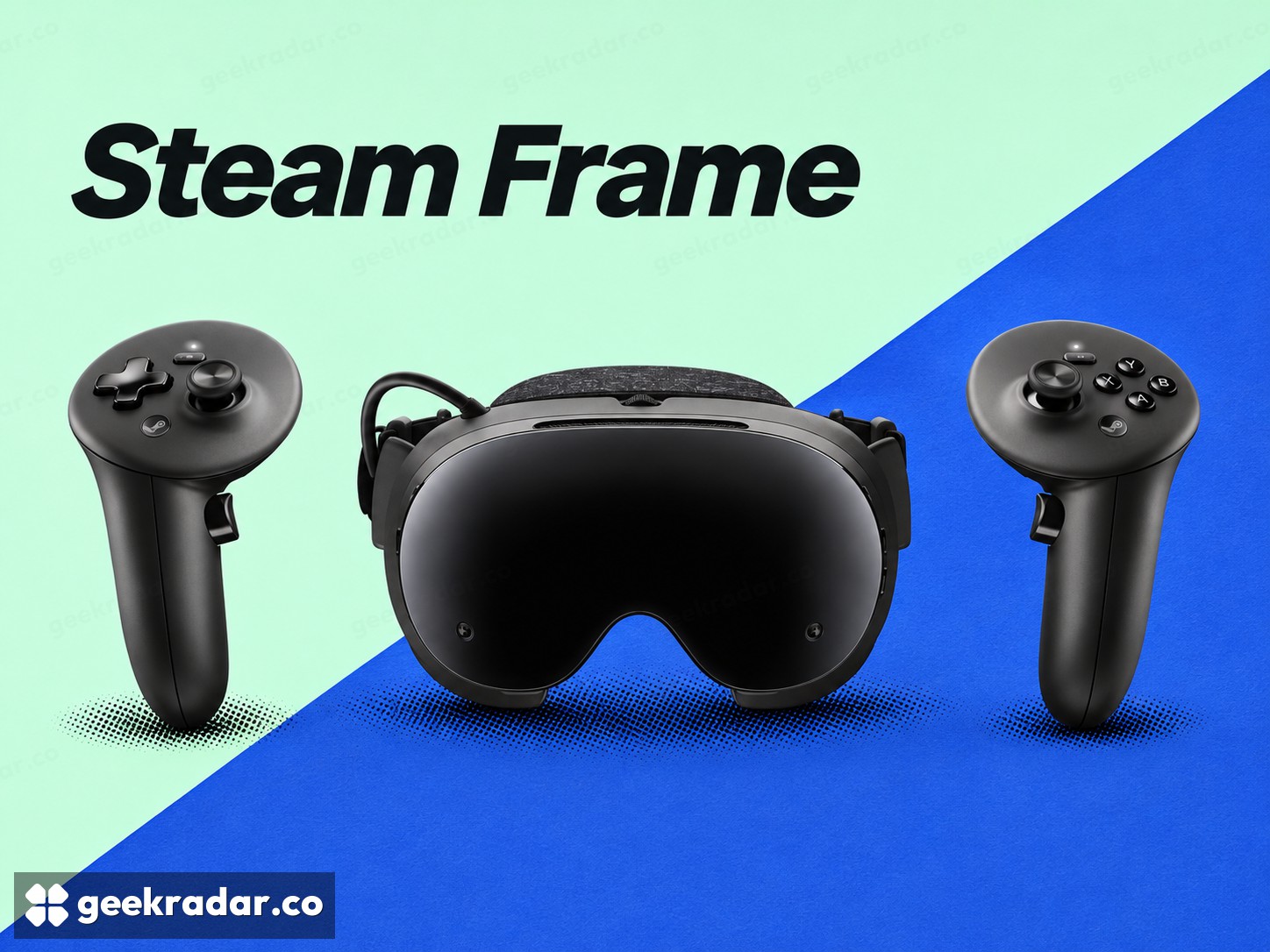
Steam Frame reaches 4.13% in Steam’s VR survey. That is not a sales figure
October puts Valve’s headset sixth in the sampled VR category, up 3.72 percentage points from September.
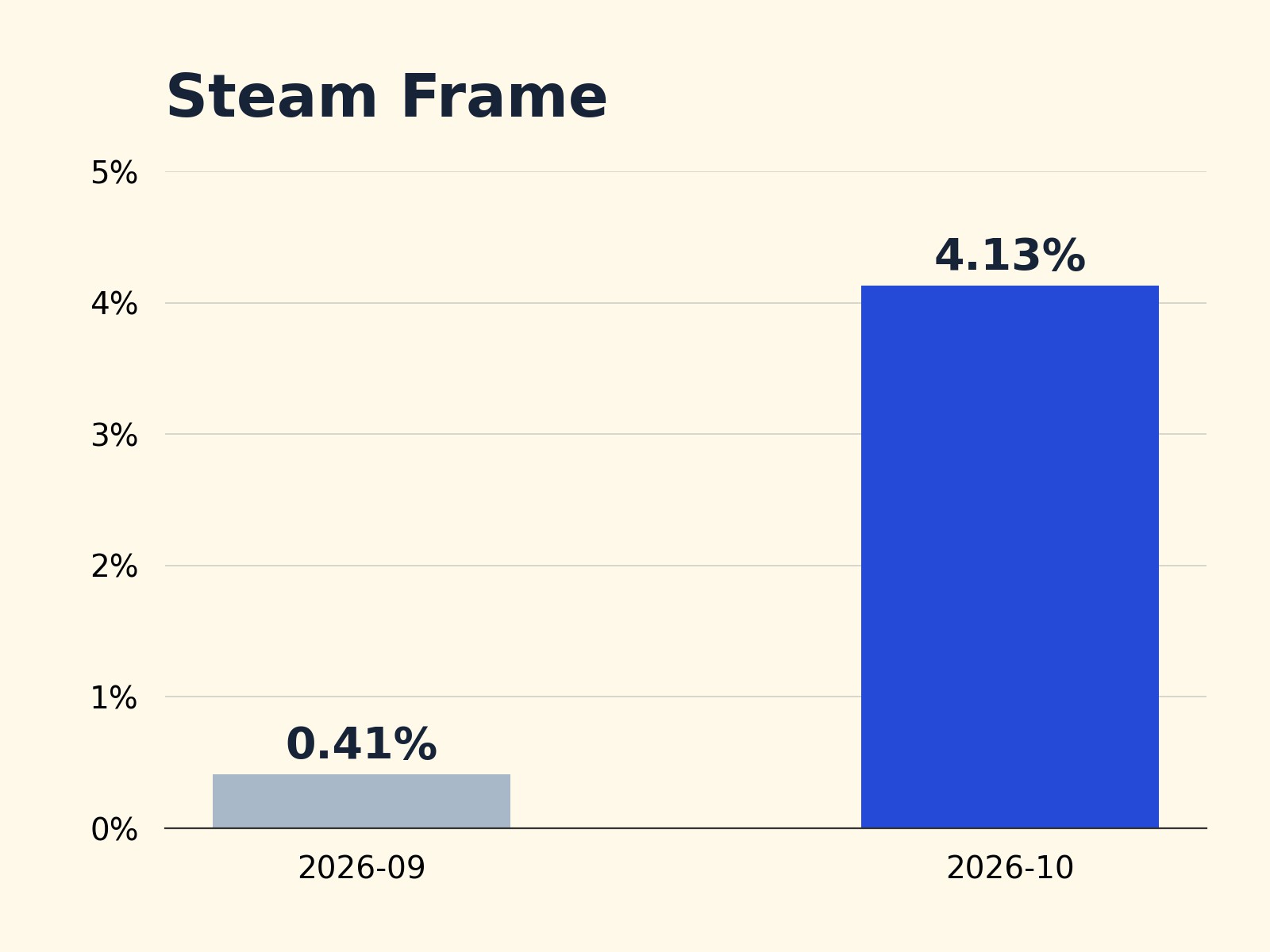
Valve's Steam Frame has reached 4.13% of the VR-headset category in Steam's October hardware survey, up from 0.41% in September. That places it sixth in the listed headset results. It is a clear change in the survey's composition, but it is not a count of headsets sold or a claim that 4.13% of everyone on Steam owns one.
The figures come from Valve's October survey, which describes participation as voluntary and anonymous. PC Gamer's November 2 coverage highlights the rapid rise. The useful question is what that change says about Steam-connected VR, without asking a sample to answer questions it was not designed to settle.
A large movement inside a specific sample
The month-to-month gain is 3.72 percentage points. The distinction between points and percent matters: subtracting the two shares gives the movement in the chart, whereas dividing them gives a relative increase from a very small starting value. Neither calculation produces unit sales.
Steam Frame sits behind Pico 4 and Valve Index in the October results. Meta's Quest-family devices occupy the first three places in this category. These are the shares Valve reports for the surveyed VR-headset group, not a ranking of all standalone headset use worldwide.
| Headset | October survey share |
|---|---|
| Meta Quest 3 | 27.27% |
| Oculus Quest 2 | 22.23% |
| Meta Quest 3S | 11.04% |
| Valve Index HMD | 9.90% |
| Pico 4 | 4.50% |
| Valve Steam Frame | 4.13% |
A device used without connecting to Steam does not become visible here merely because it exists. That limits comparisons with the broader VR market. Survey participation and the population being measured are part of the result, not footnotes that can be discarded after copying the percentages.
A share can rise without revealing the number sold
The results do not provide an absolute count of Steam Frame users from which to infer shipments. They also cannot establish whether a change reflects only newly purchased hardware, existing owners using Steam more often, or differences in the sampled population.
The size of the movement makes it interesting, but a single month remains a single observation. A sustained share across later surveys would support a different argument from a one-month jump. It would still describe participation in this ecosystem rather than the whole retail market.
The hardware is built around the Steam connection
Valve's Steam Frame product page describes both wireless streaming and standalone operation. The headset runs SteamOS on an ARM-based Snapdragon platform and includes a wireless adapter for the PC connection. That makes the survey relevant to one of its central uses rather than an incidental compatibility mode.
The two operating paths also require different expectations. Streaming relies on the host PC and wireless connection; standalone execution relies on what the headset itself can run. A place in a hardware chart does not establish that a particular game performs equally well through both paths, or that a player's entire library is supported.
Our Switch 2 and Steam Deck comparison made a related point about choosing hardware around the games actually available to it. The same discipline applies to VR: check the titles, control requirements and intended mode of play before turning an ecosystem advantage into a universal compatibility claim.
Within Steam’s VR ecosystem, October supplies a useful early marker. Steam Frame is now large enough in the surveyed headset mix to appear alongside established devices. The figure earns attention on that basis alone; it does not need an invented sales total to become news.