Fujifilm’s instax SQUARE 2 makes color a decision before the shutter
Physical Warm and Cool filters change the exposure itself. Three focusing ranges and the cost of film matter as much as the camera’s new look.
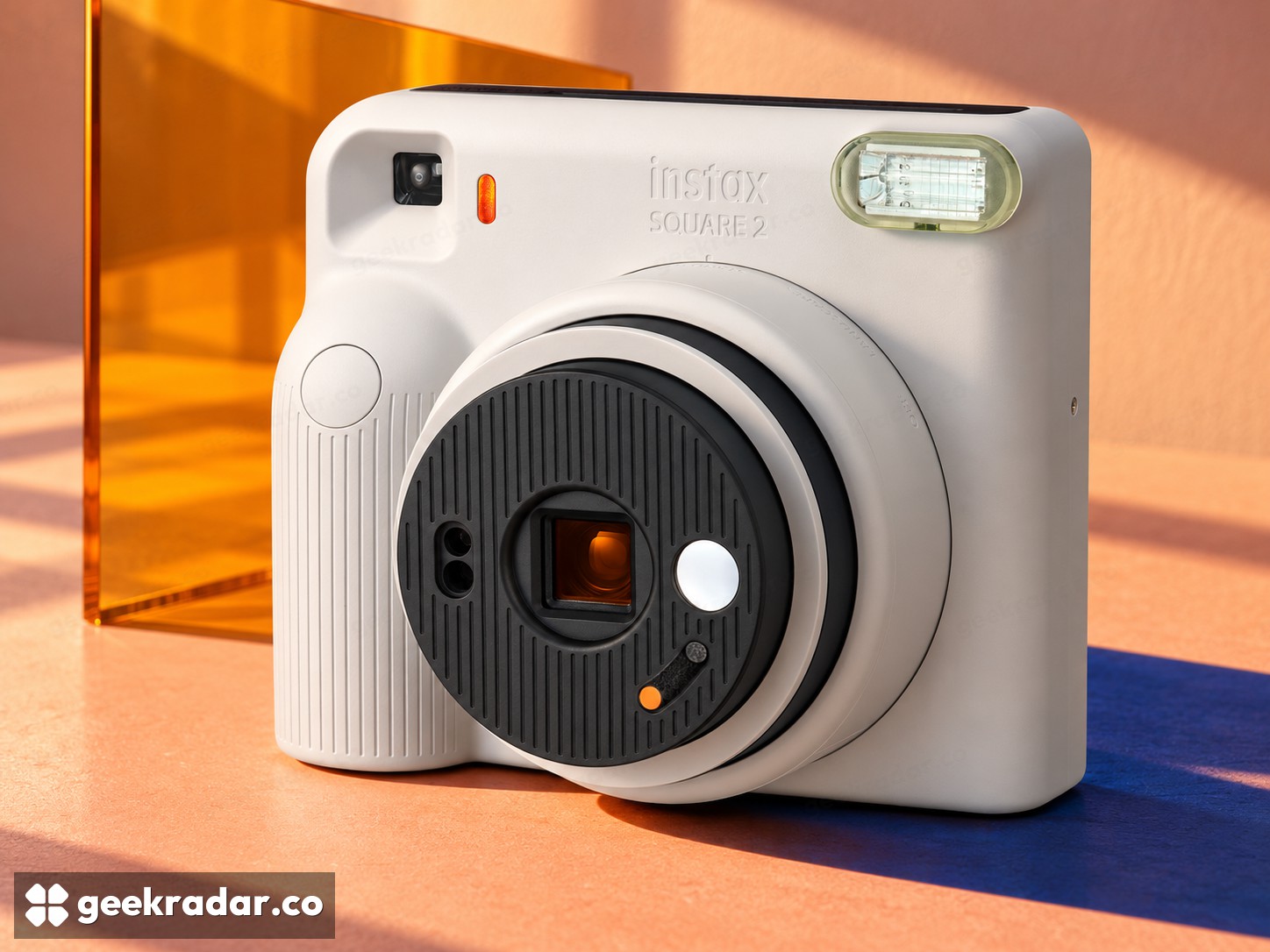
Fujifilm’s instax SQUARE 2 adds a small but consequential choice to instant photography: slide a physical filter in front of the lens before taking the picture. Warm and Cool settings change the light reaching the film, while Off retains the ordinary film rendering. The decision happens before exposure, not in an editing menu afterward.
Announced on 13 October, the camera is due in North America in late October at a stated US price of $119.95. Fujifilm also has European product pages, including its Italian instax site, but the US announcement should not be converted into an Italian price or delivery promise.
A filter you commit to before the shutter
The official product demonstration shows the filter mechanism moving over the lens. This is different from a hybrid instant camera that captures a digital image and lets the photographer choose what to print. Here, the filter is part of the exposure itself.
That has an appealing simplicity and a real constraint. You can make an intentional color choice without learning image-editing software, but you cannot undo that choice on the already exposed sheet. Each attempt uses film. Experimentation therefore has a physical cost that a phone’s preview does not.
There are two independent sources of the final look. The camera supplies its optical filter, while the film has its own response. Fujifilm’s launch announcement also introduces Soft Haze film, described as having reduced saturation and contrast. That is a separate consumable, not a software preset unlocked by buying the camera.
Three distance ranges, one square frame
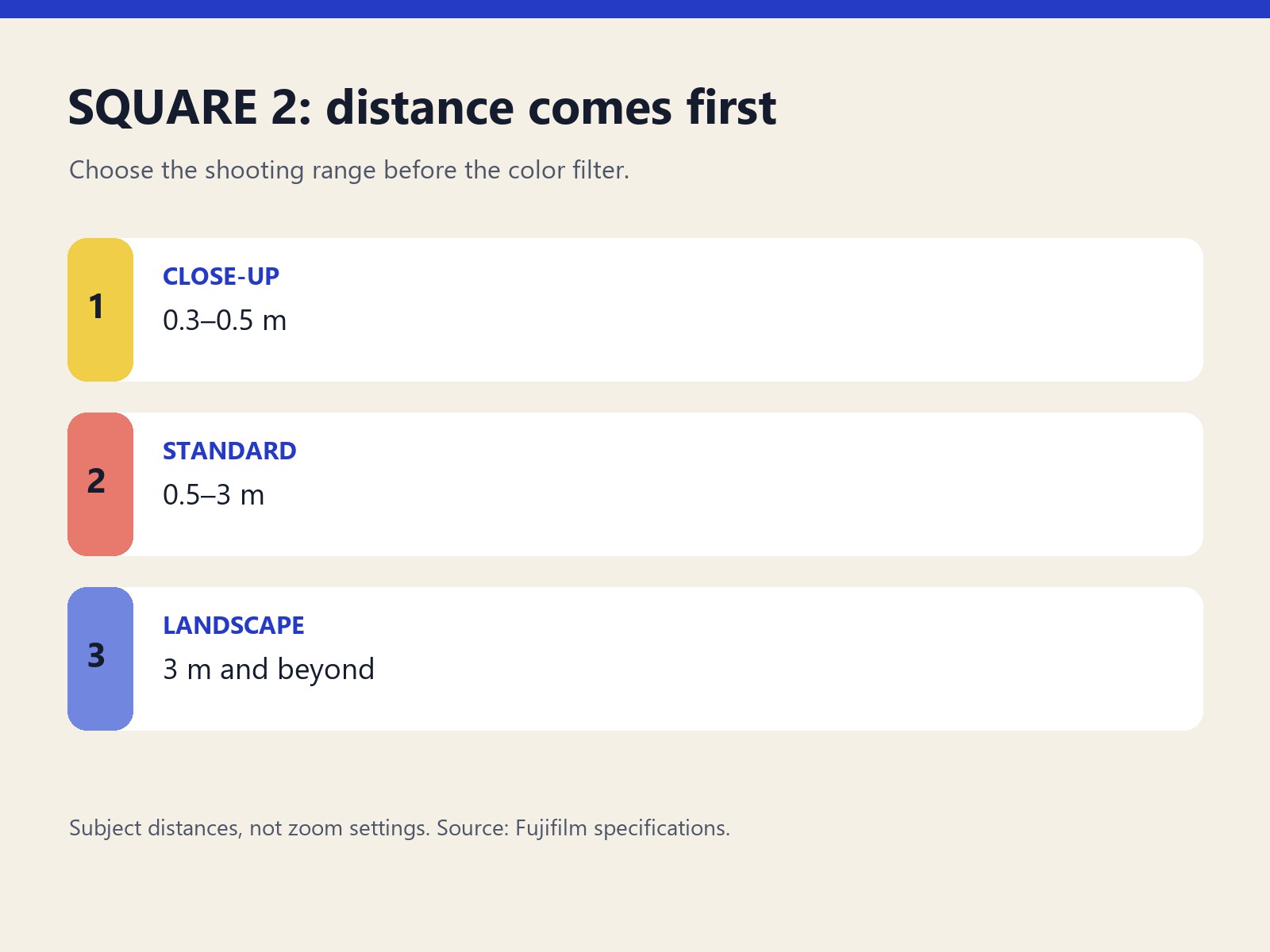
The SQUARE 2 uses three selectable shooting ranges. Close-up covers 0.3–0.5 metres, Standard 0.5–3 metres, and Landscape starts at 3 metres. These ranges describe subject distance; they do not mean the lens changes focal length when a mode is selected.
Those details come from Fujifilm’s specification. The square image is larger than a tiny screen thumbnail but still asks the photographer to be deliberate about composition. Getting the distance range right matters more than choosing an attractive filter: color cannot rescue a subject placed outside the intended focusing range.
The flash also deserves attention. The listed effective range is 0.3–2.2 metres. A close group and a distant building are therefore different photographic situations even when both fit inside the viewfinder. Automatic exposure simplifies the controls; it does not remove the limits imposed by light and distance.
The running cost belongs in the comparison
Film is sold separately. The American announcement lists a ten-exposure Soft Haze pack at $18.99, but that figure is a regional launch price, not an Italian consumables quote. Comparing cameras without comparing locally available film can hide a substantial part of ownership.
The three announced body colors are Misty White, Slate Blue and Brick Red. Choosing among them changes the object in your hand; choosing a filter changes the photograph. Keeping those decisions separate is part of the pleasure of a camera with so few controls.
The consumer-hardware story here is not that analog photography has acquired a digital trick. Fujifilm has put another decision back before the shutter. Once the print emerges, the color choice is already part of the memory.