Curiosity’s Nazca target asks whether a crystal’s shape outlived its chemistry
Newly published drilling preparations combine close-up 3D imaging with deeper laser measurements. The textures are geological clues, not evidence of life.
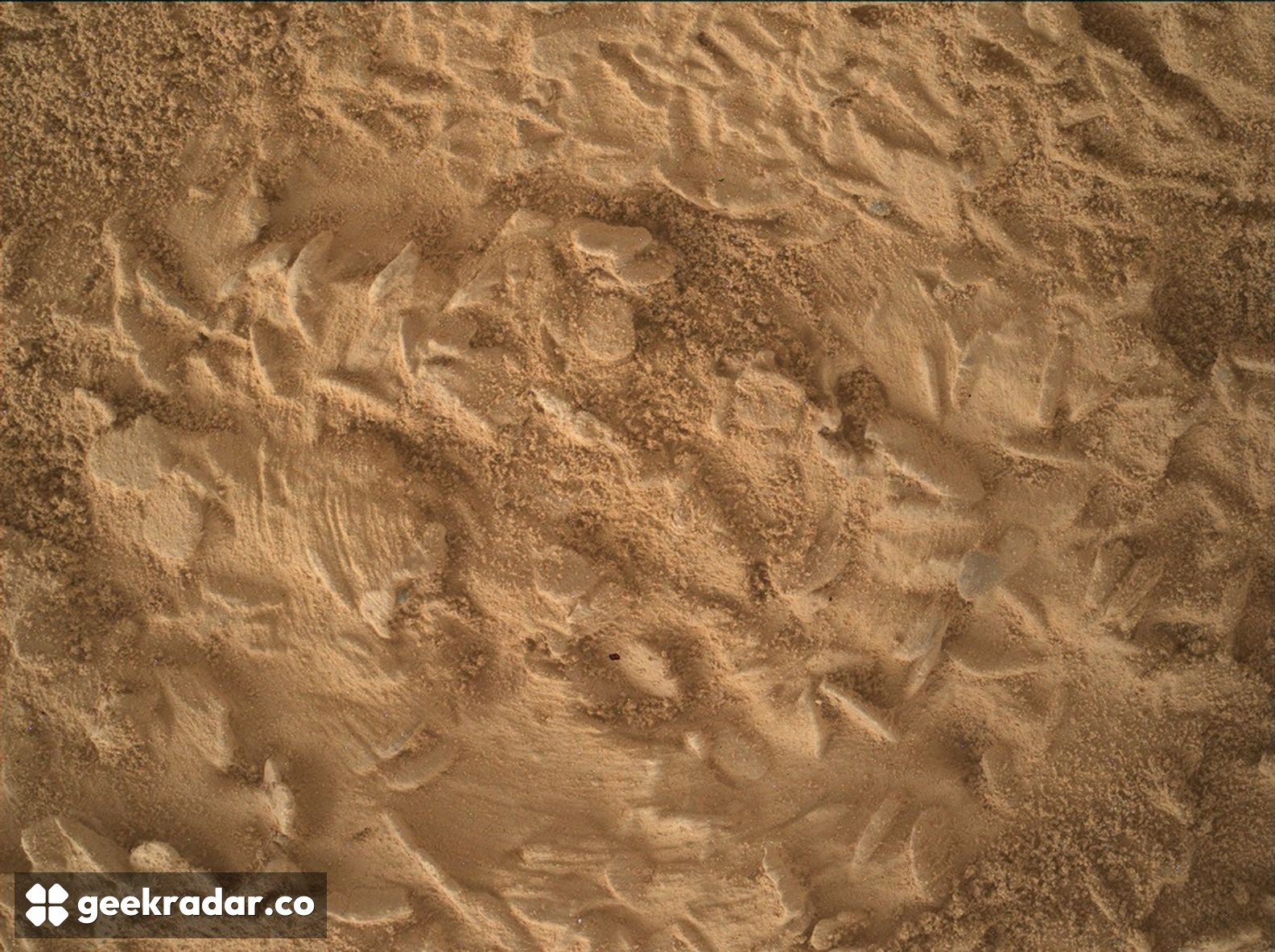
Curiosity's next drilling target is interesting partly because its shape may be misleading. The rock nicknamed Nazca contains abundant disc- and needle-like forms that could record crystal growth on ancient Mars. But even if that interpretation is correct, the minerals present today may not be the ones that originally made those shapes.
The rover team's report published on October 28 describes preparations for drilling, not a completed analysis of a fresh sample. It recounts planning on October 16 and includes a close-up assembled on October 18. Publication, observation and sampling are separate moments in this investigation.
A shape can outlive its original mineral
Minerals tend to form characteristic shapes as their atoms organise into crystals. Their size and geometry can therefore preserve clues about the conditions in which they grew, including the availability of salts and fluids and the temperature at the time.
Later processes can replace one mineral with another while retaining its external form. Geologists call the replacement a pseudomorph. The consequence is straightforward: recognising a shape in a photograph does not complete the chemical identification. Nazca's texture is a reason to investigate its history, not a shortcut to naming its original ingredients.
The neighbouring Chiu Chiu block showed similar forms but was less suitable for drilling. Moving to a workable nearby target allows the team to pursue the same geological question with an instrument configuration that can actually collect a sample. A visually striking rock is not automatically a safe or useful drill site.
Five views add a dimension
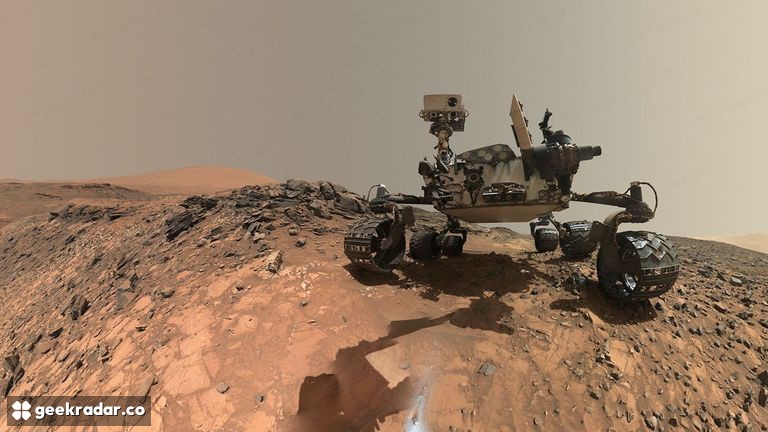
The plan uses MAHLI, the camera at the end of Curiosity's arm, to capture five overlapping views from slightly different positions. Their combination can produce a three-dimensional relief model. Additional focus steps also improve the high-resolution imaging of the small forms.
That matters because a bright patch in a single image could be a surface feature, a raised edge or a lighting effect. Multiple views constrain the geometry. The rover's instruments then provide complementary information: detailed imaging describes the structure, while chemical measurements test what it contains.
The laser asks whether the surface tells the whole story
On a nearby target called Toucan, ChemCam's laser experiment concentrates 150 shots on one point rather than spreading them across five positions. Repeated shots remove tiny amounts of material, allowing the instrument to probe deeper than a normal 30-shot observation at one location.
The team expects roughly five times the usual penetration, not a fivefold improvement in every measurement. Comparing the outer material with deeper layers can reveal whether exposure to modern Martian conditions has altered the surface or whether differences originated during formation.
None of this establishes a biological origin for the textures. It is a carefully staged geological test. Nazca's value lies in the chance to connect an unusual shape with chemistry and depth: three kinds of evidence that may explain why the rock looks this way, and whether its appearance has survived a more complicated past.