NASA’s simulated Mars crew is about to finish 378 days of ordinary life under unusual constraints
The October 31 exit ends a long test of isolation, workload and communications. An Earth-based analogue answers selected questions, not every Mars problem.
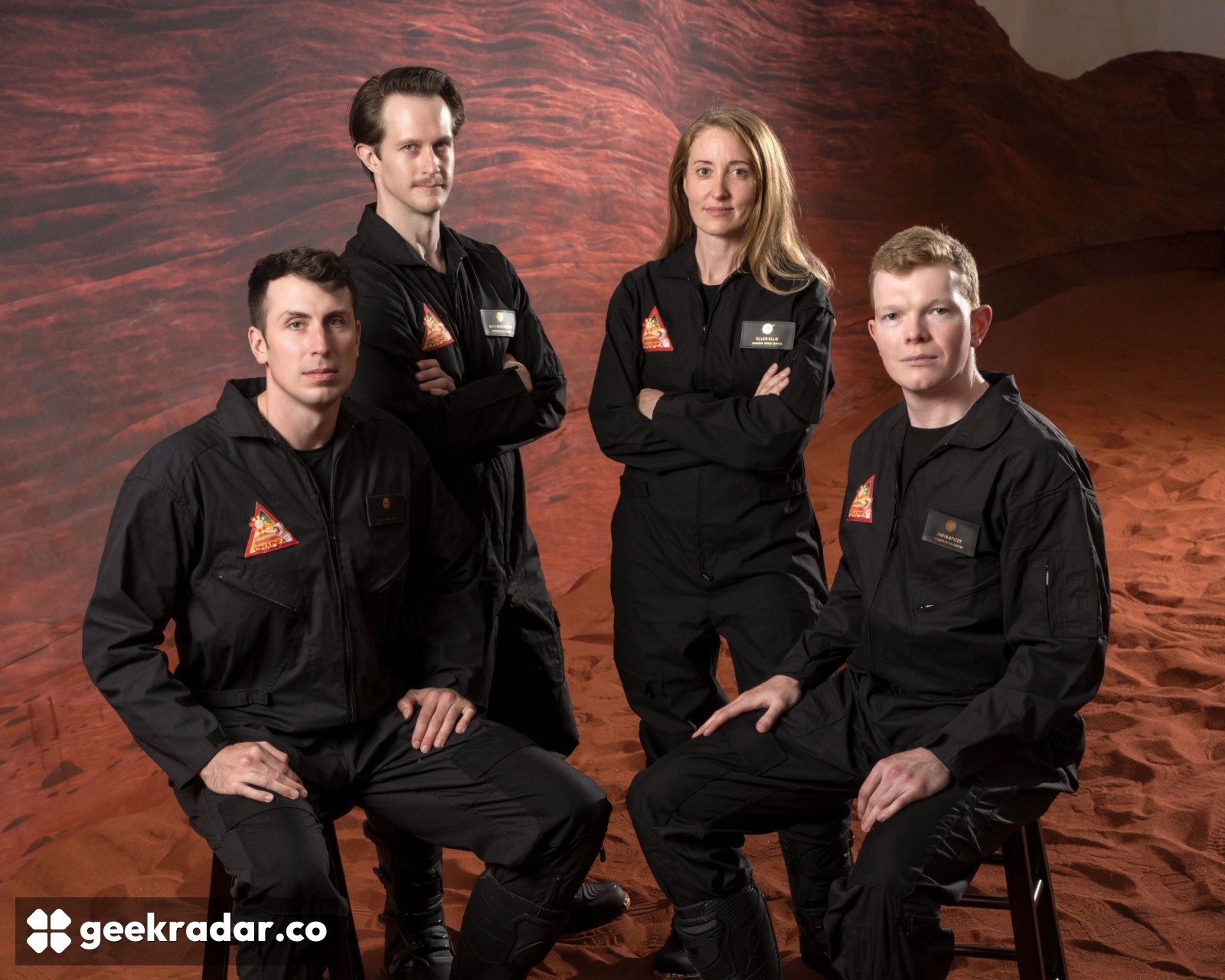
Four volunteers are due to leave NASA's simulated Mars habitat on October 31 after 378 days inside. The scheduled exit closes CHAPEA's second long-duration mission, an experiment in running daily life and scientific work under isolation, limited resources and delayed communications.
The setting is Houston, not another planet. That distinction is what makes the experiment manageable: researchers can study selected pressures of a distant mission without reproducing every danger of travelling to Mars. The exit announcement sets live coverage for 19:00 UTC on October 31, through NASA Johnson's channels.
The experiment is in the routine
Ross Elder, Ellen Ellis, Matthew Montgomery and James Spicer entered the 3D-printed habitat on October 19, 2025. Its roughly 1,700 square feet, or 158 square metres, contain the living and working areas for a year of maintenance, exercise, plant growing and simulated surface operations.
The workload is part of the research. A food system that works on paper still has to fit around exercise, repairs and other duties. A schedule that appears efficient for one week can become harder to sustain when the same small group repeats it for months. Long-duration observation exposes those interactions in a way a short demonstration cannot.
Communications are another constraint. A crew accustomed to immediate help must work differently when a reply is delayed or contact is temporarily unavailable. NASA's mission overview includes a simulated two-week communications blackout among the experiences discussed by the crew.
A Mars analogue has deliberate boundaries
CHAPEA stands for Crew Health and Performance Exploration Analog. An analogue reproduces selected conditions well enough to investigate a question; it does not claim to be a complete copy of the destination.
This makes the results useful without making them universal. Four people in one mission cannot represent every future crew, and living in a controlled habitat is different from knowing Earth is months away. Researchers must interpret the observations within those limits rather than turn successful completion into proof that human Mars exploration is solved.
The data has uses before Mars
NASA says the work can inform food-system design, crew-time allocation, communications bandwidth and behavioural support for deep-space operations, including lunar missions. Some problems are shared across destinations even when the travel time and physical environment differ.
The exit ceremony will be the visible ending. The more consequential work is the analysis of what happened between the milestones: which routines remained manageable, where resources or schedules created friction, and what support helped the group sustain its tasks.
CHAPEA's strongest contribution is not the spectacle of four people emerging after a year. It is the chance to discover, on Earth, which ordinary parts of living together become mission-critical when the ordinary option of going home is removed.