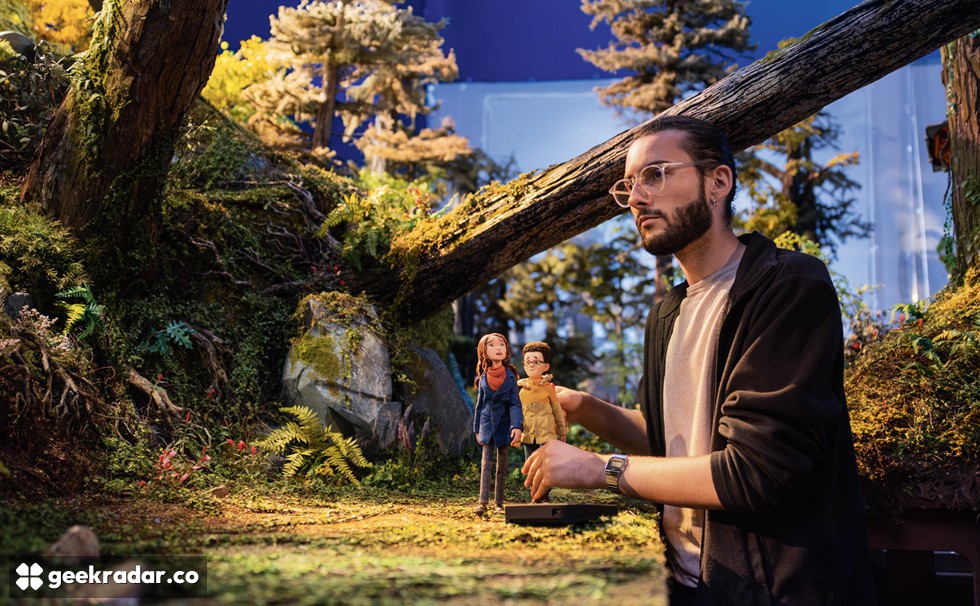
Wildwood’s handmade world is worth a closer look, without the spoilers
LAIKA’s film and a London exhibition offer two ways to examine the design behind stop-motion, from puppets to miniature sets.
Wildwood's arrival in cinemas brings an unusually tangible companion: a chance to examine the objects from which its animated world was built. The film opened in the United States and the United Kingdom on October 23, while London's Design Museum is showing puppets, sketches, props and miniature sets in an exhibition created with LAIKA. It offers a spoiler-free way into the film through its construction rather than its plot.
The US distributor's announcement identifies Travis Knight as director and Chris Butler as screenwriter, adapting Colin Meloy's book with illustrations by Carson Ellis. The premise needs little elaboration: Prue enters a hidden forest to rescue her baby brother. What she finds there is best left to the film.
A world has to work at several scales
The Design Museum exhibition follows the project from visual research through character and environment design, costume, puppet fabrication, rapid prototyping, set construction and cinematography. That sequence makes a useful point about stop-motion: the final image is the meeting place of many kinds of design, rather than the output of a single technique.
A puppet has to communicate at the scale of a close-up while existing as an object that can be handled. A miniature environment has to look coherent through a camera, not merely attractive on a workbench. Costume and lighting must support the same illusion of scale. These are general demands of the medium, and the exhibition's objects make them easier to consider without needing a plot explanation.
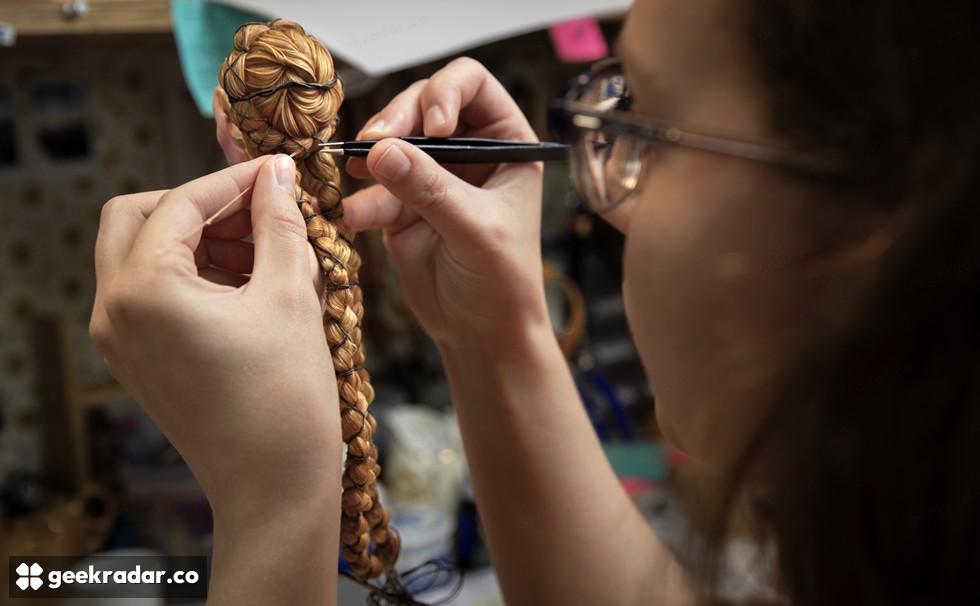
The production photograph accompanying this article shows close manual work on a figure's hair. It is a small detail with a large implication: material texture is designed before the viewer encounters it as a fleeting part of a scene. Understanding that process need not reduce the illusion. It can reveal how many decisions are compressed into an apparently effortless image.
Handcraft and technology are not opposites
LAIKA's exhibition includes rapid prototyping alongside traditional model-making stages. The studio's history also includes an Academy scientific and technical award for its use of 3D printing, as the museum records. That is a more informative account of the work than a contest between “real craft” and computers.
The interesting question is what a tool lets an artist control. Precision fabrication and physical animation can contribute to the same performance, just as lenses and lighting are technological choices even when the subject is a handmade object. Recognizing that combination avoids reducing years of work to either a sentimental craft story or a claim that the software did everything.
Cinema and exhibition are separate experiences
Fathom's October 23 date covers the US theatrical release. The museum independently confirms the same date for UK cinemas. Neither establishes streaming availability or the opening date in every territory. Local cinema listings remain the appropriate check for an actual screening.
The London exhibition runs from October 15, 2026, to January 10, 2027. Its admission is separate from seeing the film, and a museum visit is not required to appreciate the work on screen. The official film site supplies the release's own promotional context.
For readers following animation, the two releases create a productive change of perspective. In the cinema, the aim is to believe in a living world. Among the objects, the interest lies in discovering how deliberately that belief was assembled. A tiny strand of fabricated hair can become evidence of the larger ambition: making a place feel inhabited before any character has explained it.