Path of Exile 2’s December 11 launch changes the campaign and the route through your build
Shadow, Duelist, six acts and relocated jewel sockets make 1.0 more than an extra set of chapters.
Path of Exile 2 is scheduled to leave Early Access on December 11, Pacific time, with a complete six-act campaign and free access. Grinding Gear Games’ full-release announcement also introduces the Shadow and Duelist, a new challenge league and changes to the passive tree that reach beyond the new characters.
The significant point is the combination. Players will not simply receive the last campaign chapters while every familiar build stays untouched. New weapon mechanics arrive alongside revisions to existing skills, support gems and the paths through which a character develops. For someone returning after a break, 1.0 is a reason to revisit assumptions as well as install new content.
Two classes change the timing of an attack
The Shadow brings daggers, traps and a stealth system. According to the announcement, monsters cannot see a character in stealth until they are close, while dagger skills gain additional effects from being hidden. Traps detonate in the order they were thrown when the attack sequence triggers them.
That order is the interesting mechanical detail. Preparing several actions before an encounter can give the player control over the sequence, rather than only over the next skill pressed. It creates room for setting up a combination, although the announcement alone cannot establish which combinations will dominate after release.
The Duelist approaches timing through sword stances. Ready Stance modifies sword skills, with Sand and Blood Stances extending the system. The two announced Ascendancies are Knight and Master-at-Arms; the Shadow’s are Assassin and Infiltrator.
These names describe the announced choices, not a finished ranking of viable builds. The common thread is that positioning or preparation can change what a familiar attack does. That is more consequential than adding another visual effect to an otherwise identical rotation.
The passive tree changes the route, not just the destination
Grinding Gear says all jewel sockets are moving into passive clusters, alongside hundreds of new stats. Its stated aim is to make players consider which clusters a build needs rather than routing mainly to collect sockets.
A socket has an opportunity cost because reaching it consumes points that could be spent elsewhere. Moving it into a cluster can make the surrounding choices more relevant to the route. Whether that produces more varied builds depends on the final values and interactions; moving the nodes is not, by itself, proof that every option becomes competitive.
Support gems are also being rebalanced, and existing classes receive substantial changes. The Mercenary’s reload system is one example. This means an old build guide can remain useful for understanding an idea while becoming unreliable about the precise route to achieve it.
A league that adds management to the endgame
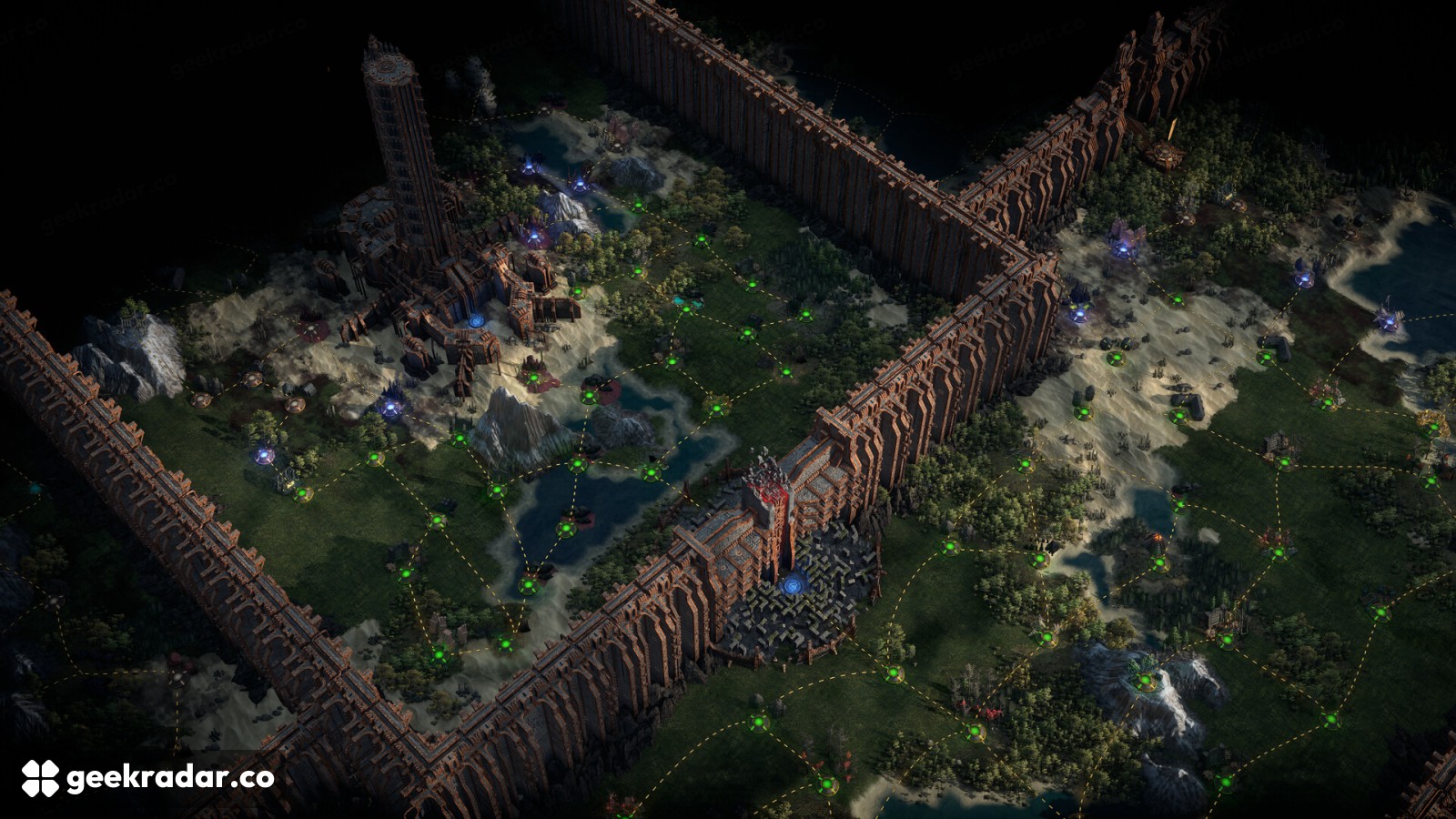
Conquerors of Wraeclast introduces troop recruitment, fortifications and a stronghold, with faction choices and commanders participating in Atlas progression. The announcement describes a real-time endgame component alongside the player’s own combat. The story details are best left for the game; the important structural change is another layer of decisions between encounters.
That can offer a reason to return to a developing campaign of objectives, but it also adds systems to learn at the same time as character balance changes. Newcomers and returning players will arrive with different needs: one group is learning the foundation, while the other must identify which parts of its knowledge still apply.
The Steam listing still records the Early Access product, so its older release date should not be confused with the announced December transition. The clearest way to read 1.0 is as a new baseline. The campaign gains its ending; the build you take through it may need a new beginning.