Saros’s boss design asks a useful question: what did losing teach you?
Housemarque and Nixxes explain how concepts become readable encounters. A look at the process, without boss identities or story revelations.
A difficult encounter has to teach the player something useful about losing. That is the most interesting thread in Housemarque and Nixxes’ October 23 account of developing Saros: the work involves repeated prototypes and playtests, with visual design, animation and combat behavior developed together.
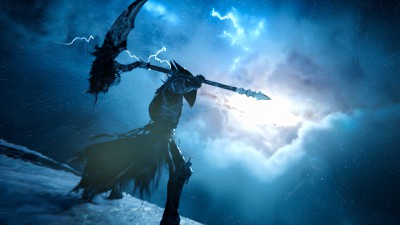
The account discusses individual bosses in detail. This article leaves their identities, locations and transformations out. The useful spoiler-free story is how two studios divide the work of making an encounter readable enough to learn, while keeping it demanding enough to matter.
Image: Sony Interactive Entertainment / Housemarque.
A concept becomes a playable argument
Housemarque describes establishing the creative and gameplay direction, including the visual-effects language that connects encounters to the broader game. Nixxes contributes encounter design, animation, environment and lighting work, as well as technical implementation. Those responsibilities meet in playable builds, where an appealing concept must survive contact with player movement and reaction time.
The development sequence moves from a brief and pitch into prototypes, a first playable version, iteration and polish. The distinction between a concept and a prototype is consequential. A drawing can communicate scale or atmosphere; an interactive version reveals whether a player can understand what is happening quickly enough to respond.
Consider a warning animation. It has to be visible from the player’s position, occur early enough to convey information and remain distinguishable from the surrounding effects. Making it more spectacular can help establish identity, but additional motion and light can also compete with the signal the player needs. The design problem is the relationship between those elements, rather than their individual quality.

Readability is part of difficulty
The developers describe evaluating whether a player understands a defeat, can identify something to change and wants another attempt. Those are different questions from whether an encounter can technically be completed. A challenge can be possible while giving poor feedback about why an attempt failed.
The official Saros overview establishes a combat system involving movement, defensive tools and attacks. Encounter design has to give those tools a meaningful place. If the response to every threat were identical, the existence of several abilities would not necessarily create several useful decisions.
This also explains why adjusting difficulty is more involved than changing a damage number. Timing, attack combinations and the clarity of transitions affect what the player can perceive and practice. Our look at Saros’s Zenith options addresses the player-facing choice of challenge; the development account looks at how the underlying encounters are constructed.
Nothing in a studio’s retrospective substitutes for independent judgment about how the finished game feels. It does, however, make the work more specific than a claim that a boss is “epic.” Animation, effects and behavior are carrying information together, and playtesting checks whether that information reaches the person holding the controller.
The strongest test in the account is therefore a modest one: after losing, does the player know what to try differently? An encounter earns another attempt when the defeat leaves behind something more useful than a depleted health bar.