Dragonfly’s simulated Titan flight tests whether the right decision arrives on time
Flight-like avionics, simulated sensors and real-time imagery bring the first Titan landing sequence into a more demanding test.
NASA's Dragonfly has completed a simulated first flight over Titan's terrain using flight-like avionics. The important achievement is not a cinematic view of dunes: it is making navigation, sensor inputs and flight software work together on the timing constraints of a spacecraft that will have to choose its landing site without live help from Earth.
The October 23 test report describes a real-time testbed at the Johns Hopkins Applied Physics Laboratory. Dragonfly did not fly on Titan, or complete this sequence on its final flight system. The team plans to repeat the sequence with the actual spacecraft avionics and run further profiles, including deliberate faults.
A convincing landscape is not enough
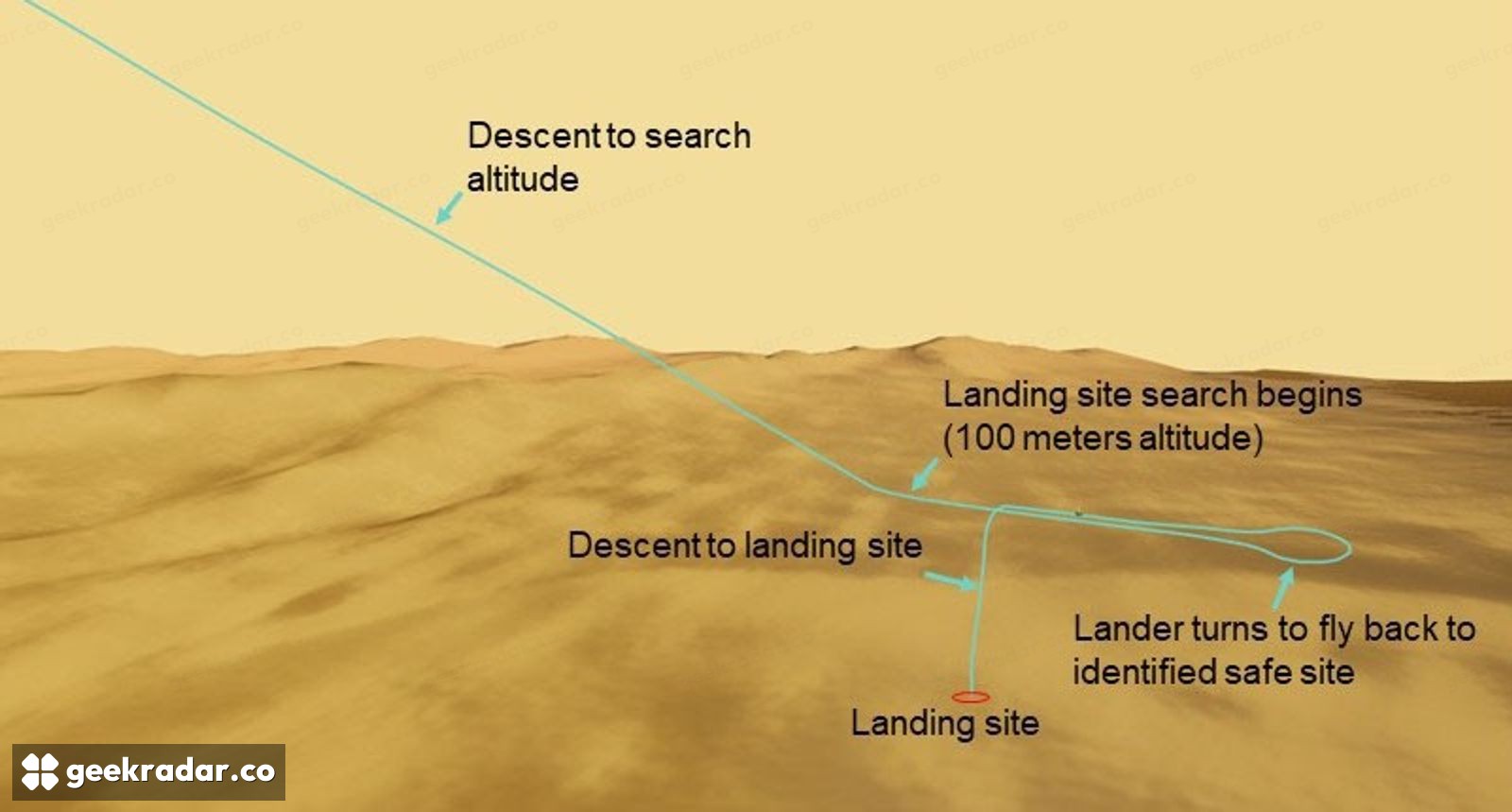
In the simulated sequence, Dragonfly searches for safe terrain, passes a suitable site, turns back and descends to it. That requires more than recognising a clear patch in a still image. The vehicle needs to relate what it sees now to where it is moving and how quickly it can change course.
The test combines flight software with simulated camera, inertial and lidar inputs. Lidar supplies information about terrain height, slope and hazards; the camera stream provides another view of the scene. The useful question is whether those inputs arrive and interact correctly while the control system is making decisions.
NASA says the camera emulator rendered scenes on GPUs on a timescale matched to the cameras' roughly 20–70 millisecond exposures. That detail explains the purpose of the exercise. A perfect answer delivered too late can be useless to a moving vehicle. Testing the sequence in real time helps expose problems that a slower, purely offline simulation could conceal.
Before flight, the spacecraft has to unfold the opportunity
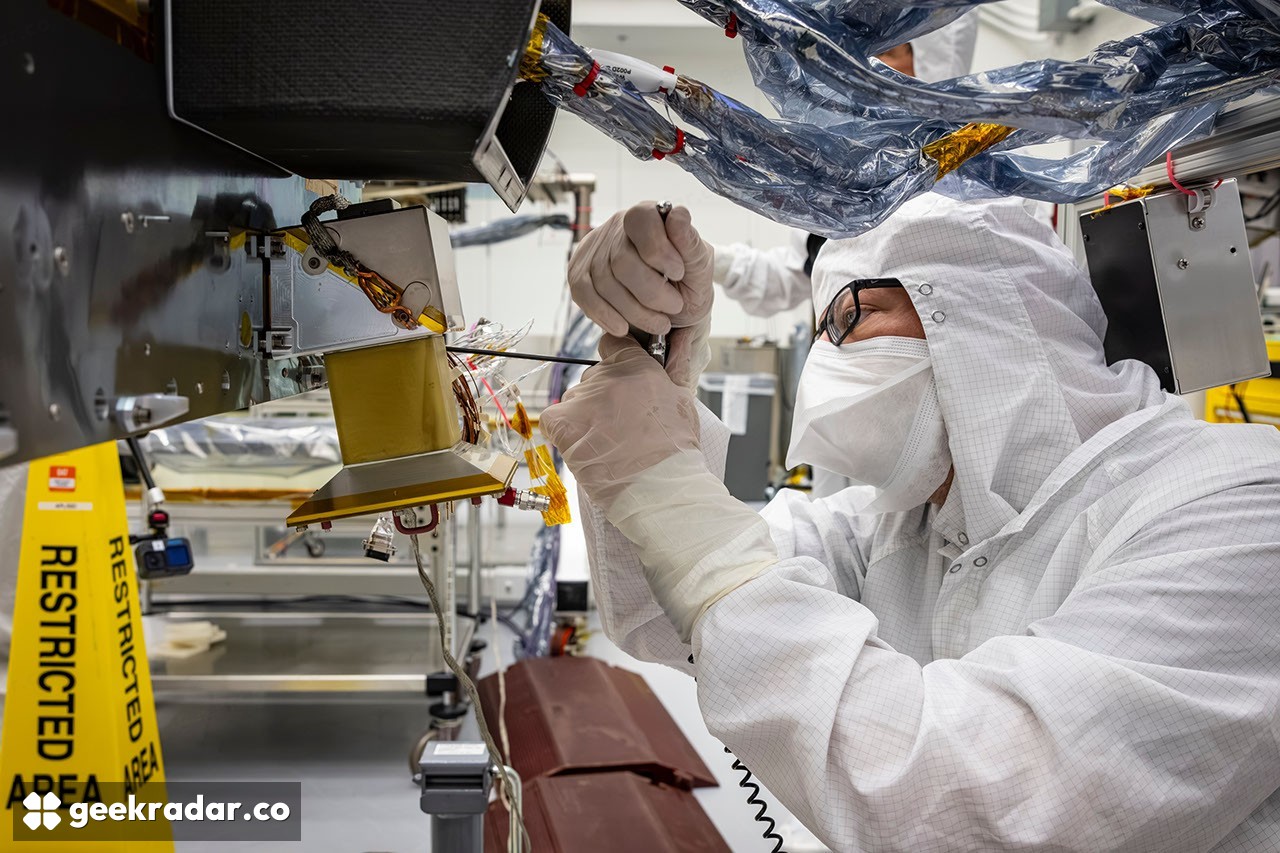
The rotorcraft also needs a reliable transition out of its entry configuration. NASA describes separate testing of the mechanism that lowers Dragonfly beneath its protective backshell before release. Representative loads and different orientations help examine how that mechanism behaves under expected conditions.
The connection between the two test campaigns is straightforward. Software can select an excellent landing site only after the physical system has put the vehicle in a position to fly. Conversely, a reliable release is not enough if the flight system cannot interpret the terrain below. The mission needs both chains to work, in sequence.
It is a useful companion to our coverage of Perseverance's autonomous driving. The vehicles operate in very different environments, but both depend on local decisions when a distant human cannot steer through the immediate situation. Autonomy is a response to the mission's operating conditions, not simply an extra feature.
Mobility serves the science
NASA's mission overview lists launch no earlier than July 2028 and arrival in late 2034. Dragonfly is intended to visit multiple sites and study Titan's chemistry and habitability; it should not be described as having already found evidence of life.
Flying gives the mission a way to compare places rather than accept one landing site as the whole story. That scientific range depends on the less spectacular work now underway: turning sensor data into a safe decision, on time, with no pilot waiting just outside the frame. The first successful landing on Titan begins with many opportunities to fail safely on Earth.