Psyche’s long acceleration is a lesson in patient propulsion
NASA’s spacecraft has begun its sustained electric-propulsion leg. A tiny continuous push matters more than a spectacular burst.
Psyche is settling into the part of its journey that a launch video cannot convey: years of gentle acceleration. NASA’s October 22 mission update says the spacecraft began sustained electric propulsion on September 28, following its Mars gravity assist. The plan calls for thrust during almost 90 percent of the remaining cruise toward a summer 2029 arrival.
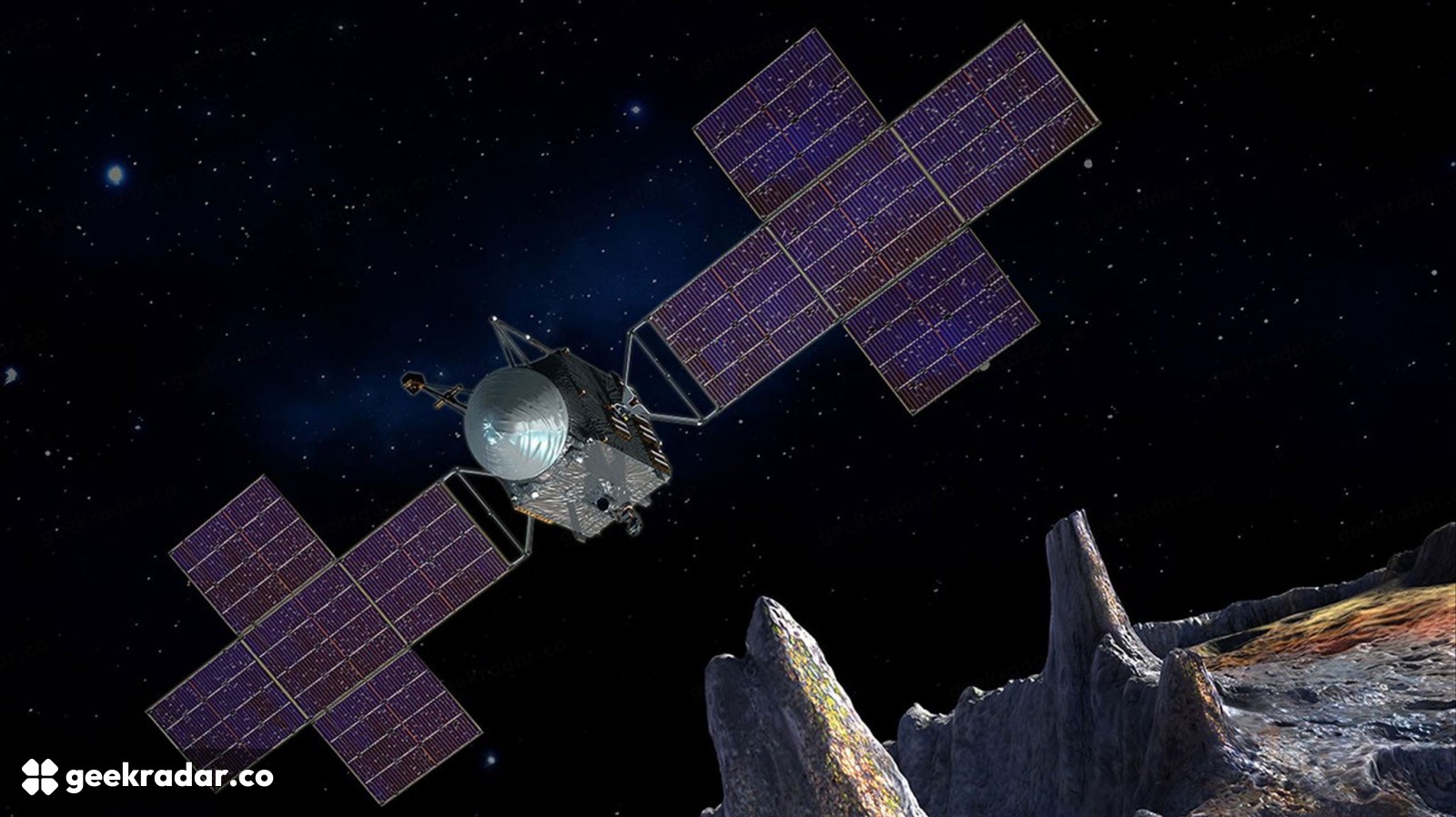
The distinction between those dates matters. This week’s report describes an operating phase already under way; the asteroid encounter remains ahead. The image above is NASA’s mission concept, not a view of an arrival that has happened.
A small force, applied for years
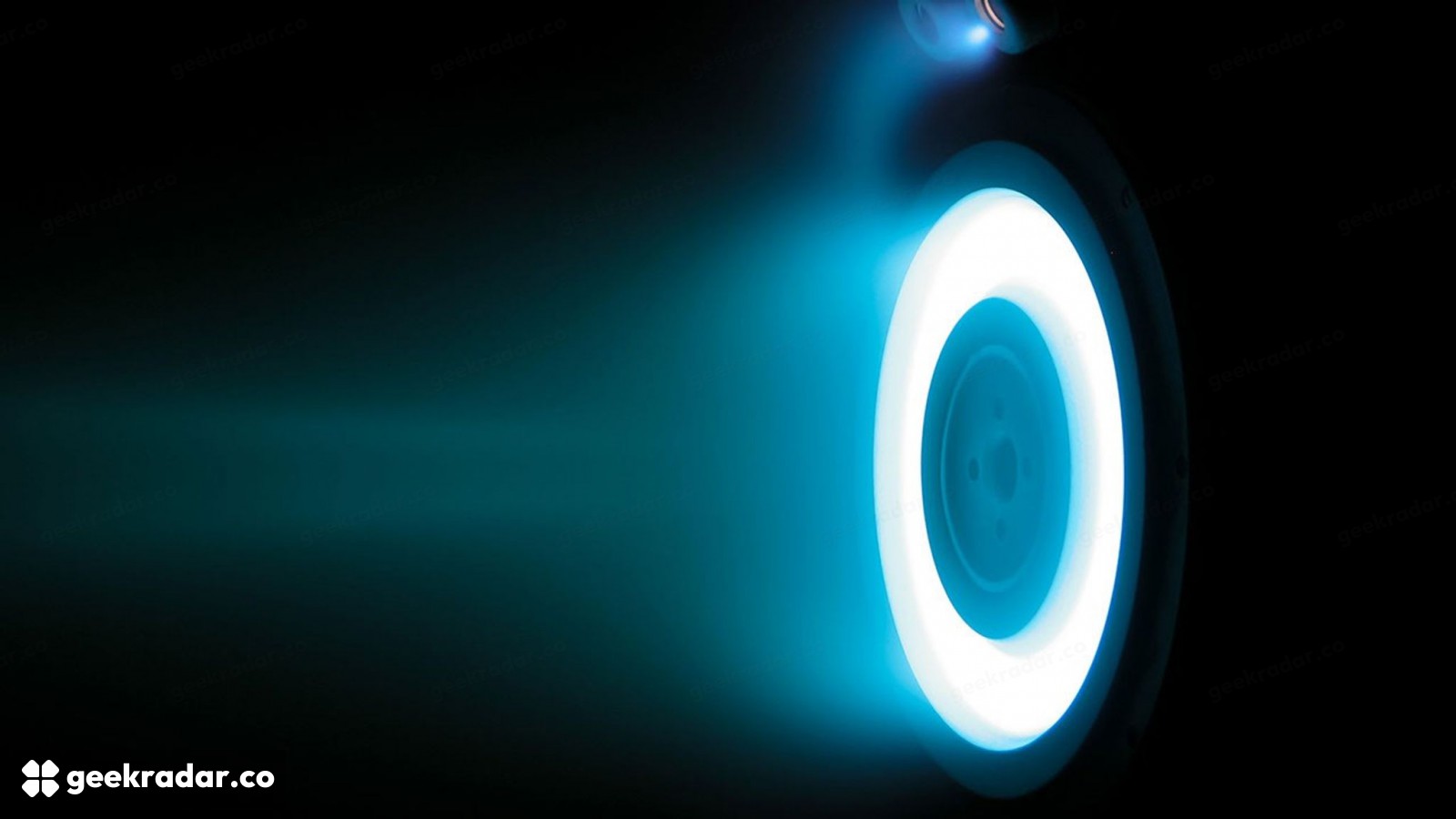
Psyche’s Hall thrusters use electricity to accelerate charged xenon atoms out of the spacecraft. Expelling that material provides the push. Solar panels supply the electrical power, but xenon remains the propellant: electric propulsion does not mean a spacecraft can move indefinitely without carrying anything to throw away.
JPL’s explanation of the propulsion system makes the division of labor clear. A chemical rocket handles departure from Earth; efficient electric thrusters reshape the trajectory over the long cruise. The older explanation contains an earlier itinerary, so the current mission update is the relevant source for arrival timing.
One of the four thrusters operates at a time, with maximum thrust around 250 millinewtons. That is an extremely small push by launchpad standards. Its value comes from persistence and efficient use of the propellant budget, not from lifting a heavy vehicle against Earth’s gravity.
Sunlight becomes a changing constraint
The farther Psyche travels from the Sun, the less light reaches a given area of solar panel. NASA expects to reduce propulsion power as the cruise progresses. Large arrays therefore do more than give the spacecraft a distinctive silhouette: they are part of the propulsion system’s operating envelope.
This also explains why nuclear electric propulsion addresses a different power-supply question. Electric describes how a thruster uses energy; it does not specify where that energy originates. Solar and nuclear systems face different engineering constraints even when both feed an electric propulsion system.
There is another quiet complication. Small torques from the thrusters accumulate in the spacecraft’s reaction wheels, which manage orientation. The team periodically uses a different thruster at low power to unload that accumulated momentum. Keeping the vehicle pointed correctly and changing its path are connected jobs, but they are not identical.
The destination is still a scientific question
The metal-rich asteroid may preserve material associated with the building blocks of rocky planets. Its nature is something the mission must investigate, rather than a conclusion established by the name or a striking illustration.
That gives this long cruise a useful perspective. The engineering achievement is not simply reaching a distant dot. It is arriving with the trajectory, orientation and remaining resources needed to turn that dot into measurements. For Psyche, an uneventful day of steady thrust is a day of progress.
Cover concept and test photograph: NASA/JPL-Caltech.