The Orionids peak tonight. Wait for the Moon to get out of the way
The October 21–22 meteor shower favors a dark interval before dawn. NASA’s sky chart and realistic viewing rates help make the early start worthwhile.
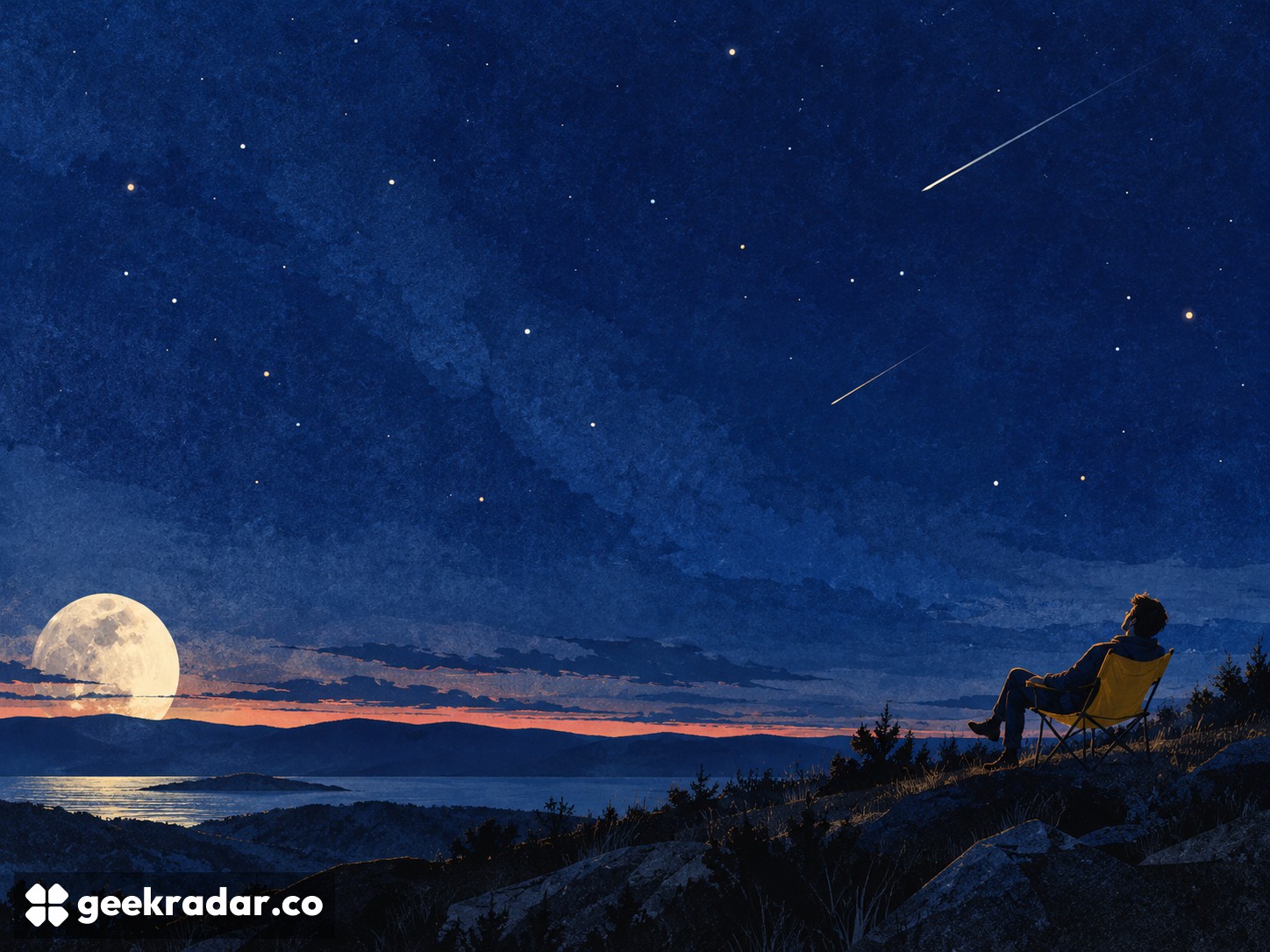
The Orionids peak tonight, October 21 into October 22, but the best reason to set an alarm is the Moon's departure rather than the shower's advertised hourly rate. A bright waxing gibbous Moon will conceal fainter meteors for much of the night. The useful opportunity comes later, when it has set and dawn has not yet brightened the sky.
NASA's October skywatching guide identifies that pre-dawn interval as this year's better viewing window. It is a practical distinction: an hour under darker skies can be more rewarding than several hours watching through moonlight. Check the Moon's setting time and the weather for your location before choosing when to go out.
A peak is a window, not an appointment
Meteor showers do not switch on at a specified minute. Earth travels through a stream of debris, and the peak marks the most promising part of that encounter. NASA's Orionids overview gives an activity period extending from early October into early November. If tonight is cloudy, nearby nights can still offer a chance, although the expected activity changes.
The often-quoted rate of roughly 10–20 meteors an hour assumes dark viewing conditions. It is not a promise that someone on an illuminated balcony will see a streak every few minutes. In its October observing advice, NASA gives a much more modest estimate of about three to six an hour from suburban skies. Moonlight, clouds and the amount of sky visible from your position can reduce the experience further.
That difference changes how to plan. A brief glance between messages is poorly suited to a scattered, unpredictable display. A comfortable chair, warm clothing and a stretch of uninterrupted looking make more sense than trying to catch a scheduled burst.
Where to look, and why Orion is only a signpost
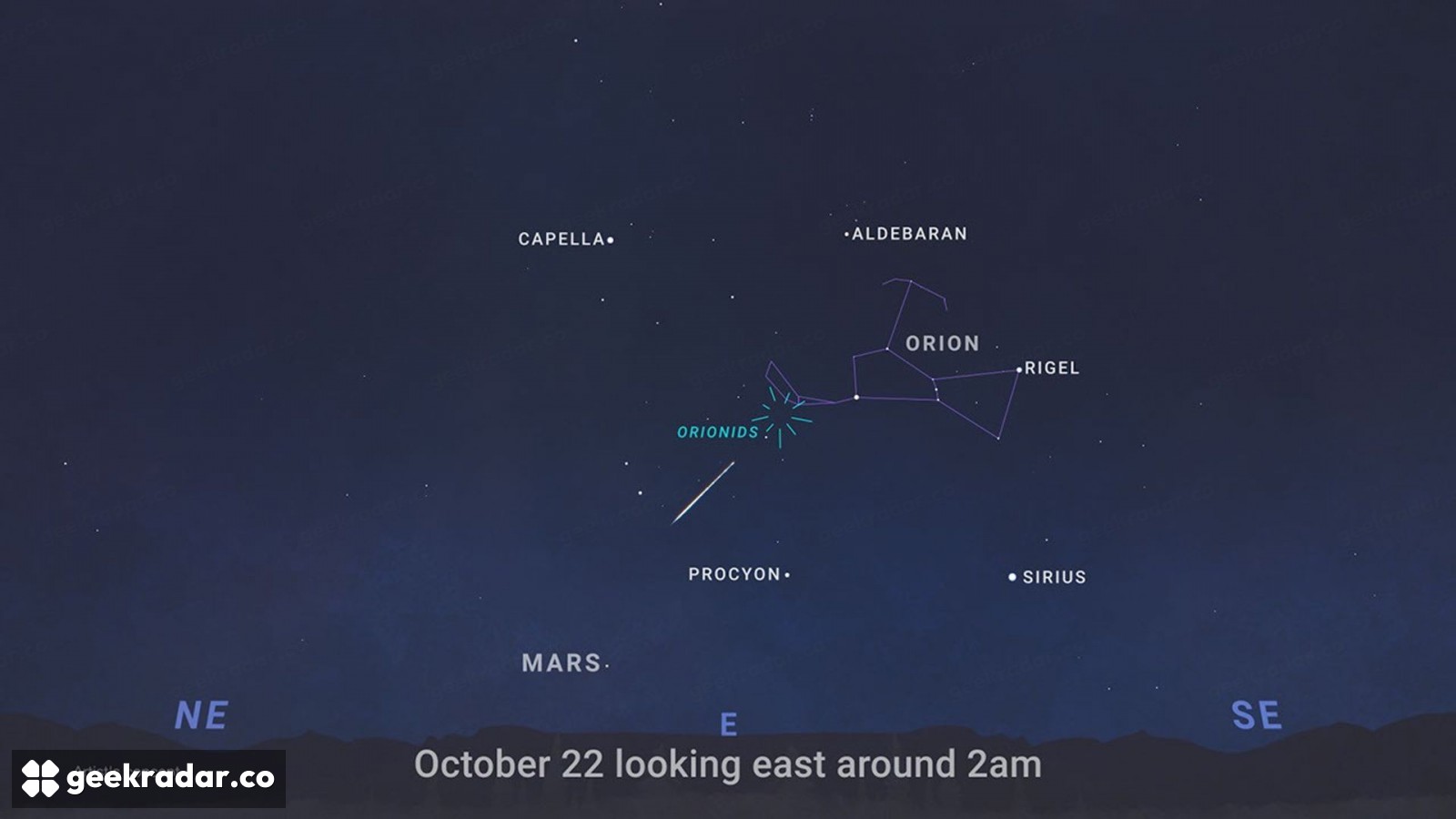
The shower takes its name from its radiant, the point near Orion from which its meteors appear to spread. NASA's chart shows that reference point. It helps orient an observer; it does not mean every meteor will be visible inside the constellation.
Looking across a large area of sky is more useful than staring at the radiant. NASA recommends looking roughly 45–90 degrees away from it, where meteor trails can appear longer. The shower is observable from both hemispheres, with the period after midnight generally favored. The chart's horizon and clock label are an observing illustration, not a substitute for local sky conditions.
The particles themselves come from Halley's comet. Earth encounters material the comet left behind; Halley does not need to be passing nearby tonight. Small pieces entering the atmosphere at around 66 kilometers a second produce the brief luminous trails. Orion supplies a direction on our sky, while a comet supplies the debris. Those are very different roles.
A modest display can still be worth the early start
There is no telescope requirement. A narrow magnified view would work against the aim of watching a wide expanse of sky. Nor does a spectacular long-exposure photograph establish what the naked eye will see in a single moment: a photograph can accumulate events over time.
The Orionids have also inspired this week's Pokémon GO event, but the real shower follows the weather and the Moon rather than an event timer. For more astronomy coverage, visit our Science desk.
Tonight's sensible ambition is a patient look at a few fast fragments of an old comet, not a sky full of simultaneous streaks. The most valuable adjustment to your plan may be the least glamorous one: wait until the Moon has stopped lighting the stage.