NASA sharpens Roman’s focus as the telescope prepares for survey science
Instrument checks and optical adjustments are turning a launched observatory into a calibrated measuring system.
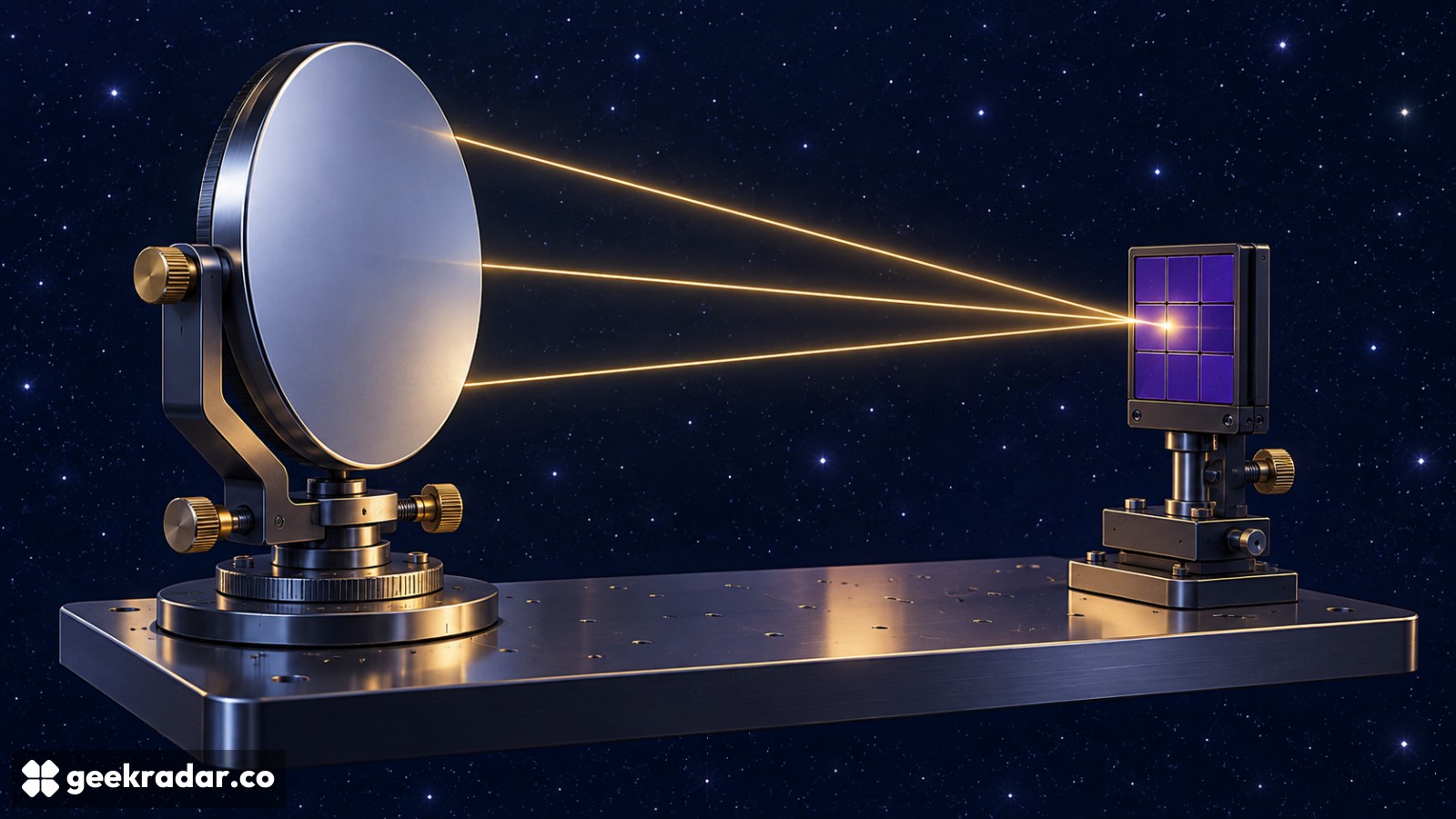
NASA says the Nancy Grace Roman Space Telescope has completed a substantial round of instrument checks and optical adjustments following its August 30 launch. In an October 14 update, the agency describes testing the Wide Field Instrument’s detectors, calibration components and thermal systems while refining the telescope’s focus. NASA’s commissioning update.
The agency reports an optical error of 63 nanometers RMS for the Wide Field Instrument after corrections, compared with a requirement of about 90 nanometers. Calibration work for the Coronagraph Instrument continues ahead of attempts to demonstrate its starlight-blocking capability.
Why a quiet milestone matters
Our editorial reading is that commissioning deserves attention even when it does not come with a headline discovery. An observatory becomes scientifically useful through confidence in its measurements. Knowing what an instrument does under controlled conditions is part of knowing how to interpret what it sees in the sky.
This update therefore answers a different question from a future science paper. It concerns the readiness and measured performance of the observing system. It does not yet tell us what Roman’s surveys will discover.
Read the metric in its own terms
The optical error figure is evidence about a particular performance measure. It should not be expanded into a claim that every scientific result will be a fixed percentage better, or that the telescope has already delivered a particular discovery.
For our next assessment, we would look at how the remaining calibration work is documented and how the first released observations are characterized. Clear explanations of uncertainties would make those observations more useful to readers, especially when striking images begin circulating without their technical context.
The bridge from launch to science
There is a useful parallel with our retrospective on Webb’s first images: the public spectacle and the measurement story are connected, but they are not identical.
Follow our NASA topic and Science section for further mission coverage. For now, Roman’s reported focus improvements are a concrete engineering result and a step toward the surveys that will test its scientific promise.