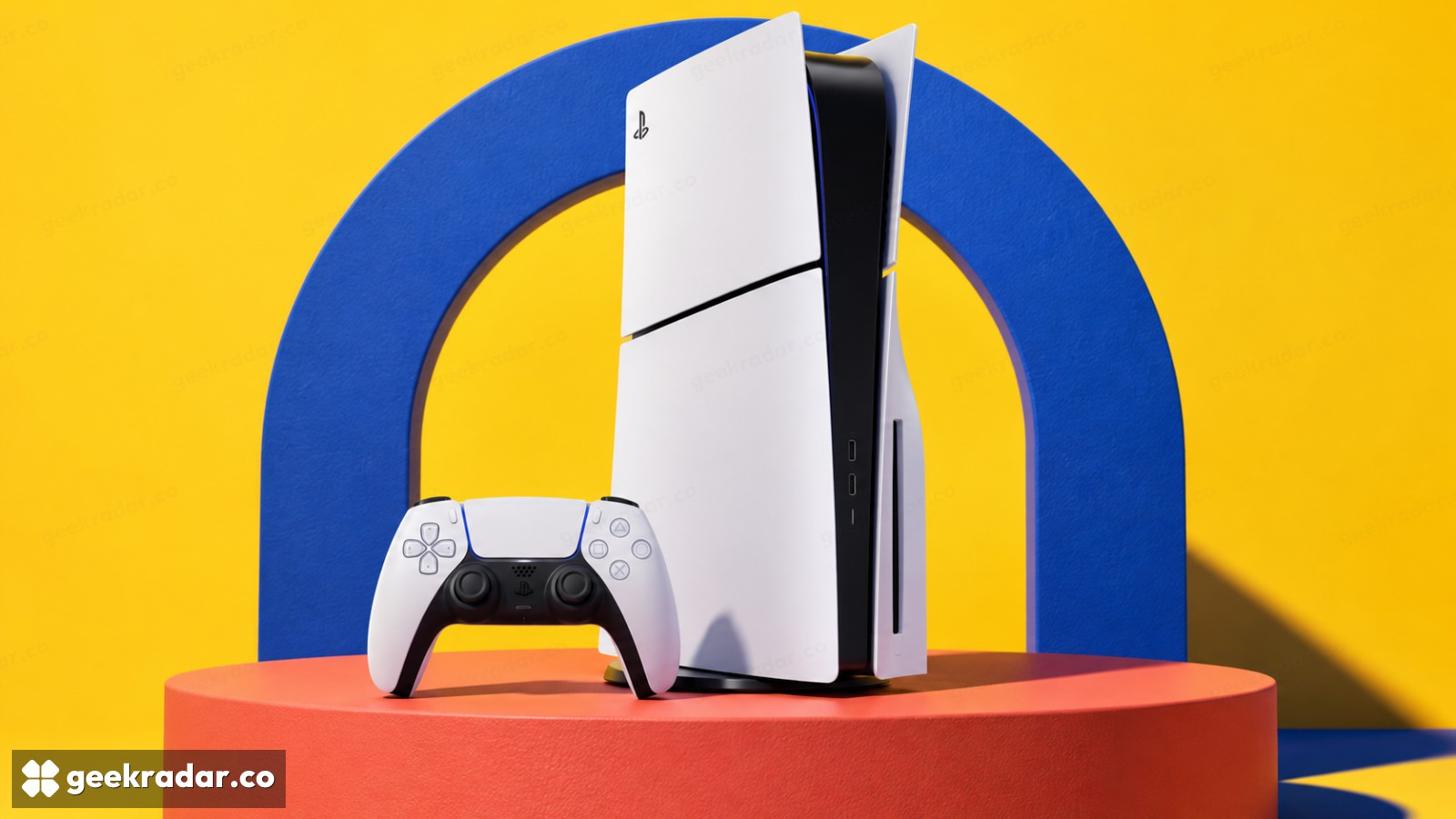
QSSR brings AI upscaling to PS5, one game integration at a time
Sony’s October update adds an option to Wolverine and Ghost of Yōtei. It does not erase the hardware differences between PS5 and PS5 Pro.
Sony's standard PS5 now has a new route to AI-assisted image reconstruction. Quick Spectral Super Resolution, or QSSR, was announced on 1 October, with Marvel's Wolverine and Ghost of Yōtei named as its first supported games. This is an explanation of that recent update, not a new announcement on 16 October. Sony's engineering post says both games received an additional QSSR graphics option.
The change matters because Sony's earlier PlayStation Spectral Super Resolution, PSSR, was associated with PS5 Pro. QSSR uses a streamlined neural network and a PS5-specific implementation developed through the AMD collaboration called Project Amethyst. Sony continues to position PSSR as the higher-quality option on Pro.
Software can improve the picture without equalizing the consoles
An upscaler works within a rendering budget. If it can reconstruct a convincing output from the information a game supplies, developers gain another way to balance image quality and performance. A lighter implementation makes that approach feasible under different hardware constraints.
It does not turn the original machine into the Pro model. In its 2024 PS5 Pro announcement, Sony identified a larger GPU, faster memory and stronger ray-tracing capabilities alongside PSSR. Reconstruction is one component of that hardware-and-software package. Bringing a related technique to another console does not add those physical resources.
That is a useful way to avoid two exaggerated readings of the update. QSSR need not match the Pro's best output to improve the standard PS5 experience. Equally, the arrival of an AI technique does not establish parity between all graphics modes on the two machines.
A patched game is the unit of support
The first two games are specific integrations. Sony says QSSR will be offered broadly to PlayStation developers, which is different from automatically replacing the graphics pipeline of every installed game. Wider access to a library creates the opportunity for support; it does not establish a completed patch for a particular title.
Image stability also needs to be judged in motion. Thin geometry, fine foliage and newly revealed surfaces can look convincing in one still frame while behaving differently during a camera pan. Sony and the developers describe improvements in detail and stability, but this article does not claim independent comparisons or measured frame rates.
Our earlier article on GeForce NOW's DLSS controls examined the value of making reconstruction choices visible to players. QSSR brings a similar practical benefit to supported PS5 games: another graphics option that can be assessed on the display someone actually uses.
For readers of our gaming coverage, the useful development is software extending the options on existing hardware. Its value will depend on the game implementation, not on treating the word “AI” as a universal image-quality guarantee.