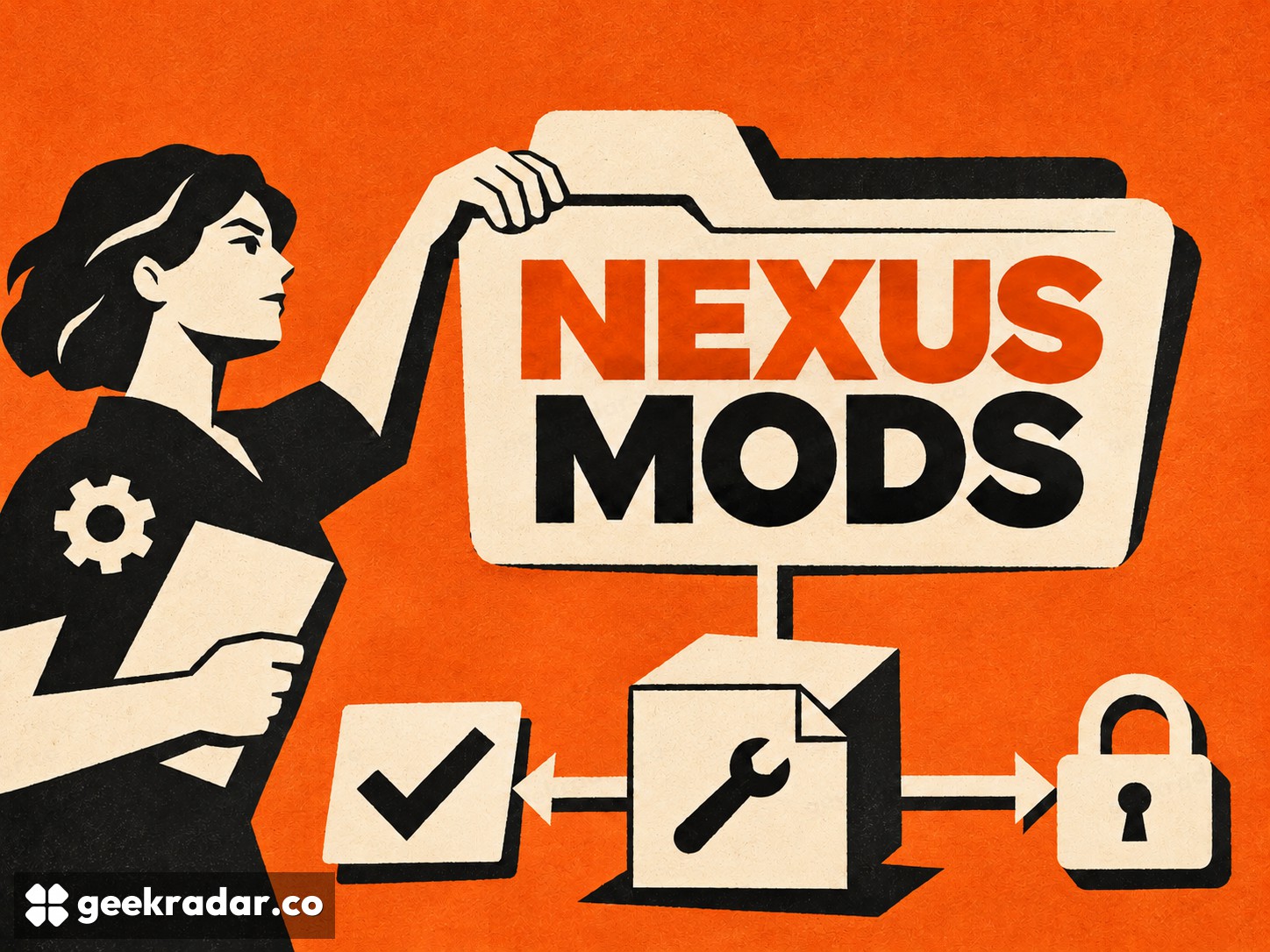
Nexus Mods separates AI disclosure from permission to reuse a mod
The revised policy creates different obligations for generated content and assisted workflows. January’s review boundary is not an automatic deletion order.
Nexus Mods is tightening disclosure and permission rules around AI-assisted work and derivative mods, but it is not announcing a blanket ban on AI. Its updated policy distinguishes generated mod content, promotional media and developer-led work with limited AI involvement. It also separates permission to use a mod from permission to feed its files into AI workflows or host a parallel version.
The transition began on November 3. New uploads must complete the updated fields immediately; the 60-day grace period for specified new requirements ends on January 2, 2027. Existing copyright rules and basic disclosure obligations remain active during that interval. “There is a grace period” therefore does not mean a new upload can leave the new questions unanswered.
A label now needs to describe where the AI is
The categories address different objects. Generated code, voices, textures or dialogue inside the mod belong to the content classification. Generated thumbnails, promotional pictures or descriptions on its page belong to the media classification, even if the playable mod contains none of those assets.
For AI-assisted work led by a developer, the page must identify the tools used and the outputs actually present in the final mod, alongside the evidence required by the submission guidelines. An author cannot use a broad “assisted” label to avoid explaining whether the contribution was code completion, texture upscaling or cleaned audio.
The practical benefit for a downloader is specificity. A mod with an AI-generated promotional image and a mod built around synthetic dialogue may raise different questions about quality, compatibility and personal preference. Putting both under one vague badge would conceal the distinction the new fields are intended to expose.
Download access is not permission for every reuse
The policy sets an “Ask Me” default for the new AI and fork permissions. It covers training and datasets as well as using files in automated generative editing workflows. Hosting a fork or parallel version requires explicit authorization or an applicable open permission.
An inactive author does not automatically turn a project into unrestricted material. The policy describes special handling for older permissions and unresponsive authors, but silence alone is not a general approval to republish. That is particularly relevant for maintenance efforts: wanting to keep an abandoned mod working does not settle the permissions attached to its code, audio and art.
Nexus also explicitly recognizes that valid underlying copyleft licences, such as the GPL, are not overridden by a website’s default permission fields. A mod may contain several kinds of material with different terms. Reading the licence and reading the page’s permission settings answer related questions; neither should be discarded simply because the other is easier to find.
January is a review boundary, not an automatic deletion switch
After the grace period, the stated process refers noncompliant mods to Trust & Safety, notifies authors and asks them to fix missing disclosures or permissions. Continued failure after notification can lead to moderation, restrictions or removal. That is different from a promise to delete every incompletely tagged legacy mod at midnight on January 2.
For authors, the useful work is to document what is inside the upload and what others may do with it. For players, the change should make those answers easier to inspect before installing or building on a project. The strongest part of the policy is not the presence of another badge; it is the insistence that the badge point to a specific contribution and a specific permission.