Google.org backs 17 AI science projects—the experiments are the story to follow
A $36 million funding round spans climate, materials and life sciences; its value will be demonstrated through research outcomes.
Google.org has selected 17 organizations to share $36 million through its AI for Science Impact Challenge. Announced on October 14, the awards cover climate and environmental research as well as health and life sciences. Recipients can choose a six-month accelerator offering technical assistance and Google infrastructure. The recipient announcement.
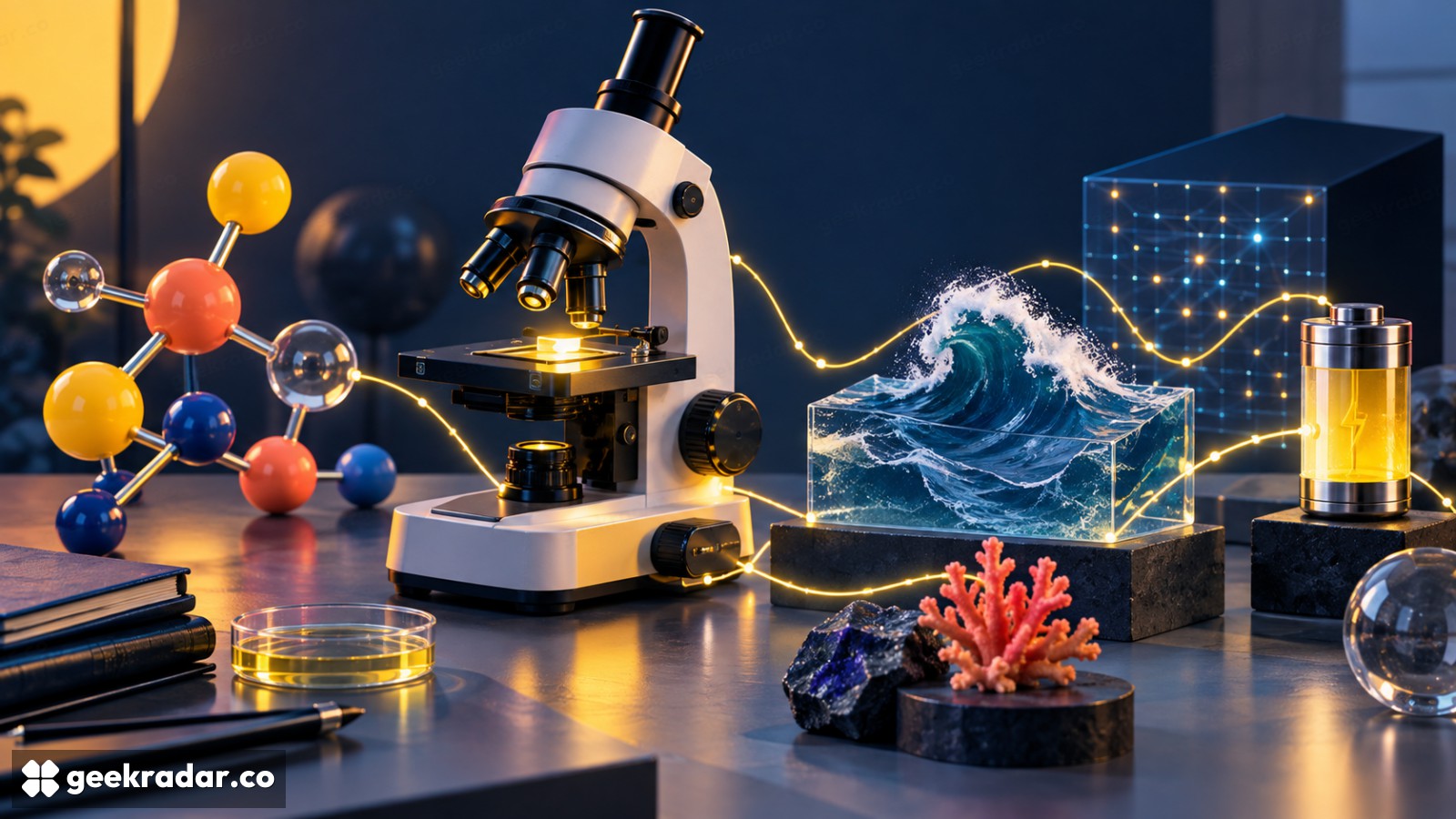
Examples include work on atmospheric warning signals in Africa, ocean modeling, fusion simulations and battery degradation. These descriptions set out research ambitions. The funding announcement does not establish that the proposed systems have achieved their intended outcomes.
Funding is the beginning of the evidence chain
Our view is that this collection is most interesting as a set of experiments to revisit. A grant can create the conditions for useful work, but the announcement and the eventual result are different editorial events.
For a forecasting project, we would ask how predictions are evaluated and whether the chosen measure reflects a meaningful improvement. For a materials project, we would look for a clear connection between a model’s suggestion and what an experiment finds. The appropriate test depends on the scientific question.
That is why a single claim about AI “accelerating science” is less informative than a documented account of one project’s methods, comparisons and results.
What should a good follow-up contain?
A useful progress report would describe the starting point, what the team tried and what changed. Negative or inconclusive findings can also be informative if they show where an attractive approach did not work.
We would look for enough detail to distinguish better prediction from better explanation, and an impressive laboratory result from a method that others can use. These are our reporting priorities, not additional commitments made by the grant recipients.
From a milestone to measurements
Our account of Webb’s first science images examined the transition from an engineering achievement to evidence researchers could use. The same distinction offers a helpful way to follow a research funding program.
Explore our Science section and AI coverage. The awards establish a promising list of projects; the subsequent experiments will establish what each one contributes.