UK tribunal confirms Apple received a notice in the iCloud encryption case
The existence of the order can now be discussed in open court. Its terms are still secret. Apple’s guidance explains why a UK user’s cloud photos and saved passwords have different protections.
The UK government served Apple with a technical capability notice. On November 19 the Investigatory Powers Tribunal confirmed that fact in an open judgment. It means Apple and the organisations challenging the government can discuss the existence of the notice in public proceedings. The notice itself remains unpublished, and the judges have yet to decide the merits of the challenge.
That distinction matters to anyone reading the news beside the iCloud settings on their phone. The judgment answers a question about what a court can say in public. For the question of who holds the keys to a particular backup or photograph, the place to look is Apple’s description of the service.
Why the judges could name the notice
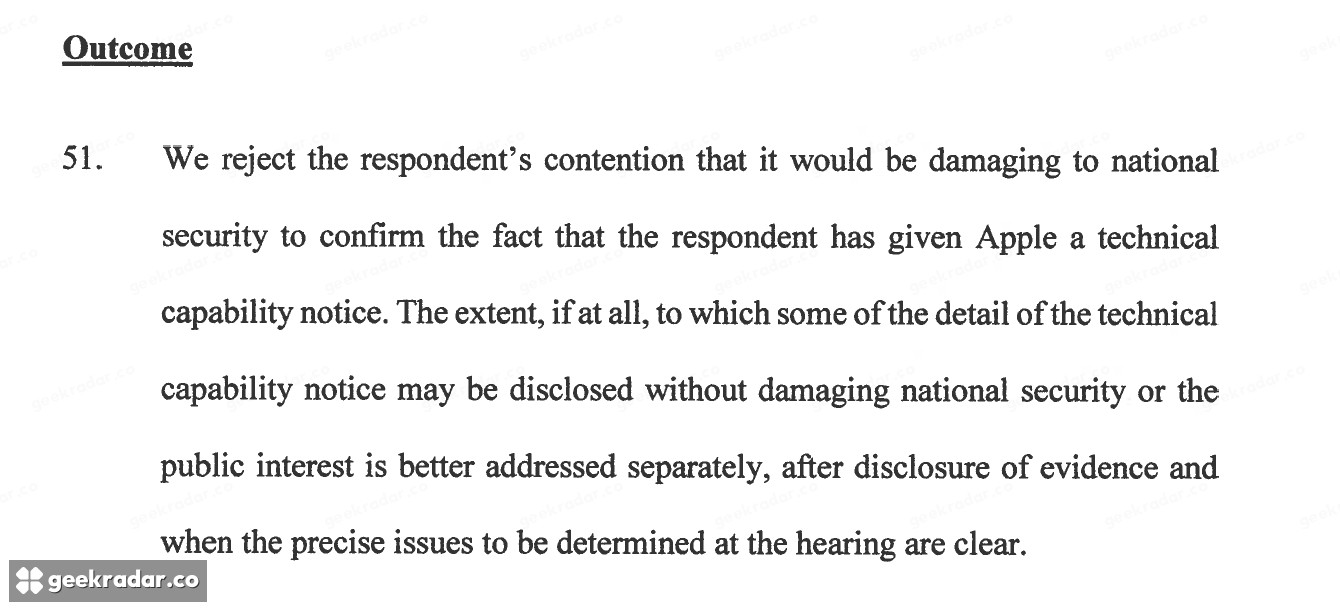
The Home Secretary argued that confirming whether a notice existed would damage national security. The tribunal examined what the government had already allowed others to say. It found that authorised confirmations had reached reputable newspapers and that US officials and legislators had been briefed in circumstances where they did not consider themselves bound to silence. The judges concluded that acknowledging the notice in court would add little to the information already available.
That leaves a practical problem for the next hearing. The parties have to identify which terms of the notice they need to argue about and what evidence bears on those terms. Only then can the tribunal draw a sensible line between material it can hear in open court and material that requires secrecy. In paragraphs 49–51 of the judgment, the judges say much of the case can now be heard publicly. They also accept that disclosing all the material would cause harm. The ruling neither publishes a technical specification nor establishes that anyone has obtained a customer’s files.
An iCloud photo and a saved password have different rules
Apple’s UK customer notice already explains one concrete change. New UK users cannot enable Advanced Data Protection, an optional setting that extends end-to-end encryption to categories including iCloud Backup, Photos and Notes. Under standard protection those categories are still encrypted in transit and on Apple’s servers. Apple holds the relevant service keys, which lets it help recover the data. With end-to-end protection, the keys for those categories are available to the user’s trusted devices. Apple spells out the differences in its category-by-category security table.
Consider two things saved from the same phone: a photograph in iCloud Photos and a password in iCloud Keychain. The UK restriction changes the protection a new user can choose for the photograph. Keychain already has end-to-end encryption by default. That is why it is possible to say precisely how the two items are protected today, while the exact terms of the government’s demand remain a question for another hearing.