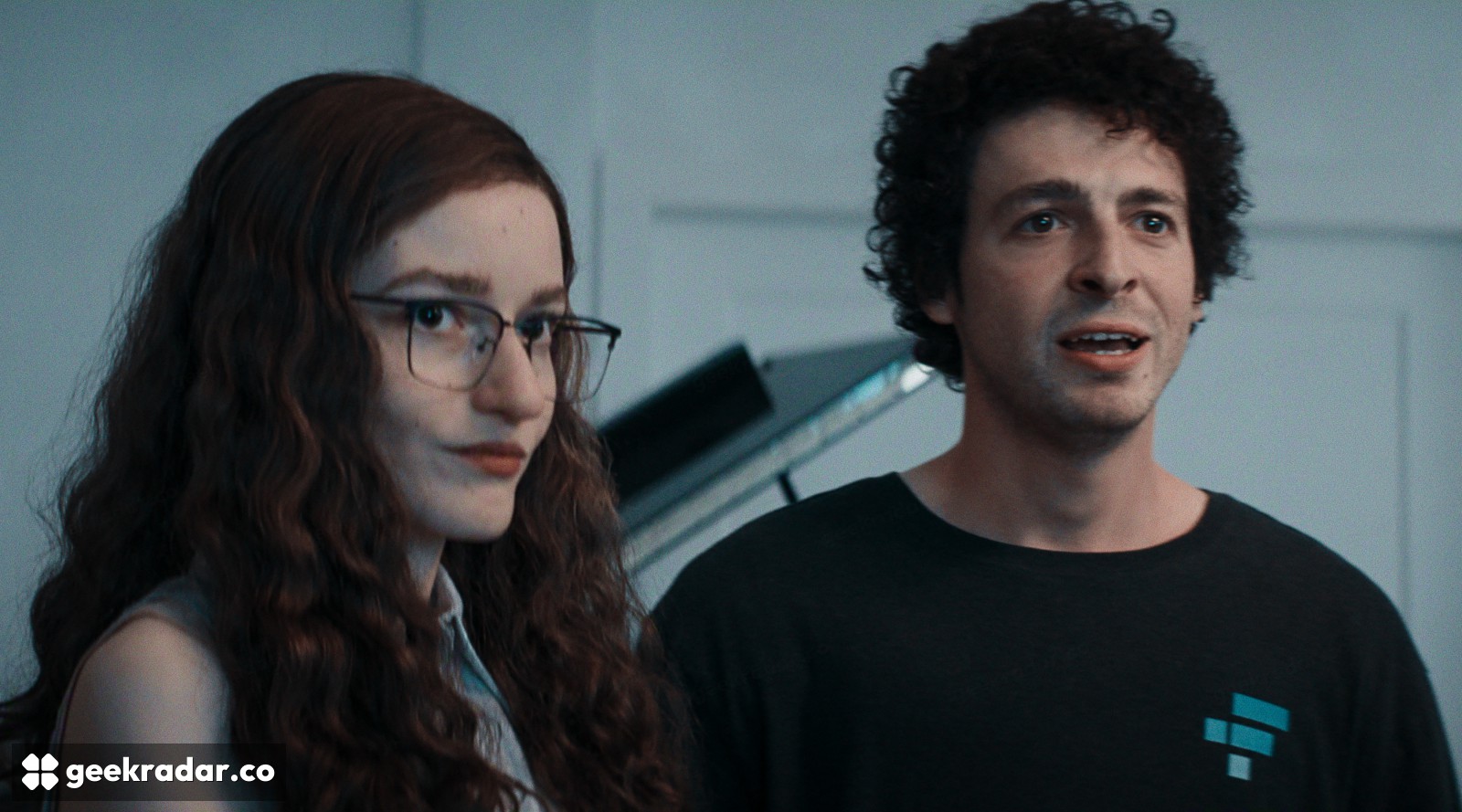
The Altruists brings FTX to Netflix. Julia Garner started with Caroline Ellison’s laugh
A half-hour interview helped Garner find Ellison’s voice. Creator Graham Moore explains why the eight-part FTX drama leaves some of the most documented moments off screen.
Julia Garner had a practical problem playing Caroline Ellison in The Altruists, Netflix’s new drama about the people behind the FTX collapse. She could find writing by Ellison and reporting about her. Hearing how she laughed was harder. Garner says she kept returning to a half-hour interview and a voice recording. Those two pieces of evidence gave her a way into a role that occupies eight episodes.
All eight are now on Netflix. Garner plays Ellison, who ran the trading firm Alameda Research. Anthony Boyle plays Sam Bankman-Fried, founder of the cryptocurrency exchange FTX. Their professional and romantic relationship gives the limited series its point of view. If you followed the headlines in 2022, there’s a useful distinction to take into the premiere: a name or a company can come straight from the reporting while a conversation between two people comes from the writers.

What an actor can get from half an hour of tape
At a Vulture conversation with Garner and series creator Graham Moore, Garner said Ellison declined to speak with her. It was a different experience from preparing to play Anna Delvey in Inventing Anna, when the actor met her subject before filming. Here she listened for small things she could repeat. Changing how she spoke altered her expressions, which in turn suggested how to hold herself. A recording made to answer someone else’s questions became a guide to what to do with her face when nobody was asking one.
Moore had a different kind of source. In addition to the financial reporting, he could read Ellison’s own blog and social posts, including things she had written about books and boy bands. Those interests may tell a writer something about the person behind a job title. They offer little help with the crucial dramatic question of how she and a colleague spoke when they were alone. Moore told Vulture that he deliberately steered away from restaging moments already preserved on video or audio. The series spends its freedom where the record is thinnest.
Two businesses to keep straight
FTX was an exchange where customers could trade crypto. Alameda Research was a trading firm. One provided a place for other people to trade, while the other took trading positions of its own. When those names come up in a conversation between the leads, it matters which business each person is talking about. A decision that suits a trading desk can raise an entirely different question for a customer who has entrusted funds to an exchange.
Netflix’s production notes credit the reporting of New York Magazine journalists Kevin T. Dugan and Jen Wieczner as inspiration. Moore shares showrunning duties with Jacqueline Hoyt. The credit identifies the reporting behind the adaptation. For a particular exchange of dialogue, the more revealing source is the camera test that Moore described. He handed Boyle a Rubik’s Cube. Garner took it from him, and the two improvised over who would get it back. They had gone into filming without a chemistry read.
That anecdote offers a way to watch The Altruists without knowing a single token price. Watch who is allowed to interrupt, who gets to hold on to something and who expects to get it back. The actors could discover all of that with a cube. A viewer looking for an account of what the real people said to one another still needs the reporting.