
Madden comes to Prime Video. Why did the coach insist on 11 players a side?
Nicolas Cage plays John Madden in the new film. Two playbooks in the original game box help explain what the Raiders coach wanted players to learn.
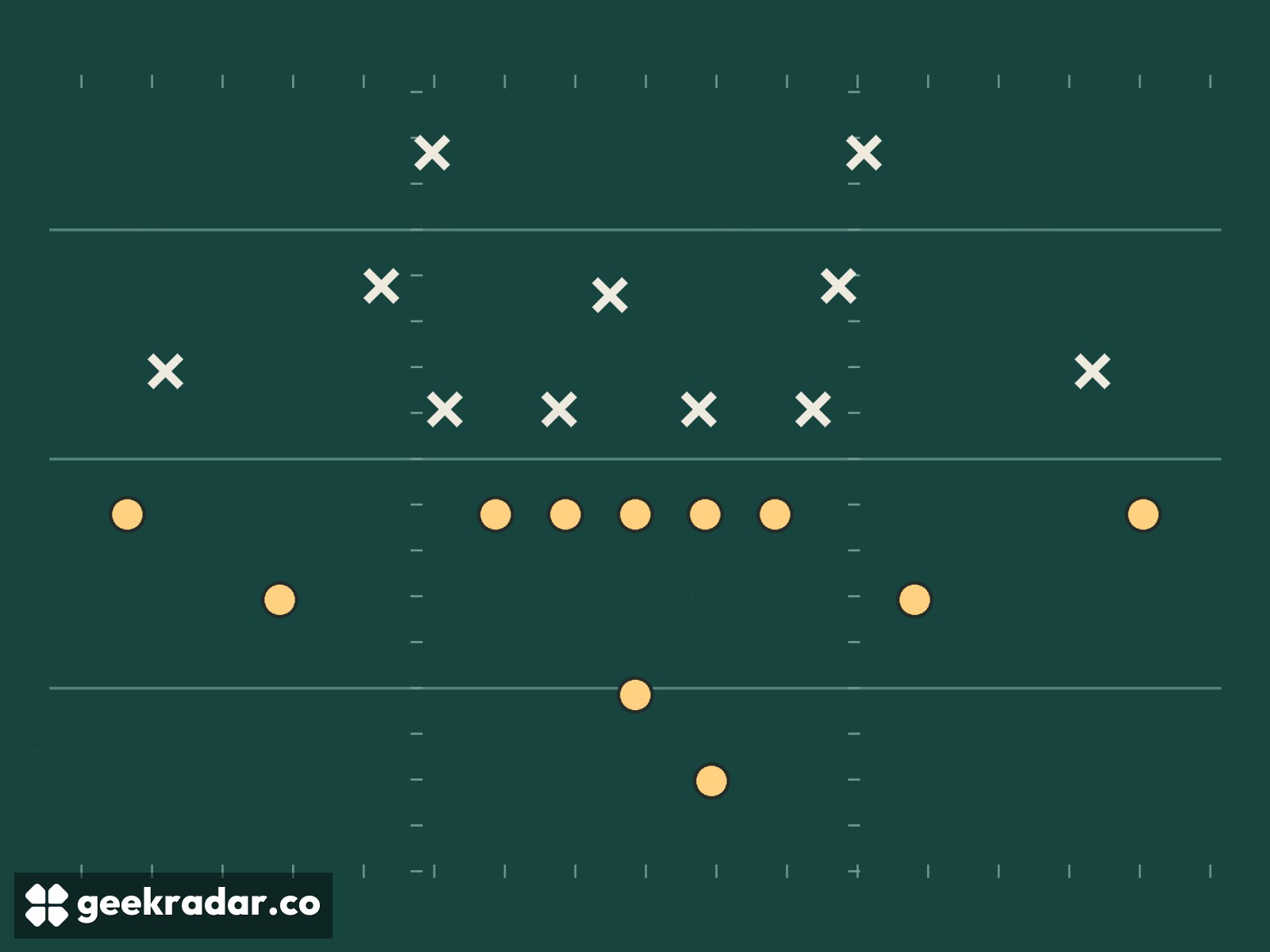
The most revealing number behind Madden, now streaming on Prime Video, is eleven. When Electronic Arts wanted John Madden’s help making a football game, the developers were considering putting six or seven players on each side. The former Oakland Raiders coach insisted on fielding full teams. That demand helps explain why the man Nicolas Cage plays in David O. Russell’s film still has his name on a football game nearly four decades later. The NFL’s account of Madden’s role
Amazon released the film globally on November 18. Christian Bale plays Al Davis, the Raiders owner, and John Mulaney plays Trip Hawkins, the Electronic Arts founder who approached Madden. It’s a biographical drama about a coach, broadcaster and game collaborator. If you know the surname mainly from a box or a console menu, there’s one piece of history worth taking into the film.
Count the players away from the ball
Imagine calling a running play. The player carrying the ball needs a gap. A teammate has to open it, and a defender can close it. Now send a receiver wide. Even if the ball never goes near him, the defence has to decide whether to send somebody with him. A smaller team might still produce a satisfying dash downfield. It would also remove several of the people whose decisions made that dash possible.
That was a practical distinction for a coach who saw a computer game as a way to teach football. According to the Pro Football Hall of Fame, Hawkins approached Madden in 1984. John Madden Football arrived in 1988 with eleven players on each side. Madden advised on the design of plays as well as lending his name to the cover.
The playbooks came in the box
The Edmonds Historical Museum’s copy of the game preserves a detail that’s easy to miss in a screenshot. Alongside the floppy disk are separate offensive and defensive playbooks and a card summarising the commands. The player at the keyboard had two jobs before the snap: choose what the team should do, then tell the computer how to do it.
The museum notes that players could change the weather, quarter length, fatigue and injury settings, yet the early game offered individual matches without a season mode. It’s an unusually clear record of where the designers put the detail. The calendar could wait. Taking four men off the field would have changed the very play Madden was trying to teach.
That gives the film’s title a second meaning for viewers coming from games. Long before Madden became an annual purchase, the name on the box belonged to a coach who could tell you what a receiver contributed even when he never touched the ball.