GTA VI carries an M rating. Utah once tried to enforce the promise on the shop window
A vetoed 2009 bill made a retailer’s public promise the crucial detail in an underage sale. Its fine print explains why two shops selling the same game could have faced different consequences.
Put two copies of Grand Theft Auto VI on two shop counters in Utah. Both carry the same ESRB Mature 17+ rating. Now give one shop a sign promising customers that it will refuse underage sales. Under a bill Utah legislators passed in 2009, that sign could have made the legal difference between two otherwise identical transactions. Governor Jon Huntsman Jr. vetoed the bill. It never governed the sale of a single copy of GTA VI.
Axios Salt Lake City revisited the debate as Rockstar’s game reached stores. The document left behind is more revealing than the shorthand about politicians trying to ban violent games. To understand how the measure would have worked, you have to look away from the screen and toward the shop window.
What a cashier’s mistake would have meant
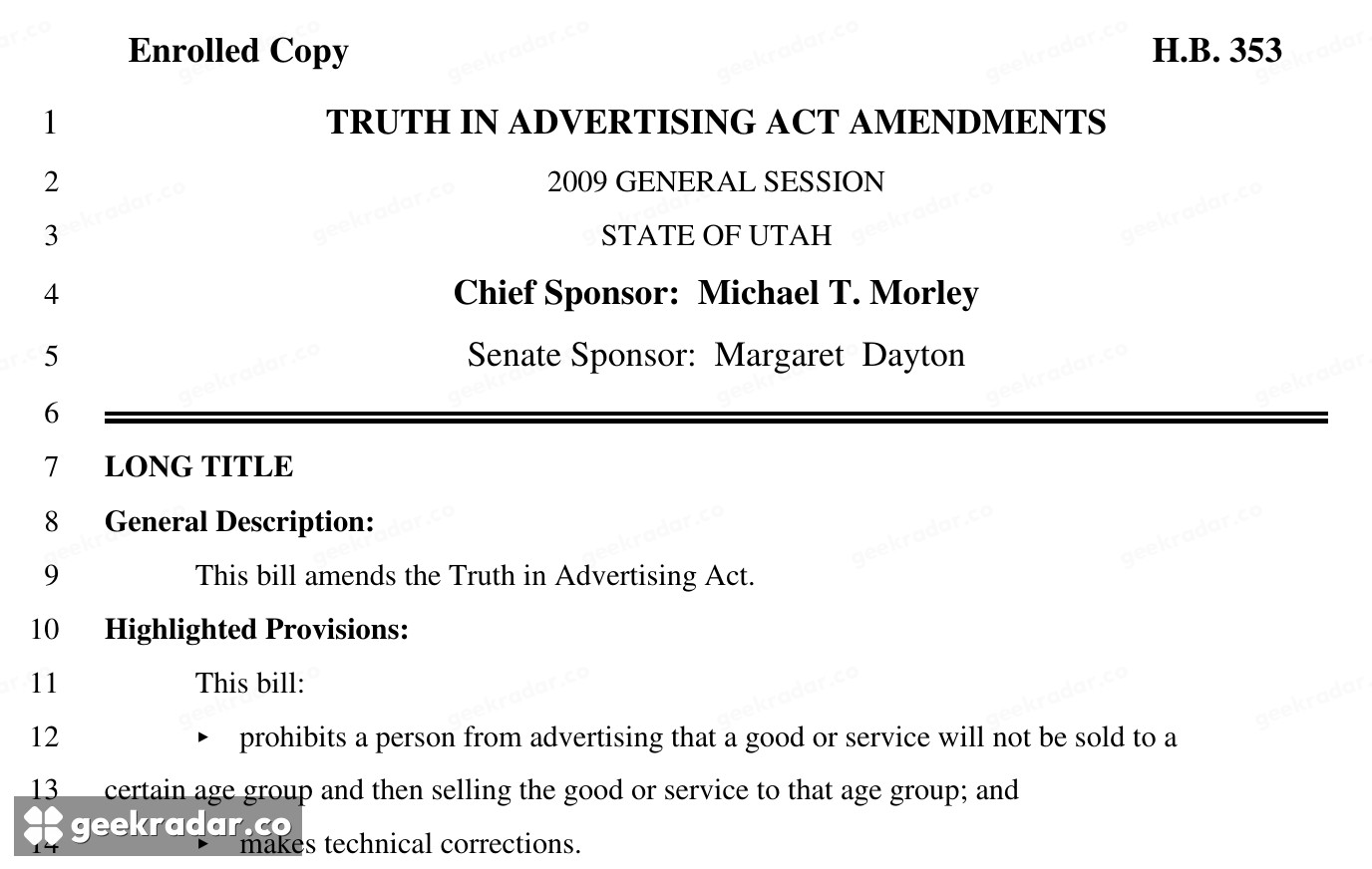
The enrolled text of H.B. 353 proposed an amendment to Utah’s Truth in Advertising Act. Its trigger had two parts. First, a business would have to advertise that it would withhold an age-labelled product or service from buyers below the stated age. Second, it would have to supply that product or service to just such a buyer. The wording extended well beyond video games. It also meant the rating on a game box, standing alone, was insufficient to establish that the retailer had made the promise in question.
Consider a hypothetical Saturday shift. A cashier sells a mature-rated game to a 16-year-old despite a shop’s advertised policy. Even there, the bill allowed a defense. The shop could show that it had a documented training programme, that the employee attended it within 30 days of starting those sales duties, and that management took appropriate corrective action, including retraining. A buyer deliberately presenting false proof of age provided a separate exception. Legislators had written a measure under which the contents of a staff training file could matter as much as the item on the receipt.
That created an awkward incentive. A shop trying to reassure parents by advertising its policy would have taken on exposure that a quieter competitor could avoid. In a contemporaneous letter supporting the veto, the National Coalition Against Censorship also questioned how the language might reach booksellers and libraries dealing in age recommendations. The legislative record dates the veto to March 25, 2009. Those concerns describe a debate over a proposal, rather than a record of prosecutions.
California asked a different question
Two years later, the US Supreme Court decided *Brown v. Entertainment Merchants Association*. California had directly restricted the sale or rental to minors of games meeting its statutory definition of violence. The Court struck down that law and recognized the expressive protection games share with books and films. Utah’s advertising proposal never went before the Court in that case.
For someone looking at GTA VI today, the rating still tells you something specific about its content. The Utah episode adds a second question worth asking whenever a shop posts an age limit: who made the promise, and to whom? An M printed on a game can travel across thousands of shop counters. In the bill on the governor’s desk, the words that mattered were the ones each shop chose to put beside it.