ASUS XG Core makes the external Radeon smaller. USB4 still shapes the result
A 16GB RX 9060 XT LP dock is a new option for compatible handhelds; desktop-equivalent performance is not established.
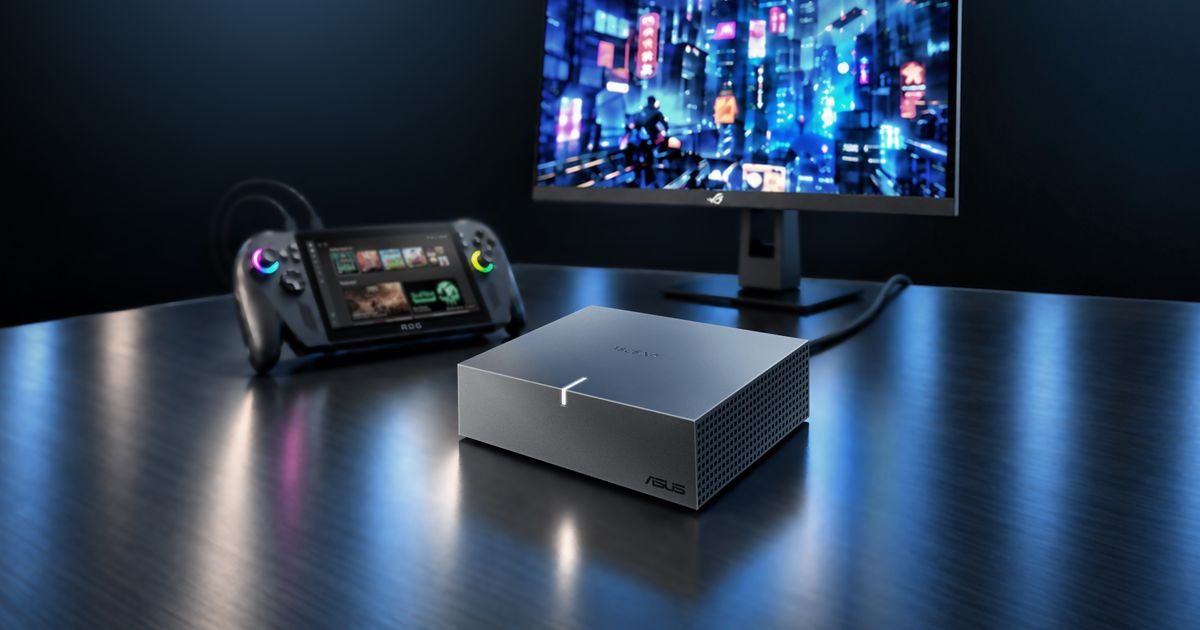
ASUS has put a Radeon RX 9060 XT LP with 16GB of GDDR6 memory into an external graphics dock measuring 144 × 117 × 39mm. The XG Core announcement, published November 6, describes a compact USB4 accessory for compatible laptops and handhelds. Its size is easy to understand; its performance cannot be inferred from the GPU name alone.
The dock connects at up to 40Gbps over USB4 and provides HDMI and DisplayPort outputs. ASUS names supported handheld families, including ROG Ally X and ROG Xbox Ally X, and describes compatibility with Thunderbolt 3 systems. Those statements are more precise than saying that any machine with a USB-C socket can use it.
The cable is part of the graphics system
A desktop graphics card normally communicates with the rest of the computer through a PCI Express connection inside the machine. An external GPU adds a transport path and its own compatibility conditions. The advertised 40Gbps is a link specification, not a measured game frame rate or a promise of desktop-equivalent performance.
That distinction remains relevant even when the graphics chip is familiar. The Radeon RX 9060 XT LP reference identifies the GPU family; the ASUS XG Core profile identifies the complete external product. Power configuration, cooling, host support and the connection all belong to the latter's behavior.
ASUS does not provide enough performance evidence in the announcement to assign a universal percentage loss or gain. Doing so would be particularly misleading across handhelds with different processors, memory arrangements and power modes. The useful confirmed fact is the option to attach a separate graphics device, not a fixed multiplier for every game.
Sixteen gigabytes belong to the GPU
The 16GB figure describes GDDR6 graphics memory inside the dock. It is useful capacity for workloads that use the external GPU, but it is not a RAM upgrade for the host's operating system. Nor does attaching the dock establish that every application automatically chooses that device.
ASUS mentions gaming, creation and local AI tools, including ComfyUI, LM Studio and Ollama. Those examples indicate intended uses; they are not benchmark results or proof that every model, backend and version is supported. Model size, software compatibility and the way a task is split between processors still matter.
This is especially important when the host is a handheld. The appeal is moving between portable use and a more capable desk setup without maintaining two separate game libraries. Our handheld library comparison explains that continuity; an external GPU addresses the compute side, while leaving the store and software ecosystem largely where it already was.
A compact box still needs a complete buying proposition
The announcement includes GPU Tweak III controls and the display outputs, but does not settle a retail price, detailed market rollout or independent performance. Those omissions prevent a meaningful value verdict against a desktop upgrade or another dock.
For a compatible handheld owner, the first checks are therefore concrete: the exact host's support, the intended display route and the applications that will use the Radeon. Only then does it make sense to ask whether a compact dock is a better investment than replacing the computer.
XG Core is interesting because it makes the external-GPU proposition physically smaller without pretending that the cable disappears. The deciding measurement will be what the complete setup delivers at the desk—and whether that gain is worth carrying, powering and paying for another box alongside the portable machine.