OLED monitor shipments double, but the brand ranking needs context
MSI moves ahead of Samsung as panel supply improves. TrendForce’s figures reveal a growing market, not a verdict on which monitor belongs on your desk.
OLED monitor shipments doubled from a year earlier in the third quarter of 2026, according to TrendForce's November 18 market report. MSI moved ahead of Samsung into second place, behind ASUS. For buyers, the more useful development lies beneath the podium: more panels are reaching more manufacturers, giving a wider field of brands room to compete.
The quarterly increase was 13%. Those two growth figures describe different comparisons: the doubling is against July–September 2025, while the smaller increase is against April–June 2026. Neither means that half of all monitors sold are now OLED. The report concerns shipments within the OLED monitor category, and its public release does not provide an absolute unit total or OLED's share of the entire monitor market.
A shrinking share can hide steady shipments
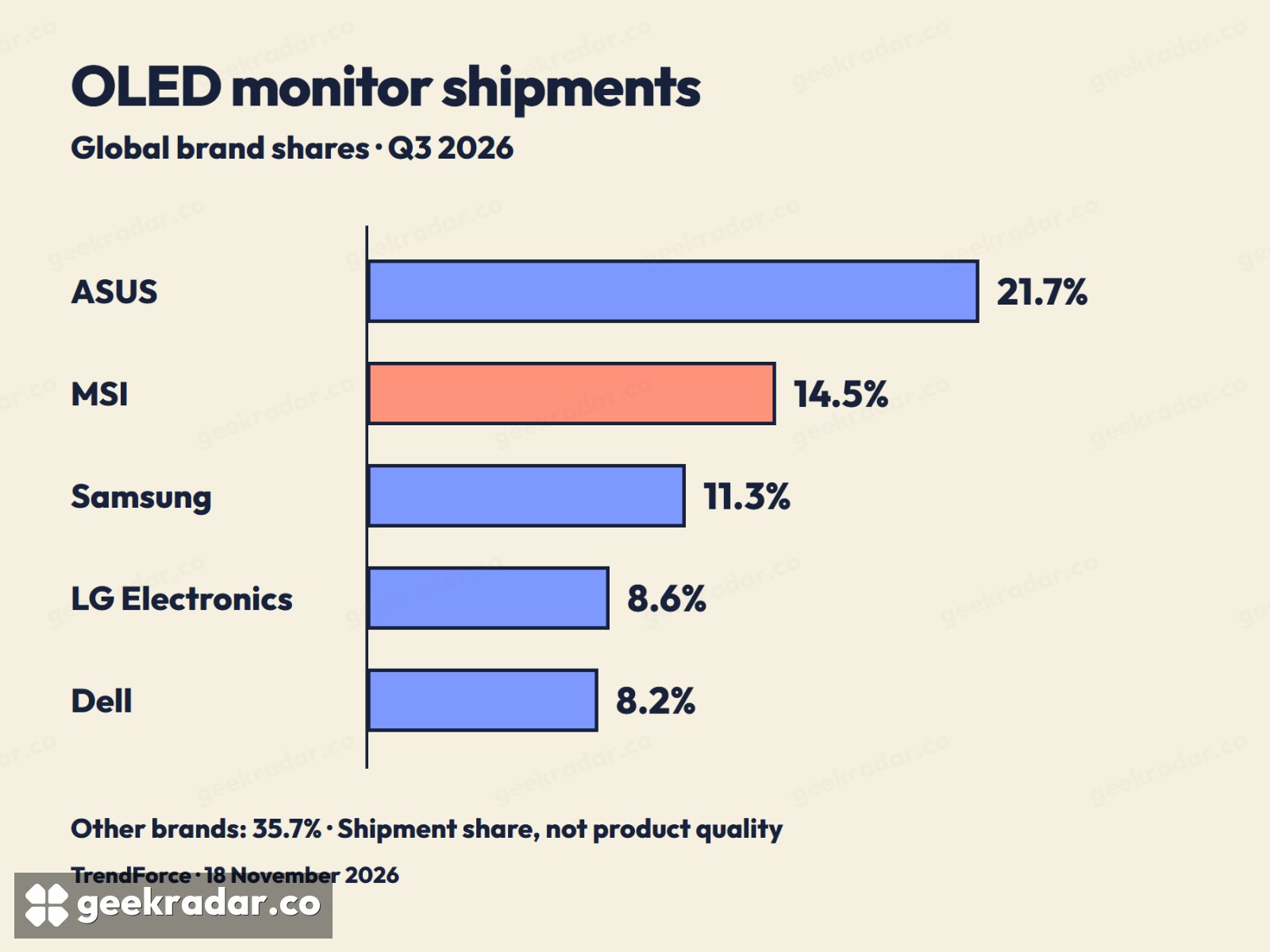
ASUS accounted for 21.7% of OLED monitor shipments, followed by MSI at 14.5% and Samsung at 11.3%. LG Electronics took 8.6% and Dell 8.2%. These are vendor shipment shares, rather than a ranking of picture quality or customer satisfaction.
Samsung is the clearest example of why the distinction matters. TrendForce describes its shipments as relatively stable through the first three quarters. With the surrounding market expanding, a stable volume occupies a smaller slice. It is possible to lose a position without shipping fewer monitors. Conversely, ASUS increased shipments 6% from the previous quarter, a slower pace than the category's 13% expansion, while remaining comfortably first.
MSI's quarterly share rose by 1.7 percentage points. That is a change in share, not a 1.7% growth rate in its shipment volume. Across the first nine months, TrendForce says MSI and Samsung were roughly level. A third-quarter win should therefore not be stretched into a claim that the whole year's contest has already been settled.
More supply changes the competition
TrendForce identifies ample upstream panel supply as an important contributor to growth, alongside new products. That matters beyond the largest names: the firm says smaller and emerging brands have also expanded shipments. A market can become more competitive because more companies can obtain the core component, even before a particular store changes its price.
The report also distinguishes different sources of momentum. ASUS benefited from eased constraints on high-end 27-inch QHD 540Hz panels. MSI's account includes preparations for seasonal promotions and new models, while LG's improvement includes promotional activity on selected 27-inch QHD 240Hz displays. These are different routes to a larger shipment count; combining them into a single explanation such as “everyone wants the fastest screen” would miss what the data actually says.
Tom's Hardware's coverage places the figures alongside falling OLED prices and improvements in display technology. Those are useful purchasing contexts, but the shipment release itself cannot tell us which factor persuaded an individual buyer. Nor does a global total establish the discount available in a particular country.
A better buying question than “who is first?”
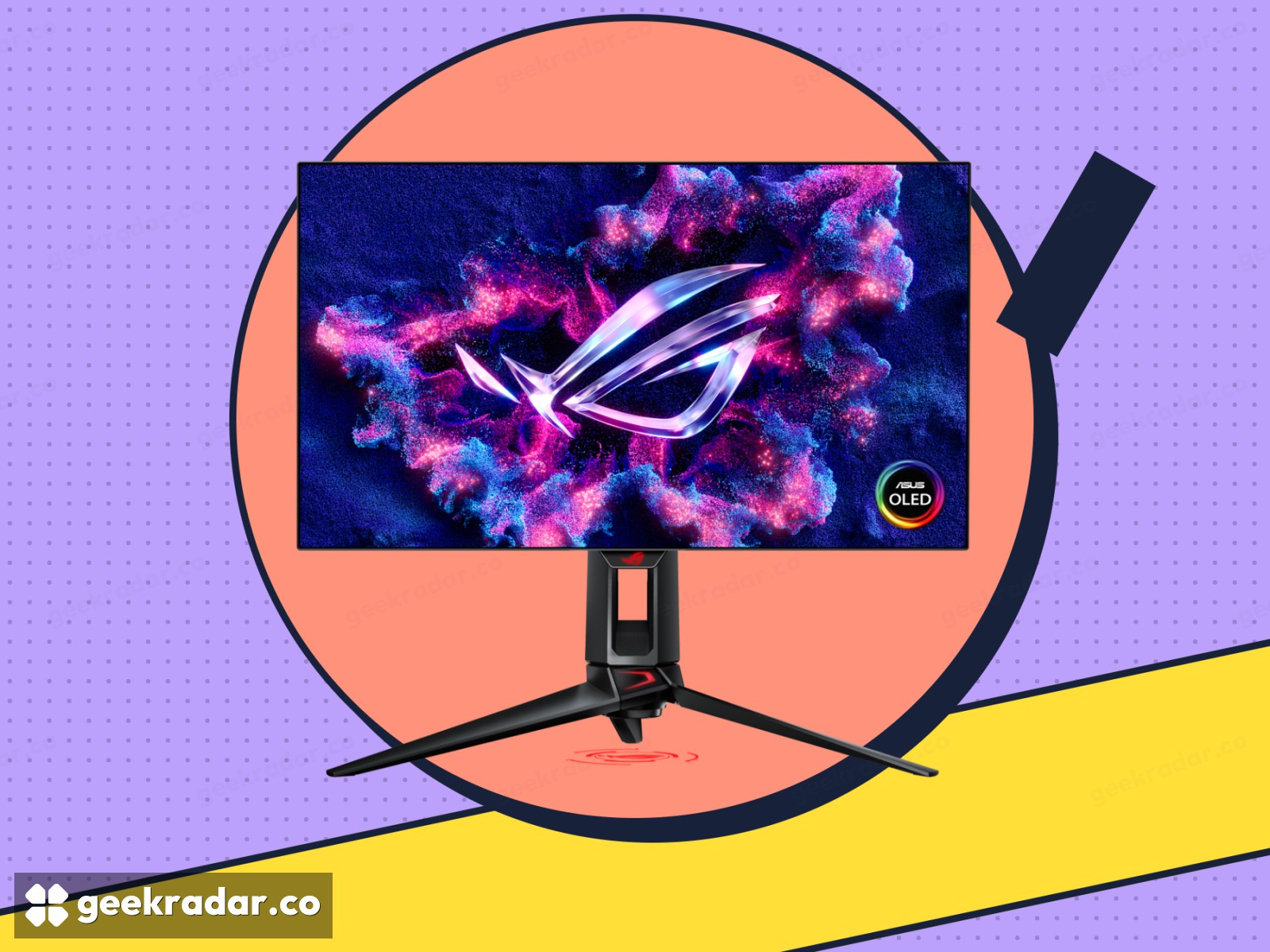
The growing choice makes exact model differences more important. ASUS's ROG Swift OLED PG27AQDP is one concrete example: the company specifies a 26.5-inch viewable, 2560 × 1440 WOLED panel and a maximum refresh rate of 480Hz. It is the monitor pictured here, not the 540Hz product segment mentioned in the shipment report.
ASUS also lists a uniform-brightness option and OLED care functions intended to reduce burn-in risk. Those details illustrate why the model's behaviour deserves attention alongside its maximum refresh rate. Manufacturer specifications are a starting point; they do not establish the brightness, text quality or motion performance a particular owner will experience in every setting.
Choose the constraint that actually bothers you. A competitive player should examine motion handling and the frame rates their computer can sustain. Someone who spends much of the day reading documents should give text rendering, screen coating and brightness behaviour equal attention. A mixed-use desk may depend on connectivity and ergonomics as much as the panel, as our look at the Prisma monitor's integrated dock explains.
The market report's encouraging signal is broader supply and more competition. Its limitation is equally useful: no vendor's place on that chart tells you which display belongs on your desk. A stronger OLED market should give buyers more room to insist on the right model, rather than another reason to buy whichever brand happens to lead it.