AMD and NVIDIA’s FP64 debate comes down to the work between matrix multiplications
At SC26, AMD defends native double precision while NVIDIA shows gains from emulation. The studies use different workloads and software, making application-level results essential.
AMD is using SC26 to argue that scientific computing still needs strong native double-precision hardware, even as AI accelerators become much faster at lower-precision arithmetic. Its new workload study makes a useful case against treating FP64 emulation as a universal replacement. NVIDIA's latest cuBLAS results make a different, narrower case: some scientific applications can benefit substantially when their expensive calculations fit the method.
Those positions are not automatically contradictory. The decisive question is how much of an application's work can use the accelerated operation, and what happens to memory use, accuracy and the rest of the program when it does. A fast matrix multiplication is valuable; it is not, by itself, a faster simulation.
The operation matters more than the label
FP64 is 64-bit, double-precision floating-point arithmetic, used when numerical range and precision matter to a calculation. Scientific software also contains many different operations: multiplying dense matrices, processing sparse systems, updating neighboring cells in a mesh, or combining partial results. Calling all of that “FP64 work” does not make it interchangeable.
The Ozaki approaches examined here reconstruct high-precision matrix products using lower-precision operations. NVIDIA's November 13 cuBLAS explanation describes breaking values into integer representations, doing the expensive multiplication on Tensor Cores and reconstructing the result. Its newer Ozaki-II approach reduces the number of integer matrix multiplications required compared with Ozaki-I.
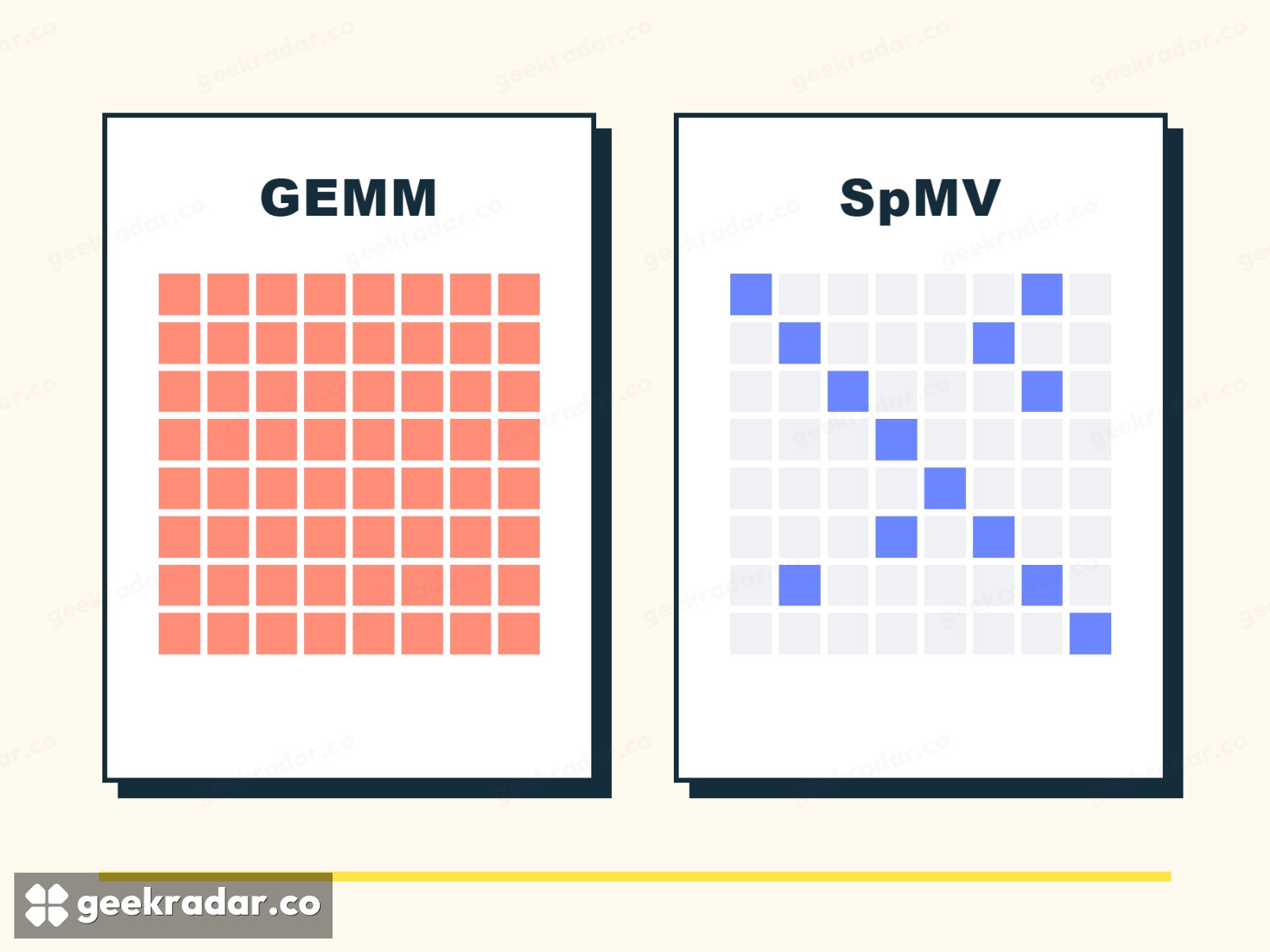
This targets GEMM, general matrix multiplication. A dense matrix is a particularly convenient shape for hardware built to multiply regular blocks of numbers. A simulation dominated by sparse relationships or irregular memory accesses may spend little time in that operation, however impressive the GEMM result looks.
AMD's study is a boundary, not a market census
AMD's research paper profiles 47 configurations across 11 applications and benchmarks, including molecular dynamics, particle transport and mesh-based calculations. Its argument is that large, dense matrix multiplication accounts for a limited part of this workload mix. The company's estimate that emulation suits less than 10% of the HPC ecosystem should be read as its research conclusion, not an independently measured census of every scientific program.
The paper also explains why “memory-bound” is not a permanent property of a workload. A program can be limited by memory delivery on one processor, then become limited by computation on another with a different balance of bandwidth and arithmetic throughput. Reducing native FP64 capability can therefore matter even when today's profile appears dominated by memory traffic.
There is a further limit on direct comparisons. The paper's tested systems include an AMD MI355X with ROCm 7.2.1, an NVIDIA B200 with CUDA 13.3.73 and a GB300 system with CUDA 13.1. Its standalone emulation measurements use GEMMul8. Those are not the same implementation and software conditions as NVIDIA's newer cuBLAS demonstration. The study is evidence about the tested methods and workloads, not a blanket measurement of every current library path.
NVIDIA's gains need their original denominator
NVIDIA reports a 1.4× end-to-end speedup on GB200 for its coupled-cluster quantum-chemistry demonstration using full FP64 precision with Ozaki-II. That is more useful than quoting a matrix-kernel peak alone because it measures the whole demonstrated calculation. It still belongs to that particular chemistry example and comparison baseline.
The same post reports larger gains in a separate mixed-precision mode. Those results must not be merged with the full-FP64 result: changing the numerical setting changes the comparison. NVIDIA also describes runtime precision selection and fallback to native FP64 when the selected emulation precision cannot meet the required accuracy within its configured limit.
Memory deserves the same care. AMD's paper shows substantial workspace overhead for its tested emulation configurations. NVIDIA describes tiling that limits intermediate storage in cuBLAS. It would be misleading to copy the largest overhead from one implementation onto every implementation, just as it would be misleading to give every simulation the speedup from NVIDIA's favorable example.
What this means for the next supercomputer
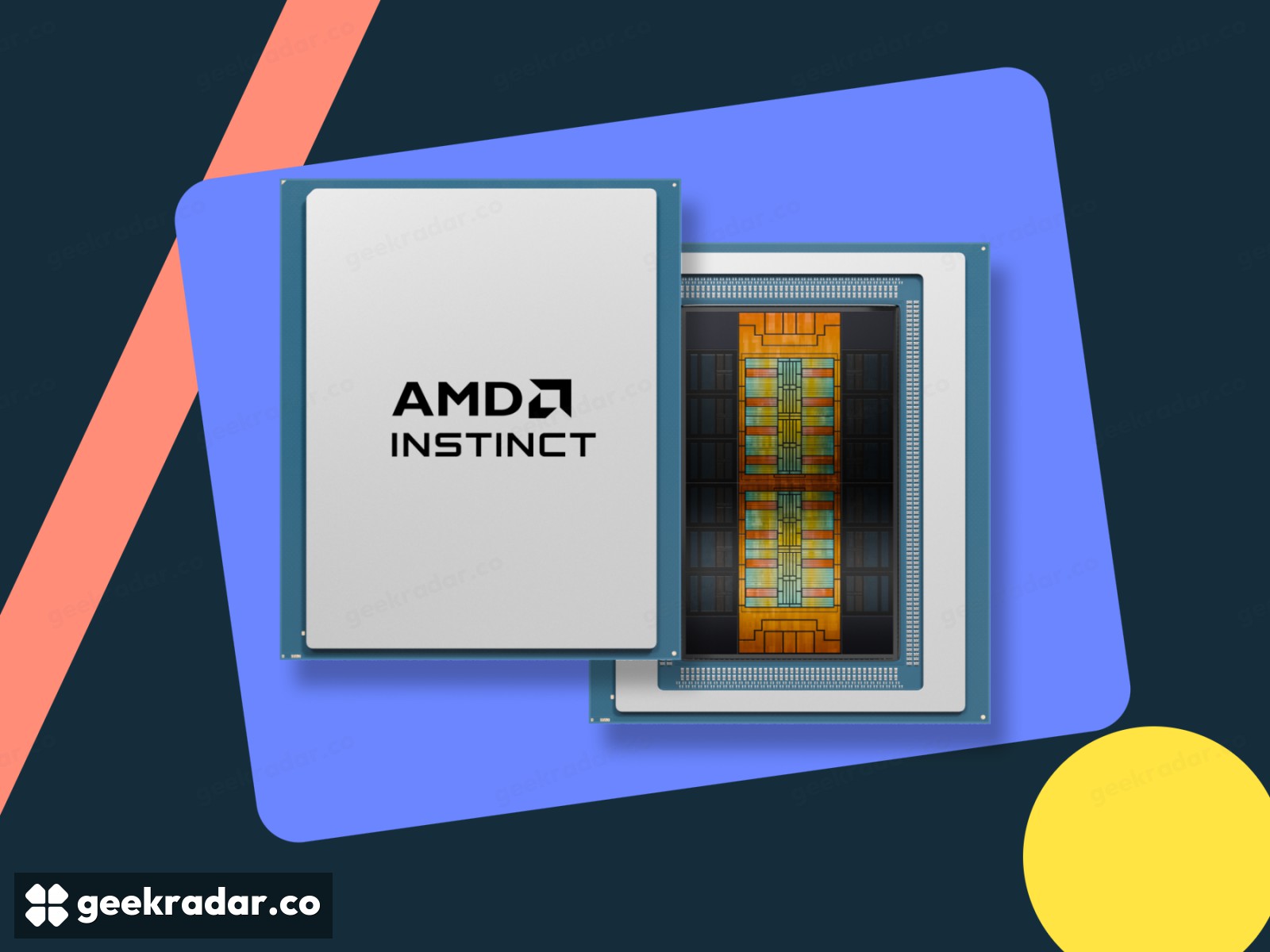
AMD promotes the Instinct MI430X with up to 432 GB of HBM4 and strong native FP64 capability. Its SC26-era product discussion explicitly labels MI430X performance comparisons as projections. They should not be placed beside measured application results as if all the numbers came from one benchmark session.
For a research team, the useful comparison starts with representative inputs, required numerical tolerances and a profile of where runtime goes. Memory capacity, communication between accelerators and software integration can determine whether a local gain survives across a complete job. Our CUDA and ROCm comparison covers another part of that decision: the dependencies a team must carry with it.
The encouraging result is that faster AI-oriented hardware can sometimes accelerate existing scientific work without abandoning double-precision results. The procurement mistake would be to buy the exception as though it were the rule. A laboratory needs the machine that finishes its validated calculation sooner, including the parts that never become a matrix multiply.