M5 Pro and M5 Max put local AI in the professional laptop pitch
Apple's March 2026 announcement linked new silicon and faster storage to on-device workloads, with vendor claims still requiring workload-specific testing.
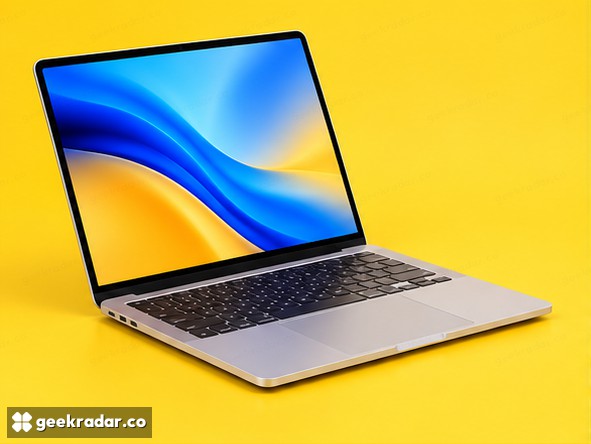
Apple's March 2026 professional MacBook announcement put local AI work near the center of its performance story. The M5 Pro and M5 Max machines were still pitched to developers and creative professionals, but language-model processing and AI image generation were now prominent examples of what a more capable notebook could do.
The platform announcement
On March 3, Apple introduced 14-inch and 16-inch MacBook Pro configurations using the new chips, with availability announced for March 11. The company described faster storage, starting capacities of 1TB for M5 Pro and 2TB for M5 Max, and an N1 wireless chip supporting Wi-Fi 7 and Bluetooth 6.
Apple also claimed substantial improvements in selected AI workloads. Such comparisons need their conditions attached: a result for prompt processing is not automatically a result for generating an answer, and an image-generation test does not stand in for every graphics application. This article reports the launch rather than presenting independent benchmark measurements.
Changes inside the chip family
The separate silicon announcement described Fusion Architecture, connecting two dies into one system on a chip. It also outlined an 18-core CPU design and a GPU architecture with a Neural Accelerator in each core.
That combination makes the hardware story broader than simply adding a new model number. Packaging, compute resources and memory access are interdependent design decisions. Their usefulness emerges through the software stack and the workload being run, not through the presence of a component name on a specification sheet.
For local model use, the practical evaluation would include memory needs, time to process input, output speed and the responsiveness of the rest of the computer. A machine may be fast at one phase while another phase remains the bottleneck.
Local capability is not a complete privacy policy
Our analysis is that stronger on-device processing expands the set of workflows worth considering locally. It does not establish that every application marketed around AI keeps every piece of data on the machine. Application behavior, network requests and service integrations remain separate questions from chip capability.
The historical significance of the announcement is the prominence of those workloads in a professional-laptop launch. Alongside storage and connectivity, Apple framed AI computation as ordinary work a notebook should be prepared to handle. Whether a particular configuration was the right tool still required application-specific evidence. The launch supplied an architectural direction and vendor claims; testing the complete workflow remained the customer's next question.