Jackery Explorer 100D: a 96Wh USB reserve, not a miniature mains outlet
Its 140W USB-C rating and 158W shared limit answer different questions from battery capacity and endurance.
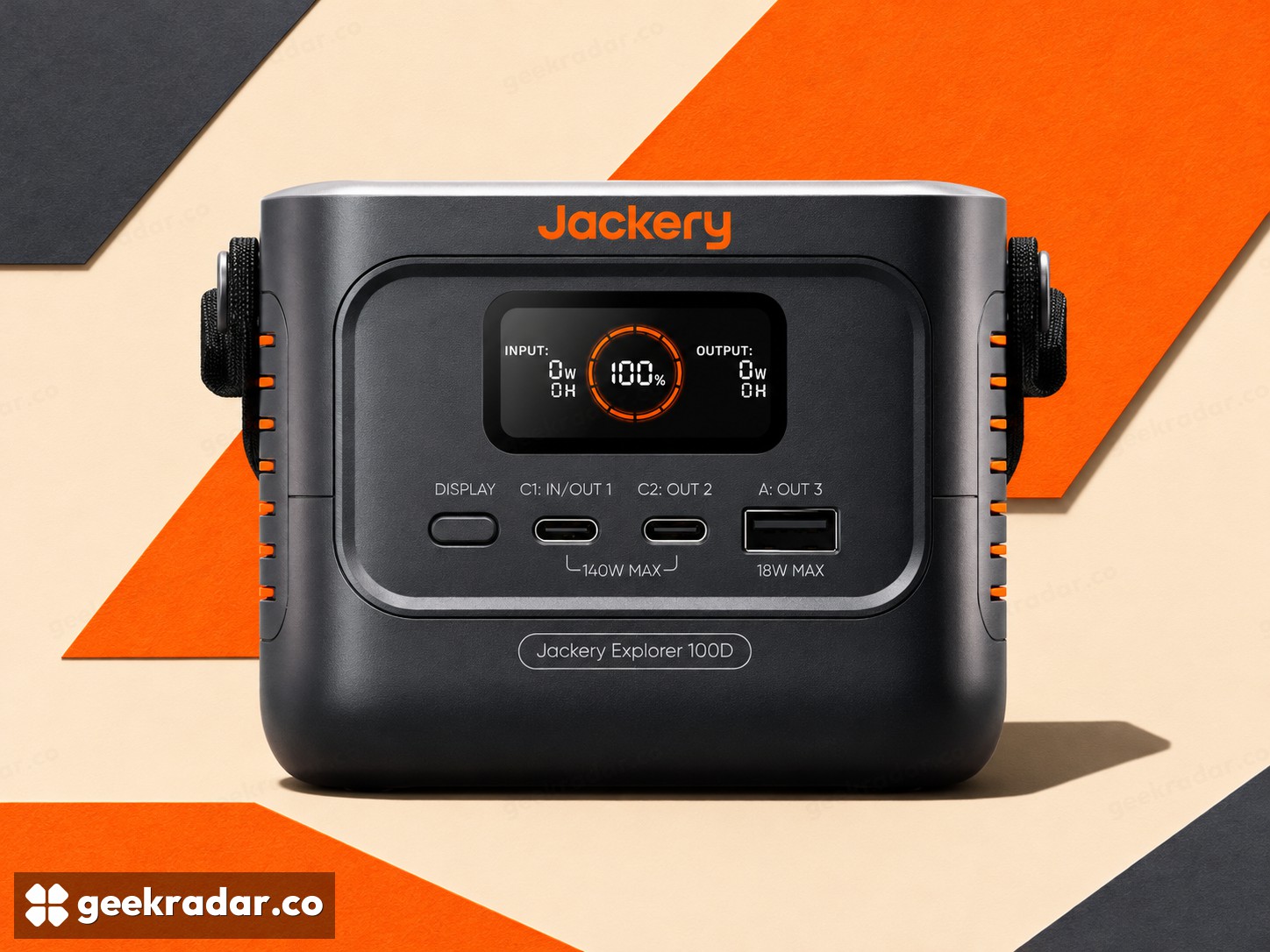
Jackery's Explorer 100D puts a 96Wh lithium iron phosphate battery in a hand-sized enclosure with USB outputs. The useful distinction is in those last two words: although Jackery calls it a portable power station, this model does not provide an AC socket for a conventional mains plug. Its natural job is supplying USB-powered equipment, including a compatible laptop.
The Canadian product page lists a regular price of CAD179 and specifies two USB-C outputs capable of up to 140W individually, plus an 18W USB-A port. The combined maximum is 158W, not the sum of every port's individual headline figure. The launch announcement positions the device around mobile work rather than powering household appliances.
Watts tell you the load; watt-hours tell you the reserve
A 140W USB-C output describes the maximum rate at which the port can supply power under compatible conditions. The 96Wh battery figure describes stored energy. Neither number replaces the other: a device can support a high-power laptop without holding enough energy to run it at that power for a whole working day.
For scale, dividing 96Wh by a hypothetical constant 60W load gives 1.6 hours before conversion losses and other limits. That is a simple energy calculation, not a measured Explorer 100D runtime. A real laptop's demand changes with workload, charging state and its power settings, while the battery cannot deliver all stored energy without losses.
The calculation is still useful because it prevents a common reading error. Higher output can make a battery compatible with a more demanding device; it does not manufacture a larger reserve. Someone using a lightweight writing workload and someone exporting video may have very different experiences with the same laptop and pack.
The “power station” label has limits
The port layout is a better buying guide than the product category. The 100D cannot accept an appliance's mains plug directly. Its three USB outputs instead suit a set of smaller electronic devices, with power shared according to the product's limits.
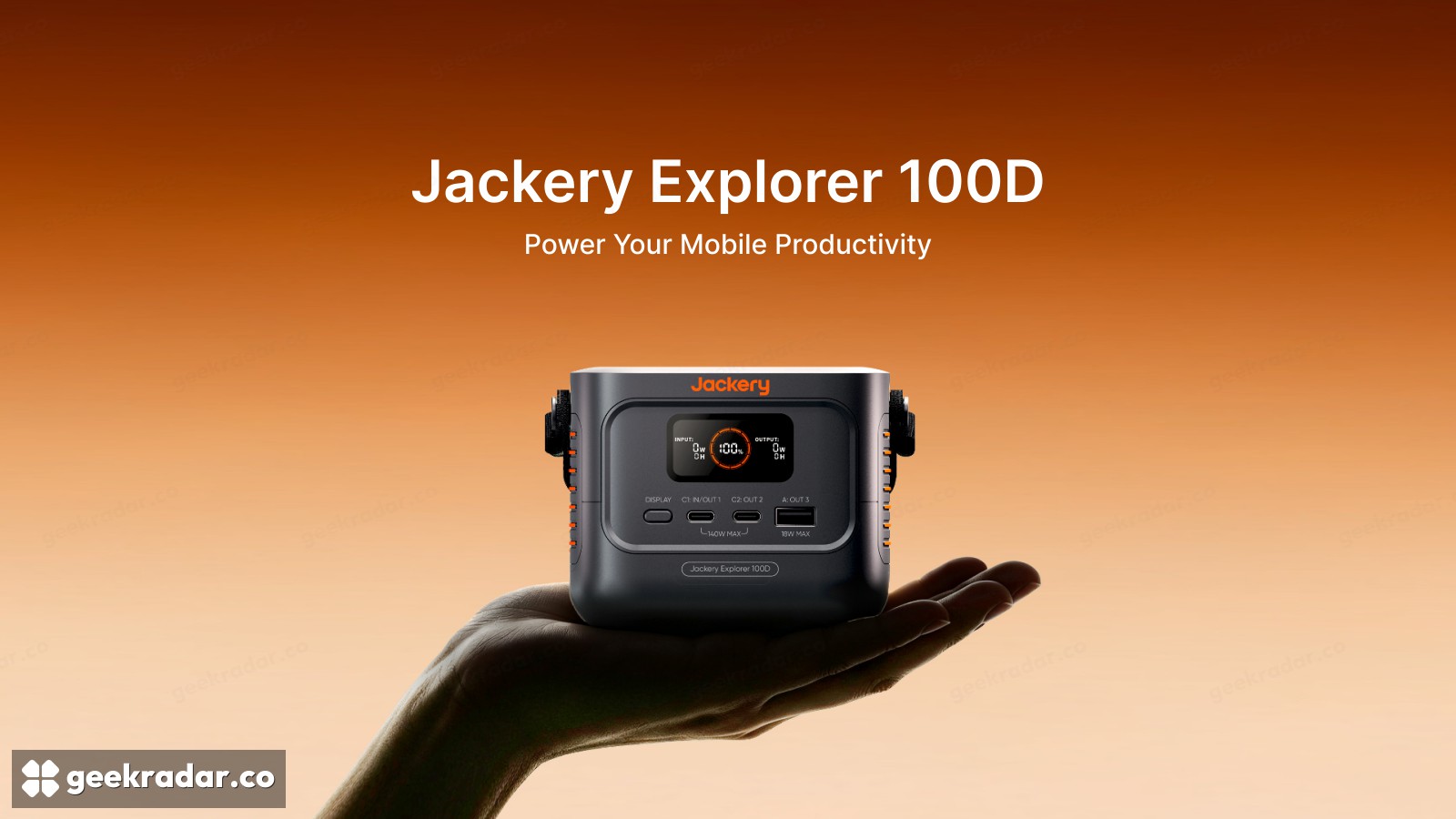
The enclosure measures roughly 119 × 83 × 86mm. That makes it compact by the visual standards of a handled power station, but 855g is still a noticeable addition to a bag. The photograph showing it on a palm communicates size; it should not be mistaken for evidence that the pack weighs about as little as a phone.
Jackery specifies up to 140W USB-C input and up to 100W solar input on the current product page. An input rating does not establish a charging time under every condition. The available charger or panel output, battery state and operating conditions remain part of the result.
The chemistry is a long-term argument
The lithium iron phosphate, or LFP, cells support Jackery's claim of 3,000 cycles while retaining at least 80% capacity. That is a manufacturer specification rather than an independent endurance test, and a cycle figure is not a promise that every user's pack will age identically.
Its significance is the proposed pattern of use. A battery repeatedly used as part of a work bag is a different purchase from one kept for an occasional outage. Cycle life can matter more in the first case, while the absence of AC output may rule it out for the second regardless of how durable the cells are.
Among portable batteries, the Explorer 100D is best understood as a substantial USB energy reserve in a compact enclosure. Match the ports to the devices and the watt-hours to the work. The orange logo may resemble Jackery's larger stations, but the equipment you need to plug in determines whether this smaller one belongs in the bag.