Starship’s upper stage came back to the tower. Reuse is the next test
Flight 15 achieved the first upper-stage catch while missing the planned booster recovery. Returned hardware can now reveal the refurbishment burden.
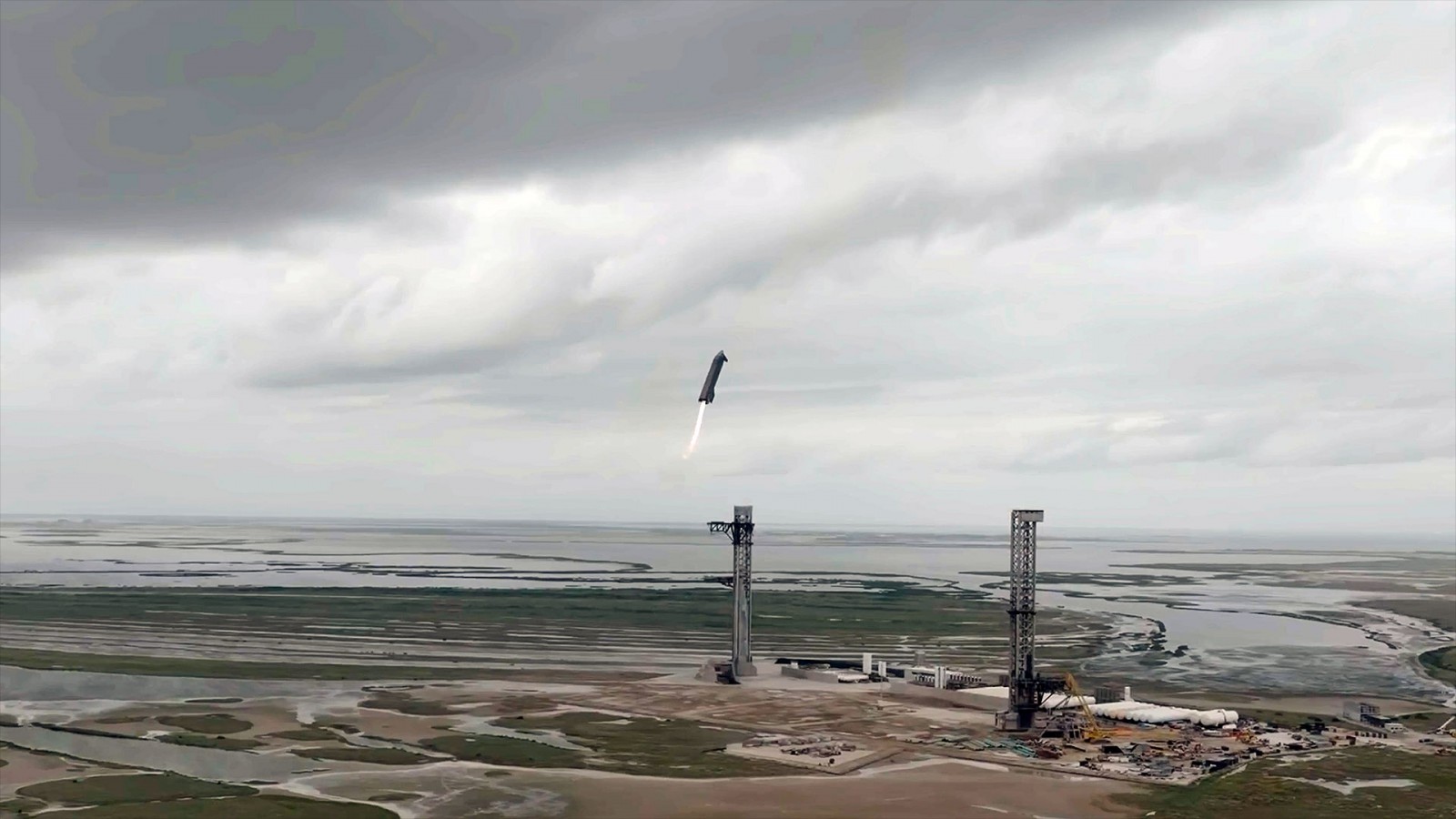
SpaceX has caught a Starship upper stage returning from orbit for the first time. Ship 42 reached the launch tower at Starbase on November 14, completing the most striking part of Flight 15. The attempted double recovery did not happen: Super Heavy failed to return for its own catch. The result is a major recovery milestone with an equally important limit on what it proves.
Space.com’s on-site and webcast reporting places the catch at 21:20 UTC, roughly 22.5 hours after launch. It reports that the booster diverted following a low-fuel alarm. The underlying cause still requires investigation; an alarm description should not be promoted into a completed engineering diagnosis.
Why catching the ship is a different problem
The booster and upper stage do different jobs. The booster supplies the early push and returns relatively quickly. The upper stage continues to orbit, spends much longer away from the launch site and must survive atmospheric re-entry before the final approach. Recovering both therefore requires more than repeating the same landing twice.
SpaceX’s Flight 15 mission plan made the upper-stage return conditional on checks of the systems needed for re-entry, the landing burn and tower approach. It also described cameras on three deployed satellites as one source of heat-shield inspection data. The useful connection is between inspection and the decision to return: an orbital trajectory alone does not establish that a vehicle is ready to approach a launch tower.
The report says Ship deployed 26 Starlink V3 satellites before returning. That combines a payload-delivery role with the recovery experiment. It does not, by itself, tell us the condition of every component after landing or the cost of preparing the vehicle for another launch.
A catch changes what engineers can inspect
Bringing the vehicle back creates an opportunity that a destructive test or an ocean landing cannot provide in the same form: engineers can examine the flown hardware directly. Heat-shield condition, structural wear and engine behavior can be compared with the telemetry and with the assumptions used to approve the return.
That is why the result matters beyond the spectacle of the tower arms. A reusable system depends on knowing which parts can fly again, which need work and how consistently the vehicle behaves. One successful recovery supplies evidence for that process. It does not remove the need to repeat it.
The booster outcome remains part of the same flight, not an inconvenient footnote. A system intended to recover both stages has to make both halves dependable. Ship’s success and Super Heavy’s unsuccessful return can coexist without either cancelling the other.
The next meaningful number is turnaround
The broader ambitions connect to the changing transport architecture for [lunar missions](https://geekradar.co/article/2026-10-24-lunar-routes~0fc18675a70b), but this catch should not be mistaken for completion of a lunar landing system. Orbital recovery, propellant operations and mission-specific spacecraft requirements are separate tasks.
What changes now is the evidence available on the ground. SpaceX has a returned upper stage to inspect and a booster event to investigate. A future reflight would add a different kind of proof: that recovery can preserve enough of the machine to make using it again practical. The tower has answered whether a ship can come back this way once. The vehicle itself now has to show what coming back has cost.