Roman has aligned its instruments. The next challenge is holding a star still
Guide detectors and deformable mirrors connect a completed alignment milestone to the telescope’s next commissioning steps.
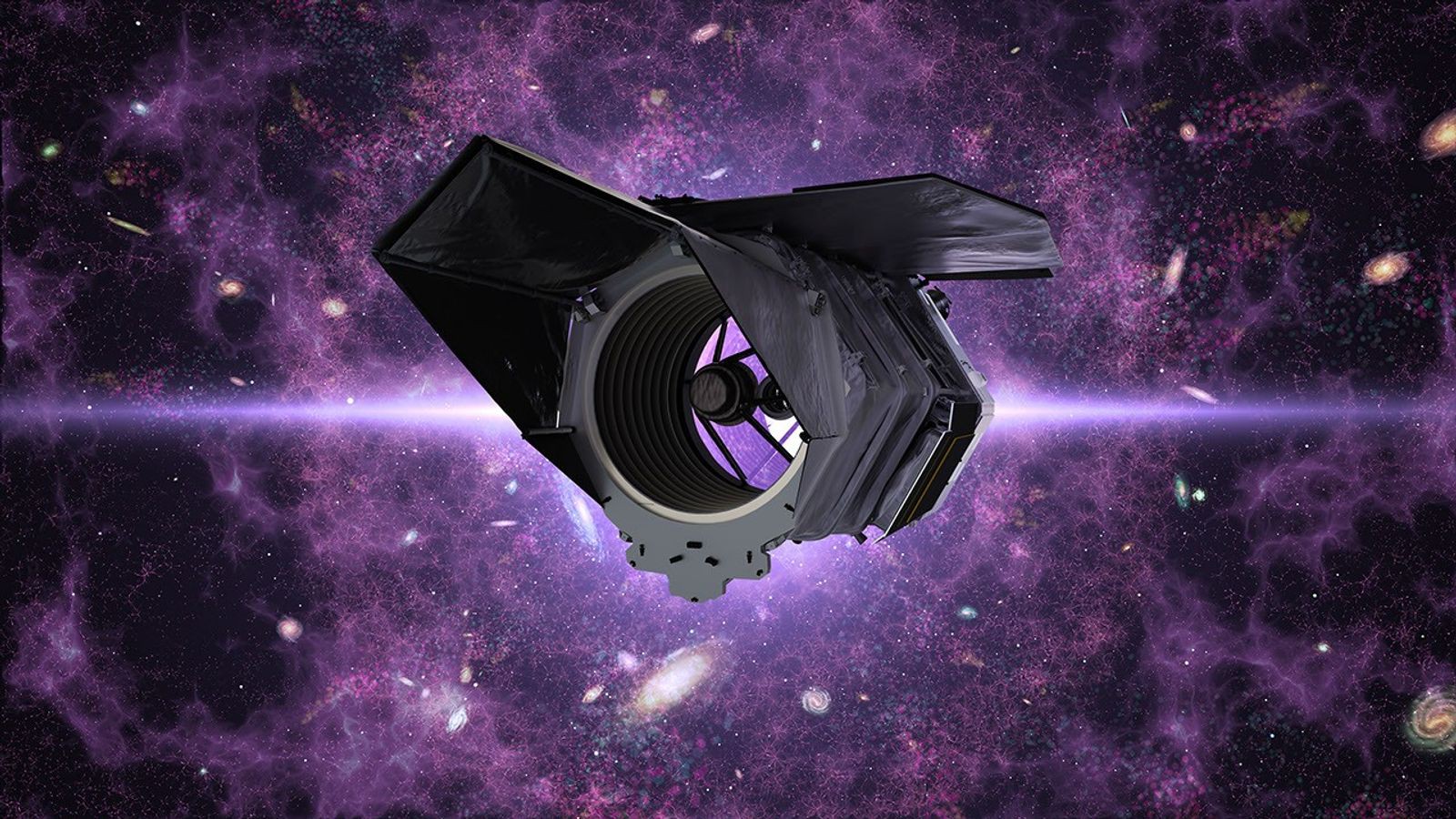
Roman has aligned its instruments in space, completing a step that turns an assembled telescope into a more reliable measuring instrument. NASA’s November 13 commissioning update describes observations of stars used to reconcile where light actually falls with where the observatory’s internal map says it should fall. That correction matters both for Roman’s wide surveys and for its attempt to isolate faint planets beside bright stars.
This is a commissioning milestone, not an announcement of newly discovered planets. The distinction is unusually important here: aligning the coronagraph’s components prepares a more demanding stage of active starlight control, which NASA describes as the next step.
The telescope needs an accurate map of itself
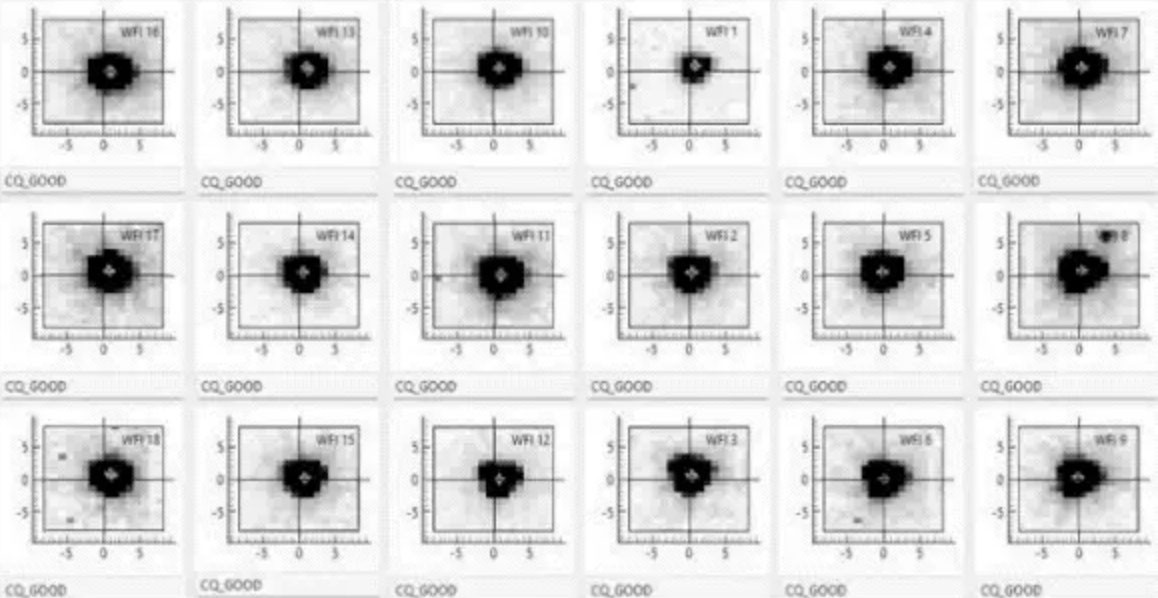
Roman’s Wide Field Instrument has 18 detectors. Together they must do more than collect attractive images: they help the telescope identify guide stars and maintain its pointing. If a star lands at a slightly different detector position from the expected one, the control system’s understanding of where it is looking becomes less reliable.
Ground alignment provides a starting point. Launch vibration, changing temperatures and the absence of gravity can shift an observatory after it leaves Earth. The team therefore observed stars, compared their measured and predicted positions, and updated the instrument geometry used for subsequent observations. It is a calibration problem with a direct scientific consequence: a tiny pointing error can move light away from the place where an experiment expects to measure it.
The commissioning overview places this work among the processes that turn on, adjust and calibrate the observatory before science operations. A spacecraft can be working correctly while that process is still unfinished. Treating every successful engineering step as the start of a complete scientific survey would obscure how much measurement depends on these preliminary checks.
One instrument watches while the other searches
The Wide Field Instrument will also guide Roman while its Coronagraph Instrument studies nearby stars. It can watch guide stars in a neighboring part of the sky as the coronagraph holds on its target. NASA says these observations can additionally provide deep-field data from areas that have not received equivalent surveys.
That arrangement connects stability to scientific reach. A long coronagraph observation needs steady pointing to accumulate a very faint signal. Meanwhile, another instrument can record useful background sky rather than acting only as an invisible support system. The two instruments’ jobs differ, but accurate knowledge of their relationship makes this shared observing time possible.
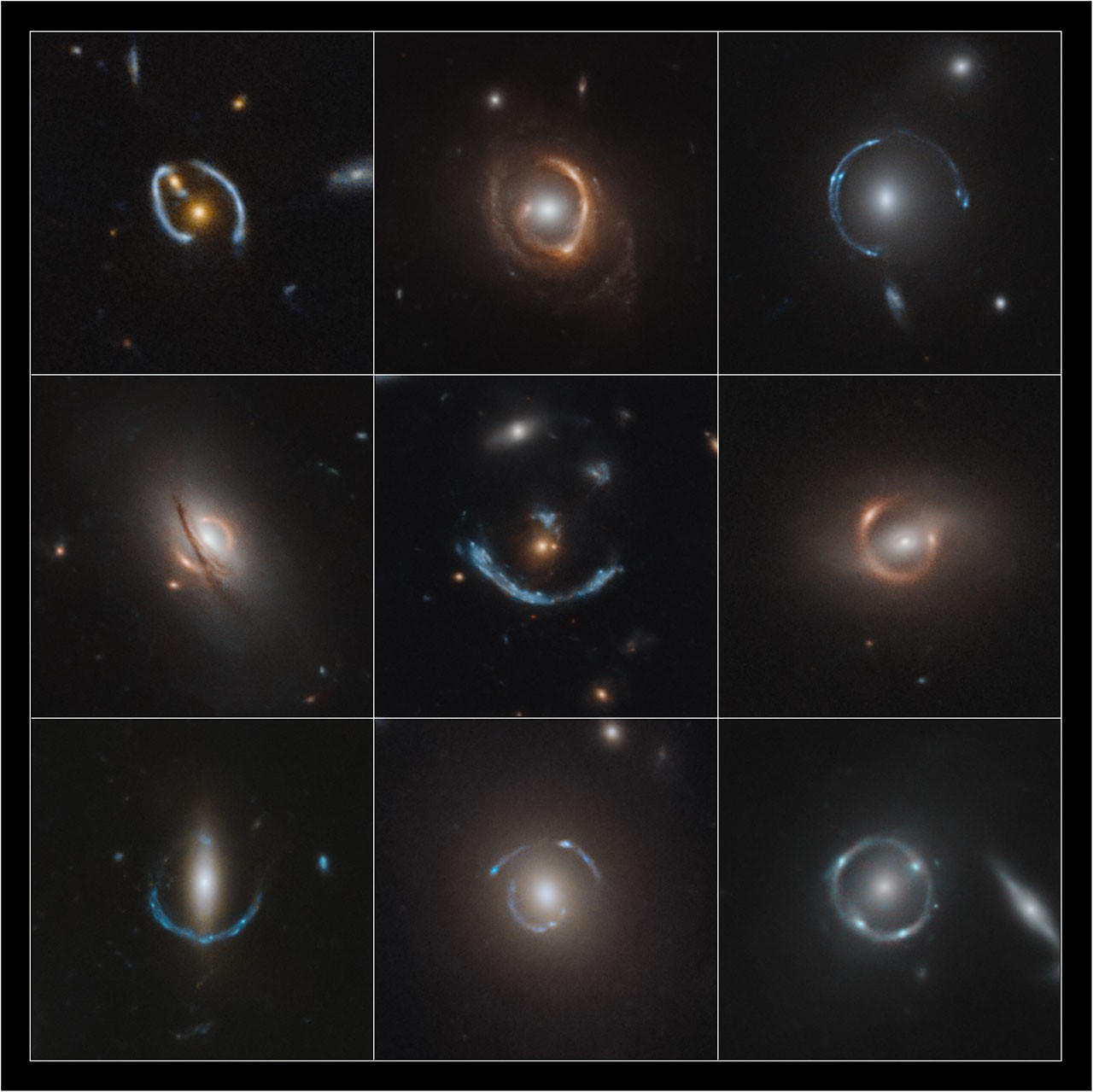
The wider survey motivation is visible in Hubble’s newly published gallery of gravitational lenses. Foreground mass bends background light into arcs, allowing astronomers to investigate the distribution of matter through its gravitational effect. Hubble’s detail and Roman’s broad infrared view serve different parts of that investigation. The gallery is Hubble imagery illustrating future research targets; it is not a new Roman science image.
A mask alone cannot remove all the glare
A coronagraph blocks and redirects a star’s light so much fainter surroundings can become detectable. Light also behaves as a wave, spreading into the very regions where a nearby planet might appear. Correctly positioning mirrors and masks is therefore necessary, but insufficient by itself.
NASA says the team has adjusted the secondary mirror, the mirror connecting the telescope to the coronagraph, and the instrument’s masks and optics. The next stage will exercise more than 3,000 moving elements associated with deformable mirrors. Small changes to those mirrors can redirect unwanted starlight while preserving the planetary signal the instrument is designed to seek.
There is no planet-detection result in this announcement to score against another telescope. Its achievement is earlier in the chain: Roman now knows its own optical geometry more accurately. For an observatory intended to measure exceedingly small differences, making the instrument itself less uncertain is already a substantive advance.